








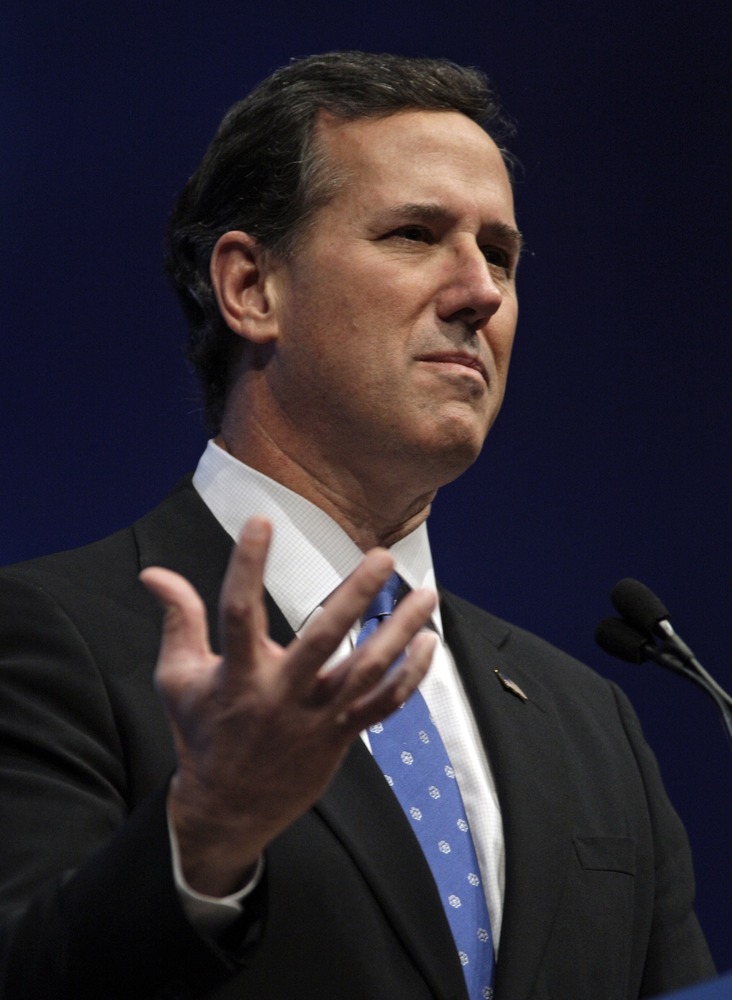
The conservative voice of the blue-collar went from going for broke, to out of business.
Rick Santorum’s presidential campaign suspension confirmed what many outsiders to the game have been saying for months: that Mitt Romney will be the eventual, if not uninspiring, nominee to represent the Republican party. Also, that a candidate can survive on a shoestring budget for only so long.
“We were just burning through cash at a rate we couldn’t maintain,” Santorum told “Today’s Issues” host Tony Perkins on Thursday. “Money isn’t everything in politics, but you do have to have enough to be successful.” Santorum was the underdog of the GOP race, coming from behind as the best non-Romney option to survive the rounds of media-vetting. But as of the latest campaign filings through February, Santorum was swimming in almost $1 million of debt, with little cash flowing in.
“The debt was a little more substantial than I was comfortable with,” Santorum said to Perkins.
Santorum now joins the ranks of the failed presidential candidates in the limbo with a suspended campaign where they must continue to raise money and pay off debts for a cause they have already conceded to losing. As Domenico Montanaro of NBC News wrote in First Read after the Santorum suspension:
By not officially terminating a campaign, a candidate can continue to raise money to retire debt. A candidate would not be allowed to “terminate” their campaign — in the technical sense with the FEC — unless they paid off their obligations and debts.
After bowing out of the GOP race in January, former Utah governor Jon Huntsman has gone AWOL, according to a Politico report — leaving few indications as to how he plans to settle his $1 million of campaign debt. Politico went on to say that Huntsman’s radio silence is prompting vendors to threaten lawsuits if they’re not paid.
And they are not the only “suspended” campaign to limp forward only to pay off their financial obligations.
Former First Lady Hillary Clinton exited the 2008 Democratic presidential primary arms swinging, but three and a half years later, the now-secretary of state’s defunct campaign filings put her at over $245,000 in the red. Former astronaut and Ohio senator John Glenn struggled with over $3 million in campaign debt for more than 20 years until the Federal Election Commission issued him a reprieve, per the New York Times. Space pioneer wannabe Newt Gingrich seems to be taking a page out of Glenn’s book, hoping for the same fate. The former House Speaker has had his checks bounce, and he finally fessed up to owing “slightly less” than $4.5 million in campaign bills. It’s not so bad that he’s applying for public assistance, but he is now putting his donor list up for rent: Scrambling to dig himself out of a $4.5 million hole, the former House speaker has resorted to renting his presidential campaign’s most valuable asset – its donor list – for as much as $26,000-a-pop. “We owe much more than we wanted to,” Gingrich said on the April 8 edition of Fox News Sunday. “Unfortunately, our guys tried to match Romney. It turned out we didn’t have anything like his capacity to raise money.”
Amanda Sakuma Recommended


