








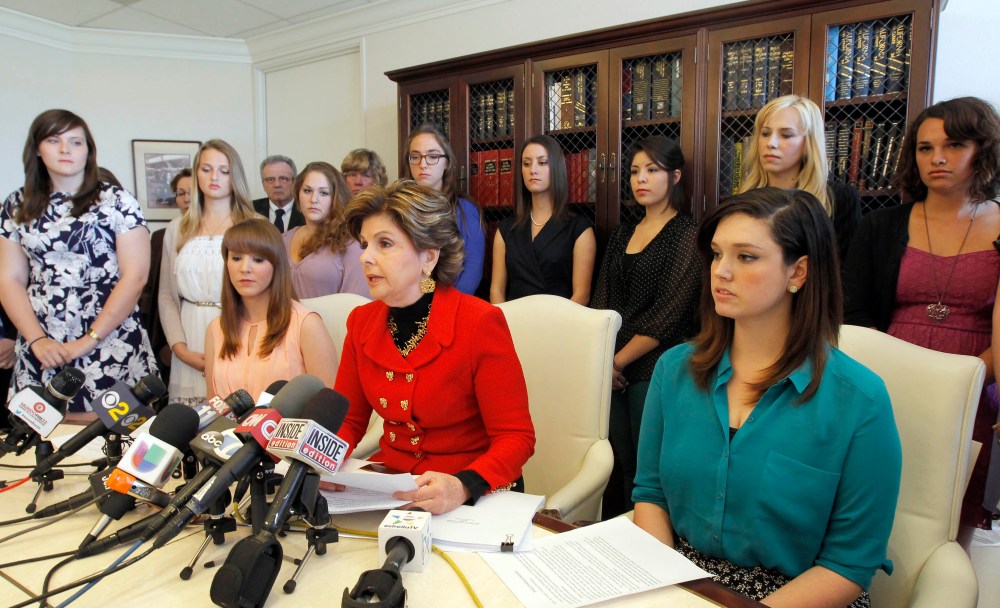
I flew to Los Angeles Friday to see Occidental College professors Caroline Heldman and Danielle Dirks, and for the first time since we had known one another, we were all together in the same room. When they picked me up at the airport, we hugged like long lost best friends—and to some extent, we have become just that.
Heldman and Dirks are two of the women who on April 18, filed federal complaints against the college for mishandling sexual assault cases in ways that included assigning a student found responsible for rape to write a five-page book report. Over the past few months, I have spent countless hours with them on Skype and the phone in order to share information and help the Occidental women write their complaints. Yet, six months ago, I had never even heard of Occidental College—and many of the 37 women there who filed had not yet heard about Title IX protection against gender discrimination beyond athletics.
But these women of Occidental are banding together, and this story of survivor connection is not isolated to their college. Since I brought my very public complaints against the University of North Carolina at Chapel Hill to the Title IX Office for Civil Rights and Clery Act, I have heard from students at dozens of schools across the country who have reached out for advice and support. Most recently, my co-complainant Andrea Pino consulted with students Hope Brinn and Mia Ferguson at Swarthmore College to write a Clery Act complaint, and several other schools are lining up to file similar complaints.
So what happened to make sexual assault a national conversation? And why hadn’t it happened before now?
Cases like Steubenville and Amherst helped bring the issue to the forefront, but what the general public still needed to recognize was that tragic rapes like that happen every day. The way in which we framed the UNC case as a microcosm of institutions everywhere helped shift the focus from the individual to the larger systematic problem. Instead of vilifying the university, the UNC complainants acknowledged that the problem was not just with UNC or Steubenville. We have a national epidemic on our hands, and we have the tools to combat it.
While we still have a very long way to go, we are making real progress. Students across the country are standing up and saying that they too were raped, blamed, shamed, silenced, and betrayed, and asking, “What can I do?” Now, there are some answers.
As a survivor collective, we are becoming more formalized in our efforts because we recognize the need for change, want to help others, and working together. For too long women and men who survived sexual assault on campuses walked alone in their experiences. Unsure of whom to trust and unaware of their legal rights as students, many survivors were isolated and voiceless. As Dirks explains, “learning the stories of other survivors who are actively pushing their colleges and universities to create safe and equitable learning environments has opened the floodgates of what students now feel empowered to do.”
Last week, a group of students and alumni survivors launched Know Your IX, a campaign that aims to educate all students of their rights under Title IX of the Educational Amendments of 1972 by the start of the 2013 fall term. With nearly 1000 followers on Facebook and over $5,000 raised towards our efforts in the past week, Know Your IX is already taking off. Additionally, while Know Your IX will certainly assist students, faculty, and staff in filing federal complaints if necessary, my personal goal is not to have a complaint filed against every school, as many have accused. My goal is to build a wave of campus policies and procedures that will set new national standards for excellence. The schools that lead the way will not only be in compliance with federal guidelines governing sexual assault, but will go above and beyond requirements in fostering an educational experience truly devoted to equity and freedom from violence. Institutions of higher education should see this moment as both a wake-up call on Title IX, and as an opportunity to be change agents themselves. Our students need university leadership and proactive corrective measures, not reactivity and denial. It should not take undergraduate students coming together to file a legal complaint with the federal government for universities and colleges to get the message that discrimination based on sex includes sexual assault, and that assigning book reports is an inappropriate sanction for rape. Annie Clark is the lead complainant in two federal cases against the University of North Carolina at Chapel Hill, and is one of the women spearheading a national movement for changing the way institutions address issues of sexual assault. She was a guest on the March 16 edition of Melissa Harris-Perry, and will be again on today’s program at 10:00 a.m. on msnbc. See her earlier appearance below.
Annie Clark Recommended


