








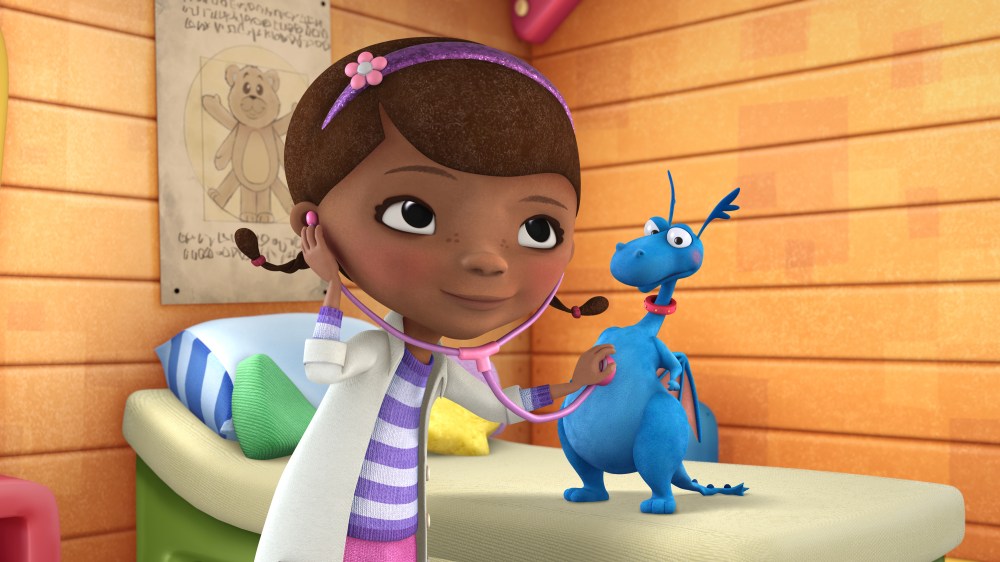
Chris Nee had been writing kids television for years before she had a child of her own. When her son’s asthma made doctors visits a regular routine, Chris decided she wanted to use her field of expertise to make going to the doctor a less scary experience for kids.
The result was “Doc McStuffins,” an animated television series featuring 6-year-old Dottie McStuffins who practices being a doctor like her mother by giving her toys check-ups and fixing their ailments. The show premiered in March of last year and has become Disney Junior’s top-rated cable series.
I talked with Nee this week about the impact the show has had and the importance of media representation of African-Americans and women.
Tell me about creating Doc McStuffins, the character.
You know, this sounds like such a line, but honestly it was one of those kismet moments people talk about. I went into the shower, and when I came out of the shower 15 minutes later, I had the entire world.
I walked out and said, “Doc McStuffins, that’s the name of the show.” I know who she is, I know who the main group of characters are, and I could picture the clinic in the backyard.
Was making Doc McStuffins African-American a choice? And what was behind that?
It was definitely a choice. It was the very first conversation after Disney bought the show. I had felt strongly about making sure that Doc was female, and a lot of people said, “Well, you created the show for your son, why is it a female lead character?” And I just thought that nobody needs another male doctor or another male leader in a group. What we needed was a female character. And Disney, in the first conversation that we had after they bought the pitch said, “We’ve been looking for a good character to bring some ethnicity into them, how do you feel if she’s African-American?” I said, “Fantastic!”
For me, I am always looking for ways to shine a light on people who don’t get to see themselves represented on TV. I think it’s one of the most powerful things we have in working in especially preschool television. Unfortunately–like everyone else–we really lag in our representation of people who are in the mainstream. It just seemed like a great choice. And that was it. It was probably just a two minute conversation at the beginning. I look at the amount of positive impact that that one decision has made, and I think about how easy it was.
I encourage anyone else to make the same decision. It’s so powerful to show representation of somebody who’s not usually on TV.
What kind of reactions have you seen from the show?
What has happened with this show has been really extraordinary. We know that we’ve affected how kids deal with doctors. We also know that we’ve created this image that little kids have…They are aware that they are seeing themselves for the first time. You guys know about the Artemis Medical Society and Myiesha Taylor and that whole group. I think what has been so amazing about that for me is that ultimately they are reacting as adults…that group of women is really…It’s so huge to them that they did not have that representation when they were growing up that it’s created a very strong experience for them as adults to finally see “that was me when I was a kid.” I’m so excited that the next generation of kids is going to grow up with that image. Tell me more about working with the female doctors in The Artemis Society. They add such a dimension to our work that we know we’re working on something that has a larger meaning. That’s incredible… I can’t thank Myiesha enough for taking the time to write the original blog entry. She was really writing because of her own experience of seeing Doc in the promos on Disney. But for me it was like I was seeing what I was doing for work had just been elevated, and it made it so delightful for me to go and work on this show every day. They tell stories that are so mind blowing. One of those women, at one point, told a story when Doc had maybe been on for four months or so, and she was watching with her son. She’s a doctor and they’re there watching Doc McStuffins and her son looked at her at one point and said, “Mommy, can boys be doctors too?” And I love that story because we forget how powerful our medium is and how quickly we can change minds. Do you have any thoughts on the future of the show, or any other things you want to create? There are so many things I want to do with this character. There are so many other issues that I want to be able to touch on, some that we’re getting to do this upcoming season. We have an army toy this season, we’re going to pay tribute to the troops and that’s really exciting; we’re getting to do some issues that were harder for us do to in season one as everyone was learning to sort of trust that we were going to do things well. We have a toy that ends up in a homemade wheelchair, so I’m really excited about that. I’m just really grateful that we’re going to have the time on this show to keep making her into the most awesome kid on the block, and the kid that every kid wants to be friends with and hang out with. Because I think that just strengthens the representation and image that she has. Watch Nee’s interview on Sunday’s edition of Melissa Harris-Perry, below.
Lorena Ruiz Recommended


