The Rachel Maddow Show WEEKNIGHTS 9PM ETMorning Joe WEEKDAYS 6AM ETDeadline: White House with Nicolle Wallace Weekdays 4PM ETThe Beat with Ari Melber Weeknights 6PM ETThe Weeknight Weeknights 7PM ETAll in with Chris Hayes TUESDAY-FRIDAY 8PM ETThe Briefing with Jen Psaki TUESDAYS – FRIDAYS 9PM ETThe Last Word with Lawrence O’Donnel Weeknights 10PM ETThe 11th Hour with Stephanie Ruhle Weeknights 11PM ET
North Carolina's Democratic governor, Bev Perdue, decided not to seek reelection at the start of 2012. From the moment she took office after a razor-thin 2008
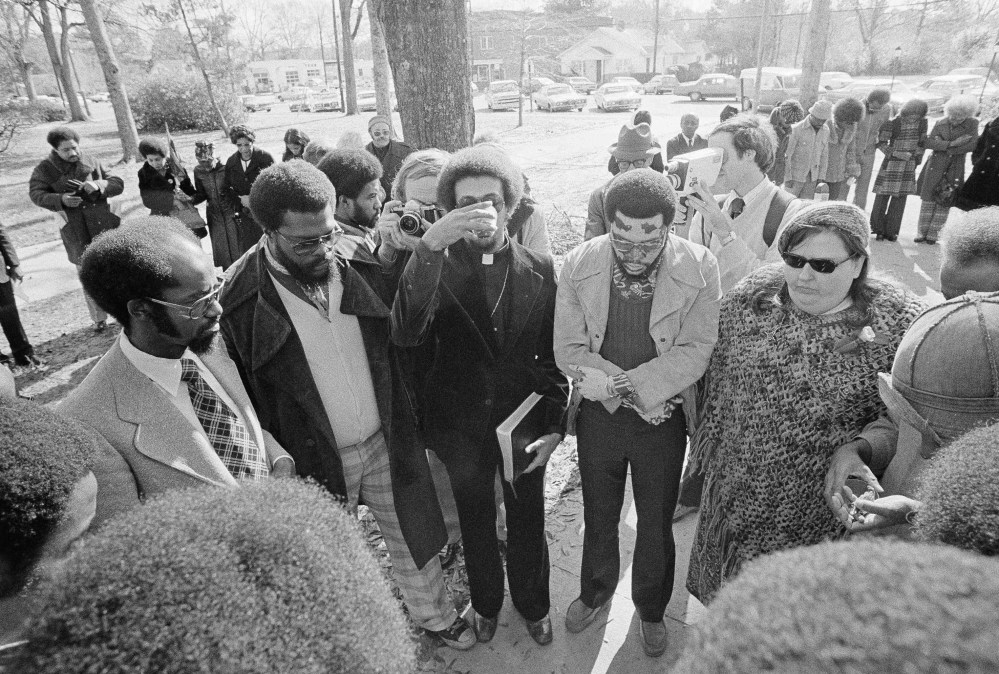
Members of the Wilmington 10 hold a brief communion service before boarding a prison bus on Feb. 2, 1976 in Burgaw, North Carolina, as they surrendered to…ASSOCIATED PRESS
By
Melissa Harris-Perry
North Carolina’s Democratic governor, Bev Perdue, decided not to seek reelection at the start of 2012. From the moment she took office after a razor-thin 2008 victory, she has been embattled, duking it out with an uber-conservative state legislature over issues of education, reproductive rights, and voter suppression. Having been badly bruised by these battles, Gov. Perdue bowed out of the 2012 race.
I know it has been hard. I know you often lost. But you did not shy away from fighting the difficult battles when issues of fairness and justice were on the line. Which is why, as you prepare to leave office next week, I am going to ask you to take up one last cause and to use the power of your office to do what only you can do.
Gov. Perdue, it is time to pardon the Wilmington Ten.
As you know, in 1972, nine young African-American men and one white woman were wrongly convicted of firebombing a Wilmington grocery store during civil rights protests. Most of the Wilmington Ten were just teenagers at the time. But despite shaky evidence, the young musicians, students and activists were sentenced to a total of 282 years in prison.
Gov. Perdue you once stated that “there’s nobody in America…who could say that trial was fair or that there wasn’t some kind of undercurrent or overt racism involved in the jury selection.”
Indeed, it was so overt that by 1977, at least three witnesses had recanted their testimony. And in 1980, the U.S. Court of Appeals overturned the convictions of the Wilmington Ten–noting that the chief witness lied on the stand and that prosecutors concealed evidence.
And now, according to the NAACP, newly discovered notes from the prosecutor suggest he racially-profiled prospective jurors–writing “KKK – good” next to some names and referring to at least one black candidate as an “Uncle Tom.”
But despite the broad consensus that these citizens never committed this crime, despite their convictions being overturned more than three decades ago, despite the years they lost while unjustly incarcerated, the state of North Carolina has never issued a pardon.
Governor, you can change that. Please add this letter to the petition with nearly 140,000 signatures that is on your desk right now. It will only be your desk for a few more days. You have one more chance to leave a legacy of fairness, a symbol that the state of North Carolina is not stuck in a racist past, but is moving toward a more just and inclusive future. You vaulted into history as the state’s first woman governor. Make history again. Pardon the Wilmington Ten.
It’s the right thing for them–and for the country.
Sincerely,Melissa
A recent segment of NPR’s All Things Considered aired about the widespread call for clemency, which includes interviews with the surviving members of the Wilmington Ten. Listen to the report here. Also, see this Democracy Now! report from Friday.
Update: The Wilmington Ten were pardoned by Governor Perdue on December 31. Read our report for more.