
A few years ago, I was at my desk in Paris planning my team’s weekly agenda.
I’m a computer scientist, and on my screen (next to the planning document I was working on), there was a tab opened to a kids’ clothes website; my son grew five centimeters, seemingly overnight. Another tab was opened to his doctor’s website because I had to book his annual wellness appointment. And another tab opened to a grocery store because earlier that morning, I noticed our refrigerator was empty.

By noon, my team-planning document wasn’t even half-ready, so I let my colleagues leave without me and ate a sandwich at my desk. An article popped up on my screen. It said, “Girls, it’s Monday. Take care of your mental load.”
Your what?
According to the article, the mental load was always worrying about household tasks to be done, even if you’re not currently executing them. When you bear the mental load, you worry about the shopping list, the laundry pile, the doctor appointments for the whole family and so on. It’s not about executing tasks, it’s about planning them. This burden, of course, usually falls on women.
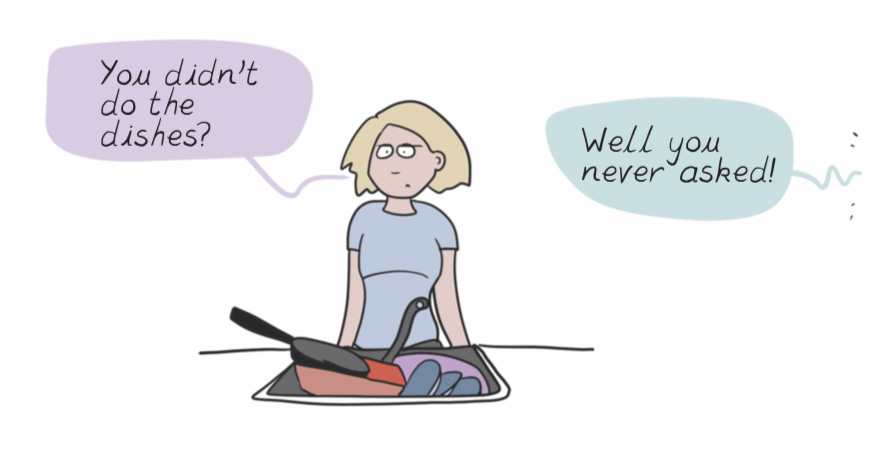
I looked at all of my opened tabs, then I read the article again, then looked back at my opened tabs, astonished. That was it. That was why I was always tired and felt like I was never able to finish anything. It was because of the mental load.
I started asking around, listening to my female friends and participating in mom’s forums online. Most of them said the same thing: their partners were sincerely willing to help, but they waited for their instructions—as if the women were project managers of the household and they were just underlings.
This “mental load” concept has existed since the ‘70s , but no one was really talking about it. I realized that most women just had no time to read it. Maybe it was because they were busy planning laundries and meals for the whole family.
So I took my pen and I made a comic about it. I drew mental load scenes from my friends’ stories and some from my personal life. I posted it on my blog and on Facebook, and I went to sleep.
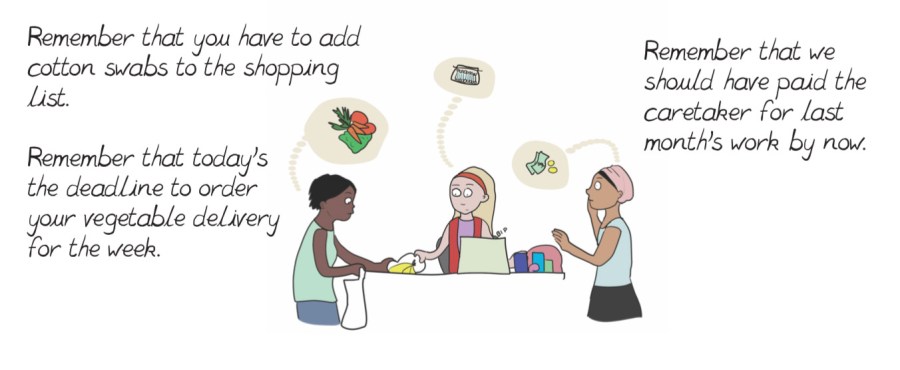
The next day when I woke up, everything on my computer was blinking. I had hundreds of notifications from everywhere. On Facebook, the comic had been shared 20,000 times (200,000 a week later) and women tagged their partners in the comments, saying, “Hey [partner’s name], read this, and tonight we talk.” These women were simply tired of bearing the mental load alone.
I was shocked when I realized that every article on the subject was aimed at women instead of men. And not only were they aimed at women, but they also suggested that they were the ones responsible for the unequal repartition of the mental load in their relationships! They all taught women how to be less controlling, how to let go, how to lower their expectations about their partners investment in and capacity for household chores. I was astonished!
Six months later, a new batch of books arrived in bookstores about the mental load. Again, they were aimed at women, with advice for helping to get rid of the mental load (like it was an illness, or something which could magically disappear!) It was all about being better organized and less controlling, nothing about how partners could start seeing themselves as adults sharing half of the household responsibility. Here’s my message for women who bear the mental load: it’s not your fault. There is a huge amount of work women do for free. Historically, women have bore the household and parenting chores for which they are not paid. And what do these women get in return? Not much. In fact, I’ve found the added stress makes many turn to individual coaching or yoga and meditation to unwind. We shouldn’t have to bear the mental load alone. Solutions should come from society and not from us. And our partners must play a role too: when they start trying to take some responsibility we have to accept that sometimes this is not the way we would have done things. The mental load is organizing housework in order to have clean clothes in the closets, healthy food in the fridge and healthy kids in clean sheets sleeping well in clean rooms. Those are not high expectations. This is just normal and healthy family life. I think the first step of this is that our partners realize that they have to take on their share of the load, and that they have to learn from the one who has been doing it for the last however many years. It requires humility from them and patience from us. It’s important because this is the parental model our kids will grow up with. I think that’s worth the effort. Emma is a computer technician, comic illustrator and blogger who lives in Paris. The author of “The Mental Load” and the forthcoming “The Emotional Load,” she is known for her unique blend of humorous and wise comics. Emma podcasts for France Culture, and has contributed comics to The Guardian and Working Mother.
Emma Clit Recommended