








This article originally appeared on Today.com.
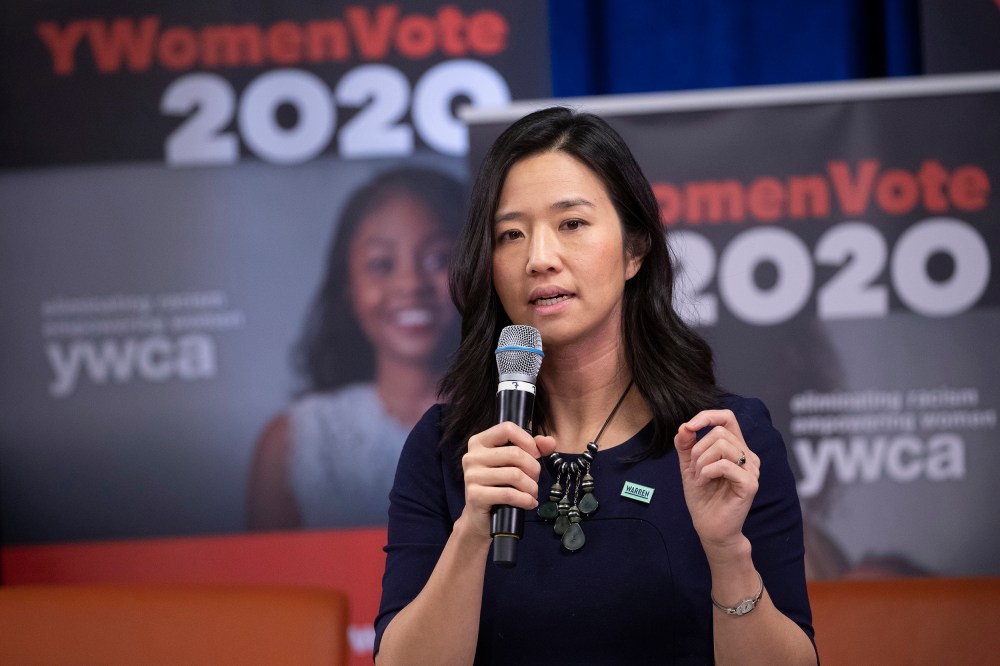
After serving on the Boston City Council for seven years, Michelle Wu is looking to reimagine Boston politics. She recently announced her run for mayor of the city. If she wins, this would be the first time a candidate unseats a sitting Boston mayor since 1949.
RELATED: Meet Michelle Wu, Boston’s first Asian-American councilwoman, who is now running for mayor
It just so happens the 35-year-old has already accomplished many “firsts” during her time in office: she’s the first Asian-American woman to serve on the Boston City Council and the first woman of color to serve as council president in 2016. From running a community-led campaign to fighting to close the racial wealth gap, Wu hopes to break one more barrier come the mayoral election next year.
TMRW: Why did you ultimately decide to run for mayor
Michelle Wu: We are in an unprecedented moment. Boston is facing an ongoing pandemic, an economic crisis, a national reckoning on systemic racism, our climate crisis. And we need leadership that matches the scale and urgency of our challenges.
I know Boston — but even before I served on the Council, I was raising my sisters as my mom was struggling with mental health challenges. And today, I’m raising my own two sons who are 3 and 5 years old. So, I know what it means when government works and when it doesn’t work. We should be a city for everyone. We have the financial resources, we have the activism, we have the ideas. We just need bold, urgent leadership that meets this moment.
What have you accomplished during your time on the Boston City Council that you’re most proud of?
One piece of legislation that we moved forward is to ensure that everybody has a fair shot at city contracts. I partnered with then Councilor Ayanna Pressley, now our amazing congresswoman, to pass legislation that would require reporting of where our city dollars were going and to require equity in city contracting. After the ordinance was passed, we learned that of the $664 million spent in that year on city contracts for goods and services … less than 1% went to businesses owned by people of color in our majority-people-of-color city, and less than 1% went to women-owned businesses. That’s a huge missed opportunity to create wealth right in our neighborhoods and to use our resources to close the racial wealth gap in Boston.
In 2018, Airbnb sent out an email to thousands of people around Boston criticizing your stance on short-term rentals. Can you address what happened?
What ended up happening in cities like Boston … Airbnb became a way for companies to come in and set up mini hotels that were in places that the zoning code legally wouldn’t have allowed hotels to exist.
In Chinatown, for example, we saw entire buildings that were purchased by a company that would then kick out all the tenants and rent out all the units as basically an Airbnb hotel. That was restricting our housing stock, driving up rent across the city and creating an even harder situation already in the midst of our housing crisis. Airbnb put a lot of money toward lobbying to try to stop any sort of regulation from happening. And they targeted me and the City Council in telling everyone who had ever used Airbnb in Boston to email us, call us — basically saying that we were trying to prevent anyone from using this business, which wasn’t true at all.
After that we drafted the most protective ordinance in the country at that time to stabilize our housing, our residents and our renters. Airbnb did sue us. But in court, the city won a very important victory in redefining the power of municipalities to be able to regulate their housing stock and to be able to regulate short-term rentals. That set a precedent for cities across the country to be able to also similarly pass local legislation that would stabilize their neighborhoods.
What issues would you fight for if you’re elected mayor?
Every kid in our city deserves access to great schools. I’m a mom in the Boston Public Schools. And I know what a difference that makes and where our challenges are today. The second is that we have the resources to close the racial wealth gap in Boston, we just need to prioritize and focus on directing our resources there.
In a city that has the best hospitals and health care institutions and life sciences organizations in the country, we need to do better in guaranteeing access to quality health care and strengthening our public health infrastructure to truly keep everyone healthy and safe. Our housing is unaffordable to more and more families, and we need to have a system of planning, development and zoning that meets the needs of affordability, climate resiliency and transportation access across our city. “I am a daughter of immigrants and never thought that I would be running for office one day.” As the first Asian-American woman to serve on the Boston City Council, what obstacles have you had to face to have your voice heard? I’m not your typical profile of a Boston politician or certainly a mayoral candidate. I’m a mom with young kids and a caregiver to my own mom who continues to live with mental health challenges. I am a daughter of immigrants and never thought that I would be running for office one day. Many of the barriers that I’ve seen through my parents eyes — navigating language barriers and, through my mom’s experience, often fighting within the health care system, fighting for my sisters to have access to the educational opportunities they needed, fighting to open a small family business. I’ve seen that our systems aren’t designed for everyone to have access when they need it most. And so those barriers are the same ones that I keep front and center as we’re running this campaign and serving in government. Our leadership should reflect our communities. What would you say to young people who aspire to run for office like you? Do it! We need you. Know that your community needs you. The way that we make change is by redefining what leadership looks like. When we have more young moms in office who are visible examples of how hard it is to juggle everything related to being a working parent, when we have more people of color and young people and women stepping up to reshape who feels connected to government, we are bringing more people into the process and creating that partnership between communities and government. What do you think is the future of America? The future of America is this next generation. It’s activists. It’s urgent and resilient and diverse. We’re at a breaking point right now. The crises of our economy, public health, racial disparities, etc. means that in this moment it’s not only possible to reimagine who we could be and what our systems could look like, it is absolutely necessary to make those changes. And I’m excited to be part of a movement that is going to lift up all of our communities and ensure that we’re building the future and the communities that our kids deserve.
Antonia DeBianchi
Antonia DeBianchi is a TMRW contributor who's been published in Apartment Therapy, Boston Magazine and Haute Living. She focuses on lifestyle, entertainment and food writing. Recommended


