Treger Strasberg never guessed that she would know someone who was homeless. But when the graphic designer moved to Detroit in 2008, she began volunteering at food rescue organization Forgotten Harvest and befriended the woman who ran the front desk. She later discovered that her new coworker was homeless.
The woman, a mom of two, had been through a divorce, and her mother — who was her only source of childcare — had recently died of leukemia. When her rent increased by “something like $25,” Strasberg said it was “the last straw” for her friend. She lost her home because she couldn’t pay rent. And because she didn’t have the funds to move and store her belongings, she had to leave almost everything behind.
Strasberg rejoiced when her friend finally found a home, but when she went to visit, she realized that the home was almost completely empty. “They were sleeping on the floor on top of a nest that they had made in their winter coats. Everything she owned, everything that she had gathered, every one of her grandma’s treasures, her kids’ artwork pieces, every pillow, everything had been thrown away [by her landlord] when she lost her home,” Strasberg said.
Strasberg had made the move to Michigan for her husband’s job just six weeks prior, and she hadn’t found employment that fit her children’s daycare schedule. So, she made helping her friend her new mission. Strasberg emptied her own cupboards of anything she could spare. She approached strangers in the grocery store and in the pickup line at daycare, saying, “I have a friend who lives in a house with nothing. What do you have?”

Strasberg didn’t want to fill her friend’s house with just anything. She wanted to create a home that her friend would love. “I am not an interior decorator, but everyone thinks I am,” Strasberg, 44, laughed.
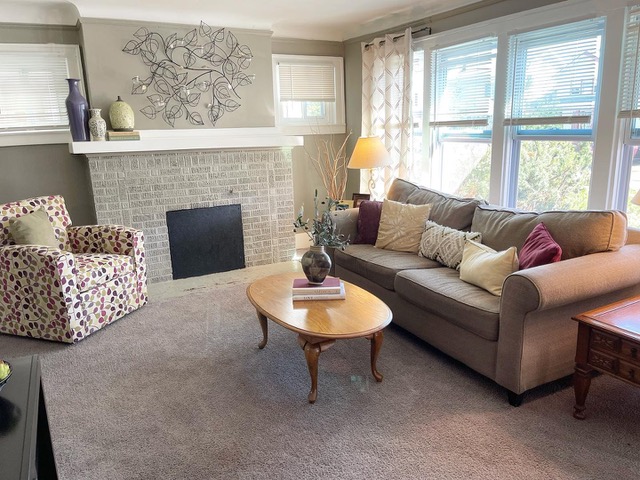
After furnishing her friend’s house in six weeks, Strasberg realized that there was more work to be done in her community. Her impulse to help people restart their lives eventually turned into Humble Design, a Detroit-based nonprofit organization with approximately 40 employees and thousands of volunteers that turns empty houses into clean, dignified, welcoming homes using donated furniture and household goods.
Since Humble Design got its start in 2009, it has helped turn over 2,000 houses into homes in five cities (Detroit, Chicago, Cleveland, San Diego, Seattle) with almost seven million pounds of donated furniture.
A humble beginning
Strasberg was still new to Michigan when she began collecting furniture for her homeless coworker. Not everyone got the word that the project was complete, and the furniture donations kept on coming.
“I became known as ‘The Furniture Lady’ overnight,” she said. “I literally came home one night and there was a sectional couch on my front lawn. I realized I needed to get this whole thing under control.”
Assuming that there was a local program that accepted unwanted furniture to donate to families in need, Strasberg called nine different homeless shelters only to be told, “Nobody does that. That’s a hole in the system. You should start something like that.” There were organizations that would accept donations and resell furniture, but Strasberg wanted to outright give beds to people who were sleeping on the floor.
With roughly 580,000 people homeless in the U.S., Strasberg knew there was a lot of work to be done. She stopped looking for employment and threw her energy into filling previously-empty homes with furniture. “I started small. We just did one house every six weeks with my pickup truck and my girlfriend Ana,” she said. Social workers would refer families to Strasberg for help, and word spread quickly. About a year into their project, Strasberg realized that they had 100 families on the waiting list.
Strasberg’s husband, Rob, a top creative director and entrepreneur, suggested that they treat Humble Design as a small business. The couple invested their money to get a truck, a warehouse and a couple of employees. Rather than making money from the company, they hoped to earn “a feeling of love and joy and community. And we’ll be able to put our heads on our pillows at night and feel that investment.”
Growing pains
With just Strasberg and her friend Ana, Humble Design was able to furnish one home every six weeks. Once she and her husband invested in the company, they were able to complete one house every three weeks. As they began streamlining the process and added interior designers to the team, they condensed the timeline to two weeks. Today, in the twelfth year of the business, Humble Design furnishes 11 homes every week.
Local social workers, who Strasberg referred to as “the hardest working, most underappreciated individuals on the face of the earth,” help Humble Design identify a potential family in need. A Humble Design employee then meets either physically or virtually with the family to “figure out what they like, what they want, what they need, what’s going to make them happy, what’s gonna make them feel at home.”
“We invite the family back home, and we surprise them. They come in, they cry, we cry, we get to hug. It is the loveliest thing I’ve ever been a part of, and I get to do it all the time,” Strasberg said.
But the process hasn’t always been smooth sailing. “I’ll be really honest. We made some missteps, because I had no idea how to run a company,” Strasberg said. But deciding to be completely transparent about her mistakes helped. For example, when she threw an event when the company as just getting started and “nobody came,” she asked people for help and what she did wrong. Everyone from volunteers to state legislators were willing to help Humble Design figure out how to improve and grow. Strasberg has a surprising and lofty goal for Humble Design: “I want to be put out of business. I don’t ever want to have to help anybody else because everyone’s going to be helped in this country. All the boats are going to rise collectively and we’re going to have a safety net that’s going to catch everybody and I’m not going to be needed. Wouldn’t that be lovely?” To that end, Strasberg wants to continue scaling the company so it can help thousands of families a week rather than just 11. Finding furniture isn’t the issue—there is a three-month waiting list just to pick up donated furniture—but finding funding to improve the logistics of getting that furniture to people in need has consistently been the biggest hurdle. Strasberg realized that tracking the Humble Design families would help her case. “When we dug into our numbers, we started to realize that we are creating systemic change. It’s keeping people out of the cycle of homelessness,” Strasberg said. At least 30 percent of families return to the shelter system after finding a home, but less than 1 percent of families who have been helped by Humble Design return to homelessness, according to Strasberg. Why? It’s not just having a roof over your head that makes the difference. “It’s all about making the house feel like yours that makes you work harder to keep it,” said Strasberg. For example, take Janica Sewell a mom of six from Detroit who became a Humble Design client this October. Previously the family had been in and out of apartments, shelters and even an abandoned house. “I think I got us a good place, and twice we had to move to a shelter because there were high lead levels in the houses. My one son was tested, and his blood had unsafe levels of lead,” she said. A shelter ultimately helped the family obtain the house they are in now, and Humble Design made that house feel like a home. “I couldn’t wait to see what the kids thought of their beds. Sometimes we were sleeping on the floor, and I knew this would be huge,” said Sewell. In recent years, companies like Progressive, U-Haul and CB2 have taken note of Humble Design and stepped in to help the organization expand operations to new locations. “ If we invest in solutions that can actually make a difference and put a foot in the revolving door of homelessness, we can help to mitigate the massive crisis that we’re about to face with the unhoused population in this country,” said Strasberg.
Rosie Colosi, TODAY
Rosie Colosi is a reporter for TODAY Parents. Recommended



Creating systemic change