We all know exercise is important, but it can be hard to prioritize working out. It’s especially tough for postpartum mothers, who are recovering physically and emotionally from giving birth while also caring for their newborns.
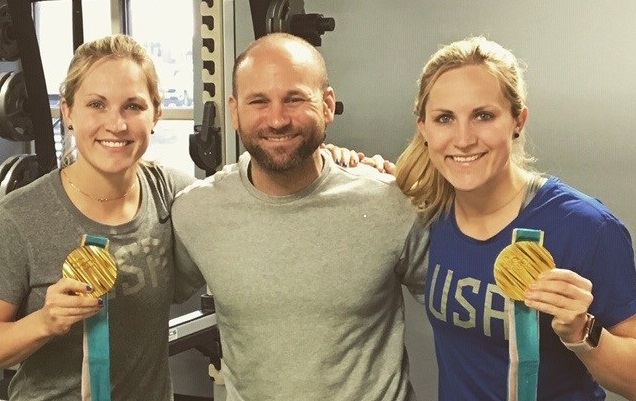
Trainer Anthony Morando came up with a postpartum exercise plan for his wife Monique Lamoureux-Morando, who along with identical twin sister Jocelyne Lamoureux-Davidson is a star on the U.S. Women’s National Hockey team. The women, who were pivotal in the team bringing Olympic gold home to the U.S. from PyeongChang in 2018, are also Know Your Value contributors.
The Morandos welcomed baby Mickey in December (Jocelyne gave birth to son Nelson the following month), and as Monique recovered and expressed interest in working out again, Anthony developed a plan for her.
He shared some of the exercises with Know Your Value. The good news is you don’t need to be an Olympic athlete to do these moves. Here are five exercises that can be done at home with minimal equipment, plus two moves that use your baby as the weight.
Band pull-apart
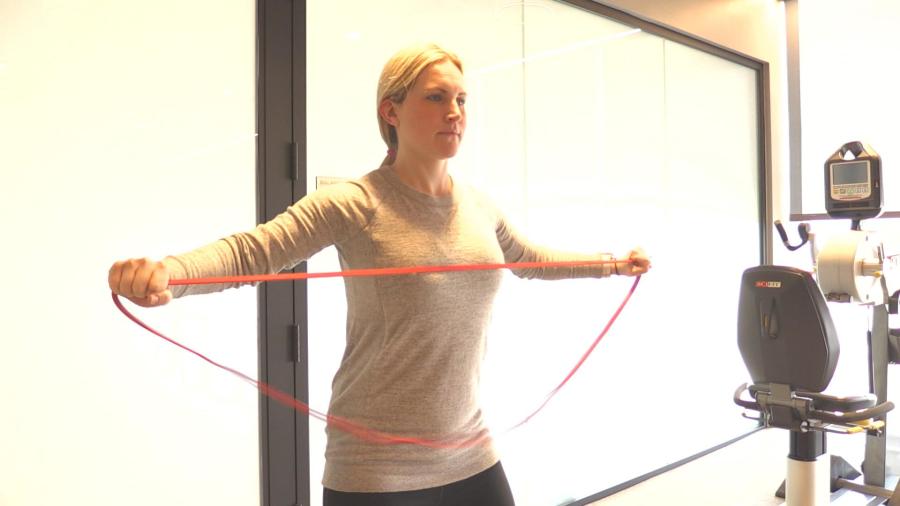
“This is an easy way for a woman who just had a baby to activate their upper torso area,” Morando said, with Lamoureux-Morando demonstrating the moves. First, bend your knees slightly – a key “base” position for any exercise to keep your joints safe and the pressure off your abs, Morando said. Next, hold out a resistance band with both arms straight out in front of you. Keep your arms as straight as possible; pull the band on each end until the band touches the highest point of your chest; and release back outward.
Complete three or four sets of eight to 12 repetitions. Band resistance is great for postpartum women, Morando said, because it involves “minimal torso movement – that’s when your core stability is going to come in. She’s also extending bilaterally in her shoulders and working her upper back.”
Mini band variations for lower body
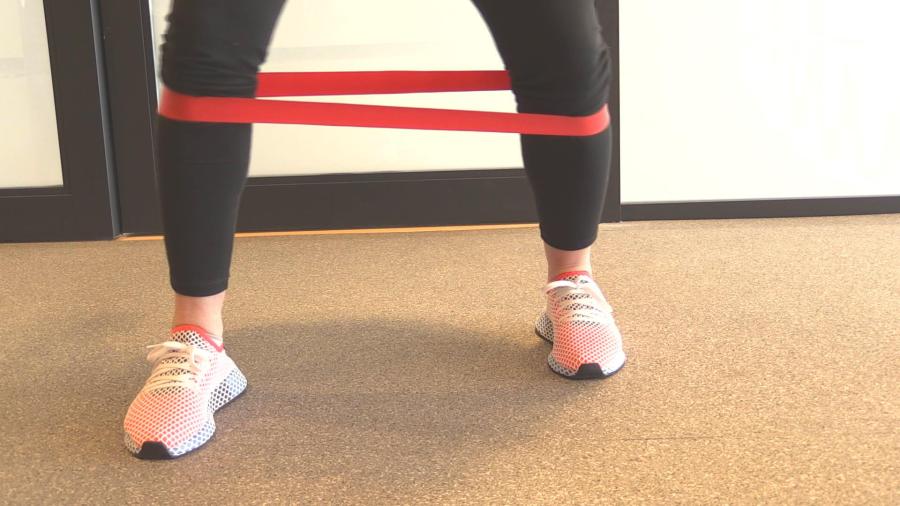
This time you’ll use a smaller, thicker band that can be used to move your legs in a linear direction, lateral direction or multi-direction. Place the band below your knees. As always, start by bending knees slightly. Place your feet about shoulder-width apart and start in the linear direction: Step one foot forward, then back, for about three to four sets of eight to 12 reps. You’ll repeat on the other side next. End the linear portion by alternating legs in the same sets. “Here we’re preparing her pelvis to create stability around the hip, back and ab region,” Morando said. Next you’ll repeat the whole series, but this time in the lateral direction: Step your right leg out further to the right, then back in. Once you complete those sets, switch to the left foot. Finally, alternate your legs in the same sets.
Morando’s final band variation is multi-directional: Step your leg simultaneously forward and to the side — think about a 45-degree angle from your starting point. As before, do your sets first with one leg, then the other and end by alternating legs.
Sumo squats
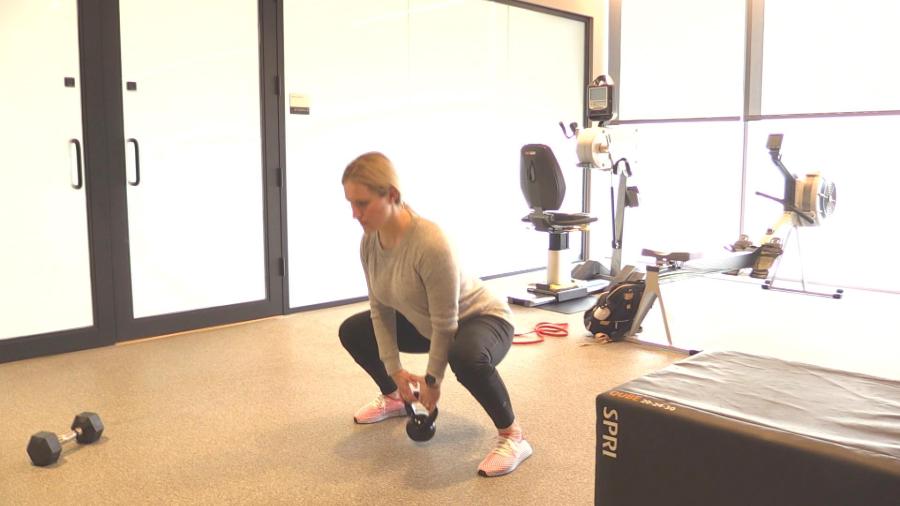
Morando performs this exercise every day, and he asks his clients to do so daily too. He likes this move for postpartum clients in particular because “the load is actually taken from the ground. I’m not going to load [a woman’s] spine after having a child because her pelvis is going to have a lot of instability … so we load her from the bottom.”
Place your legs a little wider than your shoulders, and line up a kettlebell with your heels. Bend your knees slightly, and squat down to reach the kettlebell. Check here to make sure the exercise feels OK with your back in particular, Morando said, and elevate your hips slightly if it doesn’t feel right. “The No. 1 goal with this exercise is to have a neutral spine,” he explained.
Once you’re in the right position, push through your feet and lift up the kettlebell while squeezing your glutes until you’re fully upright with slightly bent knees; squat back down to touch the kettlebell to the floor. Repeat for three to four sets of eight to 12 reps.
Variations: If squatting all the way to the floor isn’t possible or feels too challenging, use a high surface to limit the range of motion: Squat down only to a high box, chair, table, couch, workbench or anything else that gets you to a comfortable height. Alternatively, you can also put the kettlebell itself on a block on the floor so you’re still squatting somewhat deeply but not all the way down.
Dumbbell presses
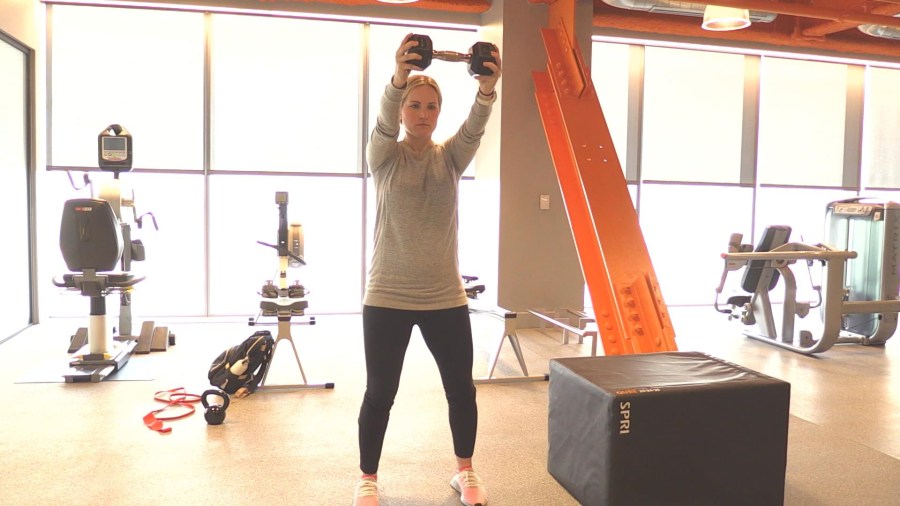
Morando employs two types of presses. The first is horizontal: Stand with slightly bent knees, and hold each end of the dumbbell in your hands. Press it up at a 45-degree angle — or vertically if the diagonal angle hurts your shoulder or otherwise doesn’t feel right — and bring your elbows back in. Again you’ll complete three to four sets of eight to 12 reps.
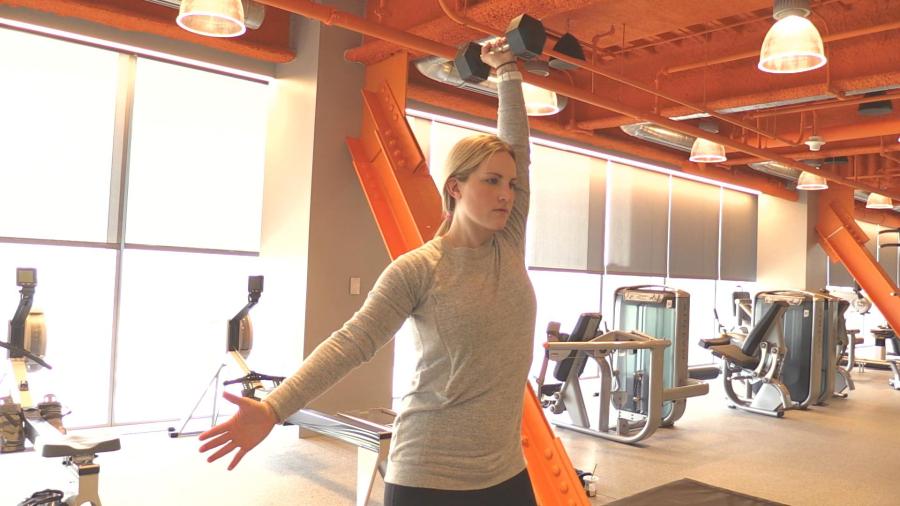
Variation: If you’re feeling strong, try a one-arm press. Here you’ll hold the middle of the dumbbell in one hand. Place your other hand out to the side at about a 45-degree angle. Push the dumbbell vertically above your head and pull back down. Alternate sets with the other arm.
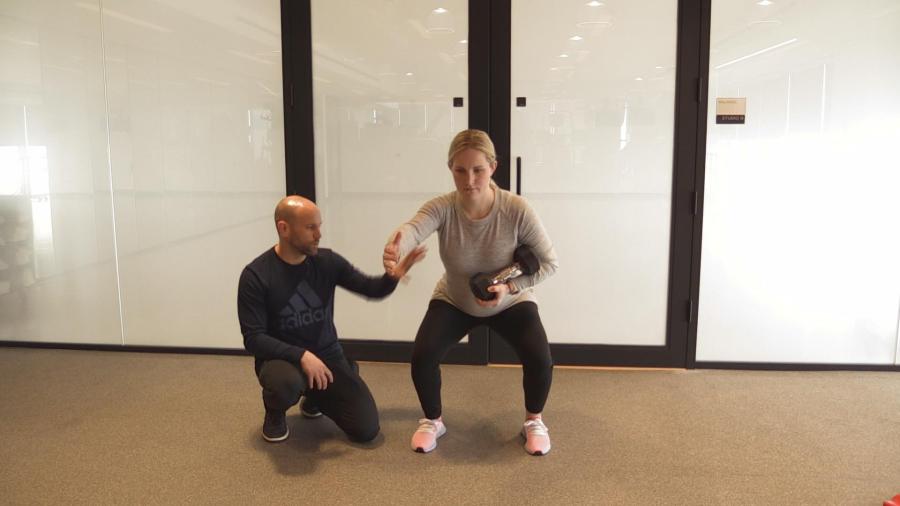
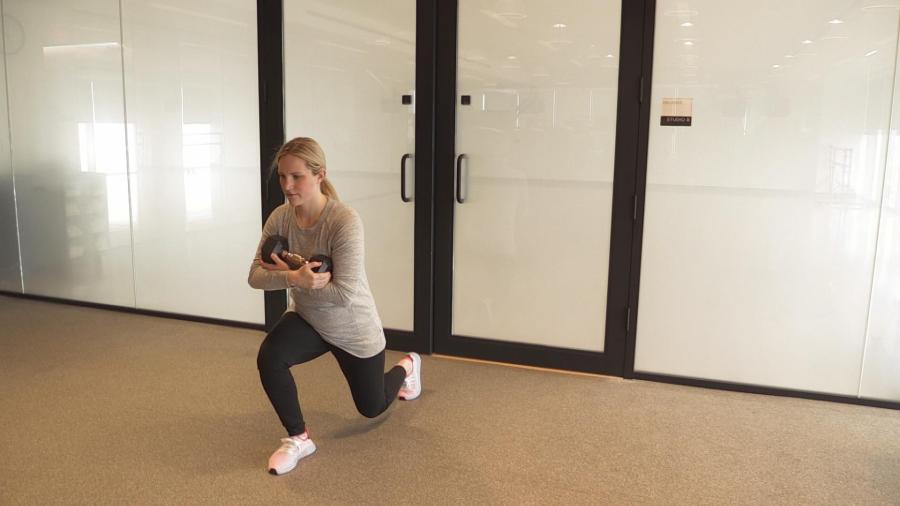
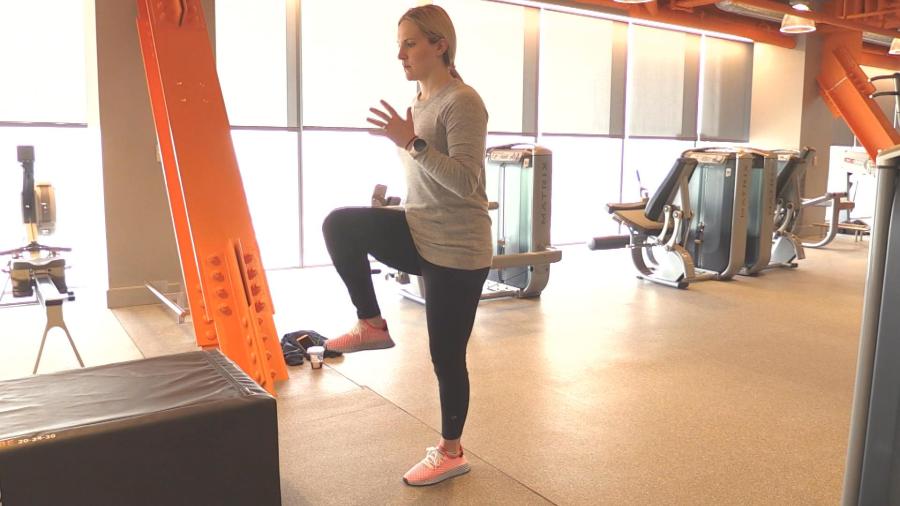
“We don’t get enough hip flexion in our bodies, so … this is very beneficial for the female clientele postpartum,” Morando said. Lift your leg so your foot is just above a high surface (again, this could be a box, chair, couch, etc.) and hold for 10 seconds. Your knee should be at about an even height or perhaps slightly higher than your hip. After the hold, rest your foot on the surface for another 10 seconds. If you feel comfortable, you can also do this exercise without the support of a high surface; simply lift your knee into the air and hold before resting on the floor. “Women lose stability in their pelvises postpartum … so our goal is to bring some kind of stability back, safely without impact,” Morando said. Bonus exercises with baby Who needs a dumbbell when you have 10 or 15 pounds of adorable baby to lift? (Lamoureux-Morando planned to demo the exercises with baby Mickey, but he decided to take a nap — so instead she used a dumbbell in this case.) Incorporating your child safely into your routine can be a great way to stay fit while still bonding with baby. “It also keeps your strength level … and cardiovascular fitness up,” Morando said. Bend knees slightly and hold baby in the crook of one arm. Squat down, holding out your empty arm straight in front of you, and rise back up. Repeat for three to five sets of eight to 12 reps. Don’t overexert yourself here, Morando said: “She’s not going all the way down, not going below 85 degrees.” After you complete your sets, switch baby to the other arm. 2. Reverse lunge Hold baby closely with both arms. Step one leg backward, and move the knee downward in a lunge. Don’t feel the need to drop that knee all the way down, Morando said. Again you’ll switch legs and repeat for three to five sets of eight to 12 reps. This exercise is all-encompassing: It helps strengthen each limb, improves cardiovascular demand and engages those unstable postpartum pelvic muscles.
Julianne Pepitone
Julianne is the senior technology writer for NBC News Digital, covering large consumer tech companies' (Apple, Google, Facebook, etc.) news and trends, as well as cybersecurity. She also writes and appears in original videos for NBCNews.com, and speaks as an expert guest on live shows across the NBC and MSNBC networks.
She previously worked at CNNMoney.com where she covered large techs from a business angle, as well as the intersection of the tech and media industries.
In addition to NBC and CNN online properties, Julianne has written for several national magazines and online publications including Esquire, Self, Popular Mechanics and Cosmopolitan. Recommended


Hip flexion
Off-set squat