








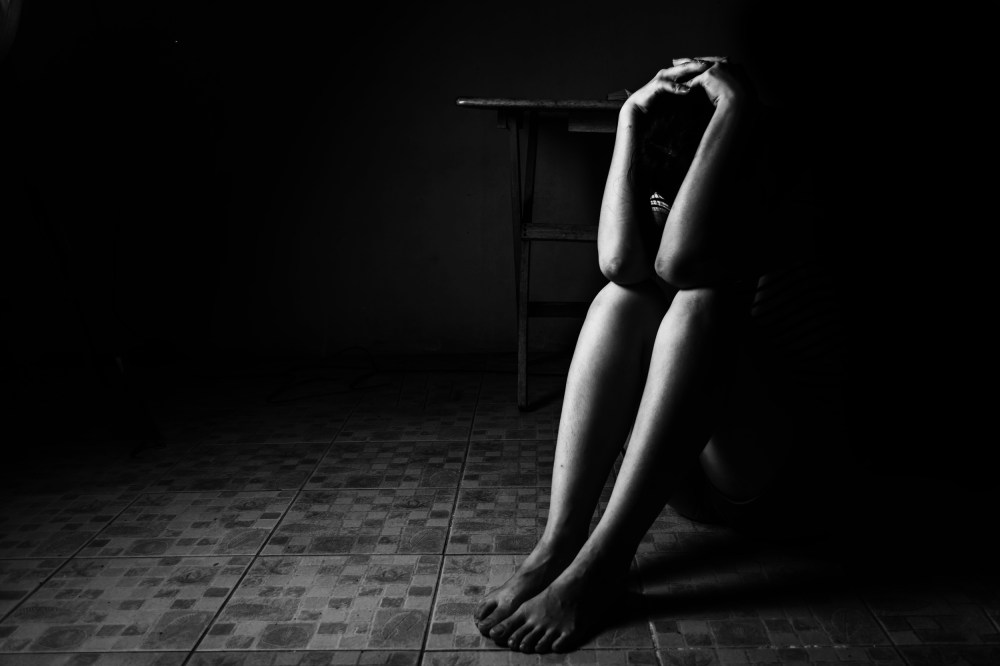
Soon after Abigail Echo-Hawk started her job as director of the Urban Indian Health Institute in 2016, she opened a drawer in her Seattle office and found something surprising: a 2010 survey of Native-American women in the city, asking if they had experienced sexual violence.
Echo-Hawk “sadly wasn’t shocked” by the results — of the 148 women surveyed, many of whom were low-income, 94 percent had been raped or coerced into sex at least once.
What did shock her was that the survey results had never been published. UIHI had partnered with the Centers for Disease Control and Prevention’s Division of Violence Prevention to administer the comprehensive poll, but it had apparently sat in a file folder for years before Echo-Hawk discovered it.
“I just knew this had to get out,” Echo-Hawk told Know Your Value.
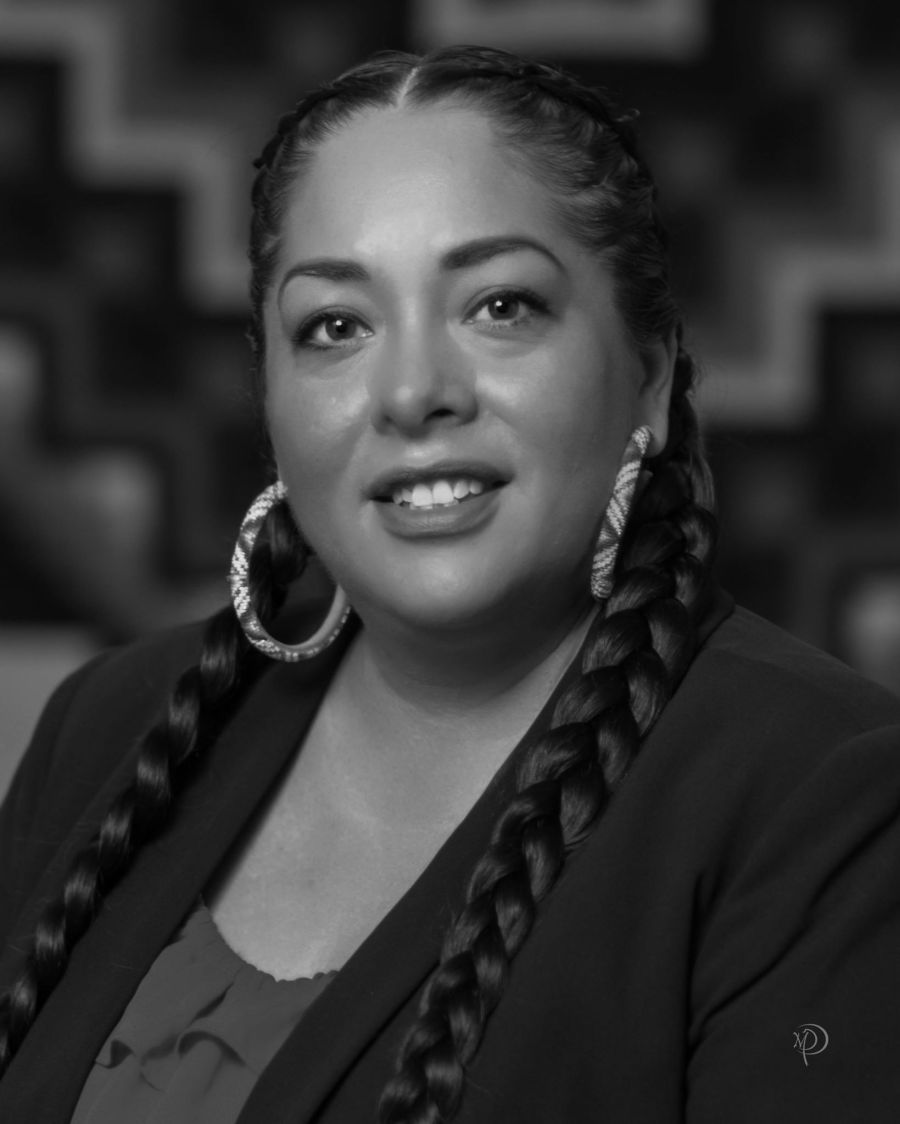
“At the time leadership felt [releasing the report] would create further stereotyping of Native women as victims,” she added. “I know that we have [to] respect the stories of these women and share them in a good way in order for change to come. Movements such as #MeToo have opened up this conversation nationwide and, I believe, created a more welcoming environment for stories like these.”
So earlier this year, the UIHI released the report, “Our Bodies, Our Stories,” and the findings garnered widespread media attention.
In the report, UIHI explained the 94 percent figure and other results “cannot be generalized to all urban Native women in Seattle nor generalized across all urban Native women throughout the United States because participants were predominantly low-income and homeless women.”
Our%20land%20was%20taken,%20our%20people%20were%20slaughtered%20and%20our%20languages%20were%20wiped%20out.%20The%20effects%20last%20for%20generations.%20These%20are%20huge,%20macro-level%20issues%20that%20are%20adversely%20affecting%20Native%20women%20on%20an%20individual%20level.
Despite those limitations, however, the results highlight the plight of Native women nationwide and the multifaceted challenges they face.
“One of the things I didn’t expect is that I’ve been inundated on every social media platform with stories from Native women who have been assaulted all over the country,” Echo-Hawk said. “It’s a lot to carry, but I carry it because I love them. I want to acknowledge their pain.”
The high rates of sexual violence found in the survey go hand-in-hand with other issues, including poverty and homelessness, all of which are the direct result of “historical trauma that is not unique to the Seattle Native population,” Echo-Hawk explained.
“Our land was taken, our people were slaughtered and our languages were wiped out,” she said. “The effects last for generations. These are huge, macro-level issues that are adversely affecting Native women on an individual level.”
Native%20people%20are%20invisible%20in%20part%20because%20we%E2%80%99re%202%20percent%20of%20the%20American%20population.%20When%20Native%20issues%20are%20taught,%20it%E2%80%99s%20all%2019th-century%20topics.%20I%20ask%20my%20students%20to%20name%20four%20prominent%20Native%20people%20from%20the%2020th%20century%20and%20most%20can%E2%80%99t%20do%20it.%20They%20don%E2%80%99t%20see%20us%20as%20people%20who%20suffer%20today.
The survey asked questions about historical trauma to both the victims of sexual assault and non-victims. Of the women who reported having been raped or coerced into sex at least once, 75 percent “sometimes, often, or always felt sadness, anger, anxiety, or shame over the historical losses of Native people;” and 56 percent thought “daily, weekly, and monthly about historical loss of land, language, culture, traditional spiritual ways, family ties from relocation or boarding schools.”
The results are “very consistent with all of the research in this area,” said Sarah Deer, a professor of women, gender and sexuality studies at the University of Kansas and author of “The Beginning and End of Rape: Confronting Sexual Violence in Native America.” In fact, she added, “we’re starting to suffer from data fatigue. The figures are all consistent, they’re all horrible and now we need to move to the next phase.
These historical and large-scale issues may seem intractable, but Echo-Hawk said Native people are well aware of the answer: “Until we are seen as humans, we will continue to be victimized.” she added, “Many people think of a Native American as Plains Indian with braids riding a horse. But I’m Native and I tend to go most places in a fancy pair of heels. If we’re seen as a stereotype rather than a human, people won’t care and things won’t change.” Deer agreed, noting that “Native people are invisible in part because we’re 2 percent of the American population. When Native issues are taught, it’s all 19th-century topics. I ask my students to name four prominent Native people from the 20th century and most can’t do it. They don’t see us as people who suffer today.” When Native issues are taught, it’s all 19th-century topics. I ask my students to name four prominent Native people from the 20th century and most can’t do it. They don’t see us as people who suffer today.” Still, both experts said they are heartened by some recent advancements. Echo-Hawk pointed to 2010’s federal Tribal Law and Order Act, which encourages the hiring of more law enforcement officers for Indian lands. It also increases tribes’ authority to prosecute and punish criminals. But Echo-Hawk would like to see every branch of government include a tribal voice, as well as more Natives working on the executive level in the private sector. And this year the first two Native-American women were elected to Congress, Deer noted. She said she is “eager to see what [Sharice Davis and Debra Haaland] do with their positions in lawmaking, though it’s hard to ask them to carry everything on their two sets of shoulders.” Deer also sees a resurgence in the academic world of Native women studying these issues. “Some exciting things are coming from women who are just starting their Ph.D.s,” she said. “I’m 46 and I’m curious to see what 25-year-old women have to say. Thinking through these issues is important, but the real work of change will be done by people on the ground, on the front lines.” That’s why Echo-Hawk wants to see more funding for city Urban Indian Health Programs that can provide culturally relevant services, as 71 percent of Native Americans live in cities. There are 41 such organizations nationwide, but Echo-Hawk said their funding is tight and additional programs are needed. But the existence of such programs, while they are helpful and needed, underscores that for Native women “it’s an expectation of sexual assault and violence” rather than one of safety, Echo-Hawk said. “I know that if I go back and do this survey again, I’m going to find the same thing,” she added. “We are talking about Native people homeless and assaulted on their own land. The injustice of that I can’t even conceptualize – and to change it, we need to have a holistic view of what got us here.”
Julianne Pepitone
Julianne is the senior technology writer for NBC News Digital, covering large consumer tech companies' (Apple, Google, Facebook, etc.) news and trends, as well as cybersecurity. She also writes and appears in original videos for NBCNews.com, and speaks as an expert guest on live shows across the NBC and MSNBC networks.
She previously worked at CNNMoney.com where she covered large techs from a business angle, as well as the intersection of the tech and media industries.
In addition to NBC and CNN online properties, Julianne has written for several national magazines and online publications including Esquire, Self, Popular Mechanics and Cosmopolitan. Recommended


