








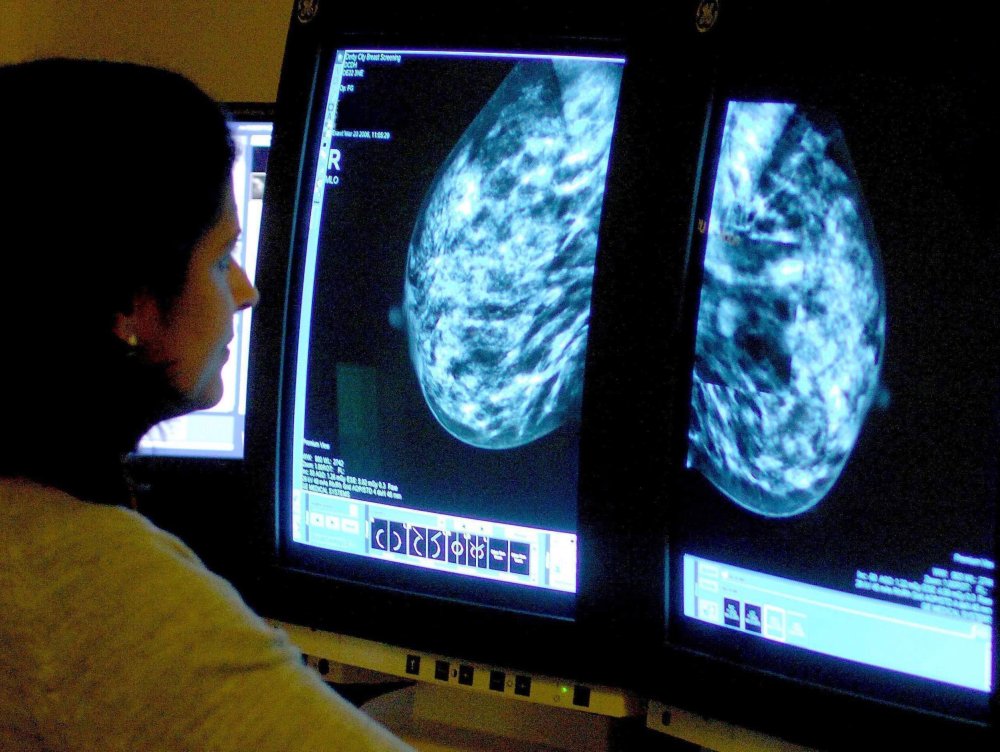
October is Breast Cancer Awareness Month, a time to spotlight the disease that one in eight American women will develop in their lifetime. Many women with breast cancer have no symptoms at all. That’s why early detection and regular screening is so important. Finding the cancer is crucial to effective treatment – and for an ultimate cure.
A combination of diagnostic tools is used for early detection – and is personalized depending on your own family and medical history. It’s using these tools together that provides a more complete picture of your current breast health, and makes it easier for doctors to spot a problem.
Imaging: Mammography
Your physician may suggest you get a mammogram, depending on your degree of risk, frequency of screening and age. Other types of imaging might be added, if an area of concern is spotted in the mammogram. If needed, a biopsy will be performed – which is the only way to know for sure if the suspicious area is cancer.
Breast Examination:
-Gynecologist/Primary Care Physician Exam: Make sure to schedule your yearly exam with your doctor. A careful examination of your breasts is an important part of this yearly checkup. You’ll have a solid documentation of any changes in your breasts over time.
-Self-Exam: Your own monthly examination of your breasts is important. You’ll learn to know what’s “normal” for your breasts – and will be able to note (and report to your doctor) anything that looks or feels different to you. It’s not always a lump – you might feel a “thickening” of an area, or see dimpling of the breast skin. Don’t hesitate to call your doctor with questions. Make your breast health a priority – not only during Breast Cancer Awareness Month, but all year long. For more, check out six surprisingly achievable ways to lower your risk of breast cancer. Madelyn Fernstrom, PhD is the NBC News Health Editor. Follow her on Twitter @drfernstrom. For more advice like this, sign up for the Know Your Value newsletter and follow Know Your Value on Facebook, Twitter and Instagram.
Madelyn Fernstrom, PhD
Madelyn Fernstrom, Ph.D., is the Diet and Nutrition editor for TODAY.
Fernstrom is a professor of psychiatry, epidemiology and surgery at the University of Pittsburgh Medical Center and a board certified nutrition specialist from the American College of Nutrition. She is the founding director of the UPMC Weight Management Center. Recommended


