








Late last week, Forbes published its list of America’s 100 Most Innovative Leaders. The rankings have faced fierce backlash since their release. The reason? The list lacked the very thing that initially inspired it: vision.
There are twice as many men named Stanley on the list than there are women in total…and there are only two “Stanleys” listed. That means that one, singular woman earned the title of one of America’s “most creative and successful minds,” that is according to a list curated by two college professors and a consultant – all three of which are male. Barbara Rentler, the CEO of Ross Stores, ranked number 75 among her otherwise totally male counterparts.
MJ Stephanie Ruhle Forbes List from Know Your Value on Vimeo.
Leaders both male and female took to Twitter to respond to the list, many harshly rebuking Forbes for publishing it. Valerie Jarrett, who served as a Senior Advisor to President Obama, wrote “Come on, @Forbes. If your methodology produced only one woman out of the 100 most innovative leaders, obviously you should have challenged it rather than publishing it.”
Katie Jacobs Stanton, Founding Partner of #ANGEL “fixed” the list for Forbes, tweeting a screenshot of the names of one hundred American innovators, comprised of only women. It took her all of five minutes.
When I first saw this list on Friday night, I refrained from firing off a tweet or making calls to “cancel” Forbes. I thought long and hard about the impact this list will have. If you turn on conservative broadcast media at night, or listen to our own president, who says “it’s a very scary time for young men in America,” you might think the picture looks very different. But here is the cold and hard truth: a progressive digital media platform, widely known for their “best of” listicles, decided to publish one of those lists even though it excluded more than 50 percent of our country’s population.
If you think there is a war on men, think again.
I also thought back to June – only three months ago – when I participated in the Forbes Women’s Summit. The annual event is literally described by the host organization as a meeting of “inspiring and innovative visionaries whose ambitious actions are changing the world at unprecedented scale.” Forbes prides itself on being a go-to business and leadership platform that advocates for the advancement of women and girls.

Their female-centric vertical, ForbesWomen, targets the very audience their list suggests doesn’t even exist: the female leader. ForbesWomen is a great platform. Moira Forbes, the publisher of the women’s platform, is a fantastic leader. But we haven’t heard from her. Instead, Randall Lane, an editor at Forbes, weighed in, offering an apology in which he outlined the methodology of the rankings. Each leader was evaluated on their media reputation for innovation, social connections, track record for value creation and investor expectations for value creation. These are important qualities to have in a leader. But what about empathy? What about one’s ability to inspire their workforce? Lane even admitted “women never had much of a chance” due to the methodology. Maybe Forbes can be more innovative in how they determine our country’s best innovators next time.
The editor also insisted the controversy around the list brought a different, much larger issue to light. “Women, as we all know, are poorly represented at the top of the largest corporations and fare even worse among growing public tech companies…we should have similarly used this moment to delve into the larger problem of women ascending to CEO.” Mr. Lane is not wrong – women are not as well represented in the C-Suite as they should be.
But this is not a new issue. It is one that is covered extensively on ForbesWomen.
Perhaps this list will inspire us to discuss these issues elsewhere – not just exclusively in the company of other females.
During my days in investment banking, I learned a term I’ll never forget: “pink ghetto.” Every year, we’d gather for so-and-so’s women’s conference. Or a “Women in Finance” networking event. I’d attend – or even participate in – one fireside chat after the other about recruiting more women for jobs in banking, or encouraging young girls to pursue STEM majors in college. I’d watch CEOs, who invested hundreds of thousands of dollars to host these conferences, deliver a powerful keynote about diversity in the workplace…only to sneak out the side door once their portion was complete. Don’t get me wrong: these events were great opportunities to meet women like me, who were often the only female in the room at work and on the trading floor. But that was the problem: these conversations were limited to the comfort of our female communities. They were not dialogues. They were echos that never transcended the walls of the pink ghetto. As we learned from Forbes’ latest list of American innovators, CEOs in our country are largely male. Despite women making up the majority of all bachelor’s degrees awarded in 2016, only 33 of Fortune 500 companies are led by women as of May 2019. While we’ve made great strides in recent years, these data points clearly show that men are still the ones holding powerful positions. They’re the ones making the critical decisions driving the most renowned companies that are fueling our economy. They need to be part of the conversation. “Canceling” Forbes for publishing this list – as shortsighted as it may have been – will accomplish nothing. We need to broaden the audience weighing in on these issues. This is not an opportunity to punish someone or shut them out. It is an opportunity for us to talk to one another about how we can get better and smarter and to learn from one another. Our culture’s progress depends on it. Progress is uncomfortable, but if we stop moving, we all lose. It’s this very idea that inspired my team to create a platform to foster those conversations that move us forward. On my new podcast Modern Ruhles: Compelling Conversations in Culturally Complicated Times, I consult with cultural tour guides—comedians, CEOs, Pulitzer Prize-winning journalists—to weigh in on subjects like privilege, social media, feminism and more. With some genuine reflection and a willingness to listen to the other side, we will have good faith conversations with the goal of coming out the other side a little bit smarter. It’s available today, 9/10, wherever you get your podcasts.
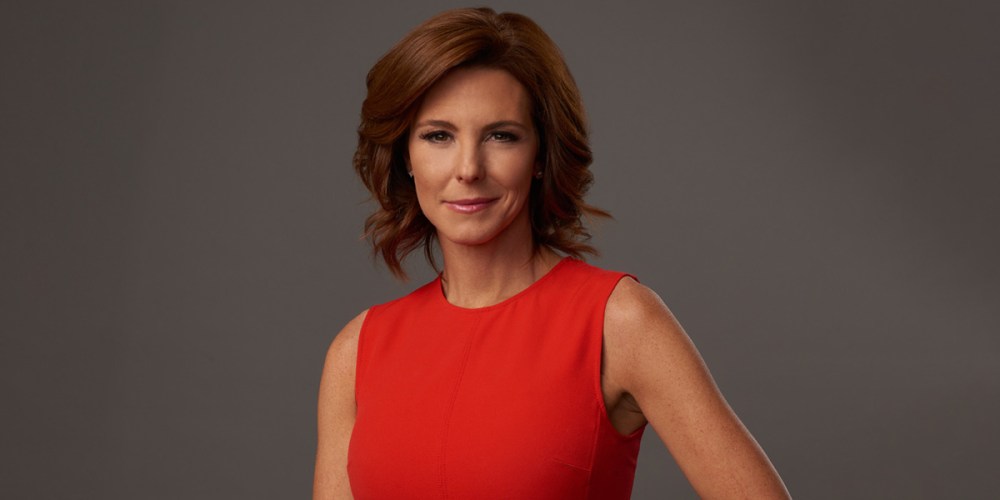
Stephanie Ruhle
Stephanie Ruhle is host of “The 11th Hour” at 11 p.m. ET on MSNBC and senior business analyst for NBC News.
Julie Brown Recommended


