








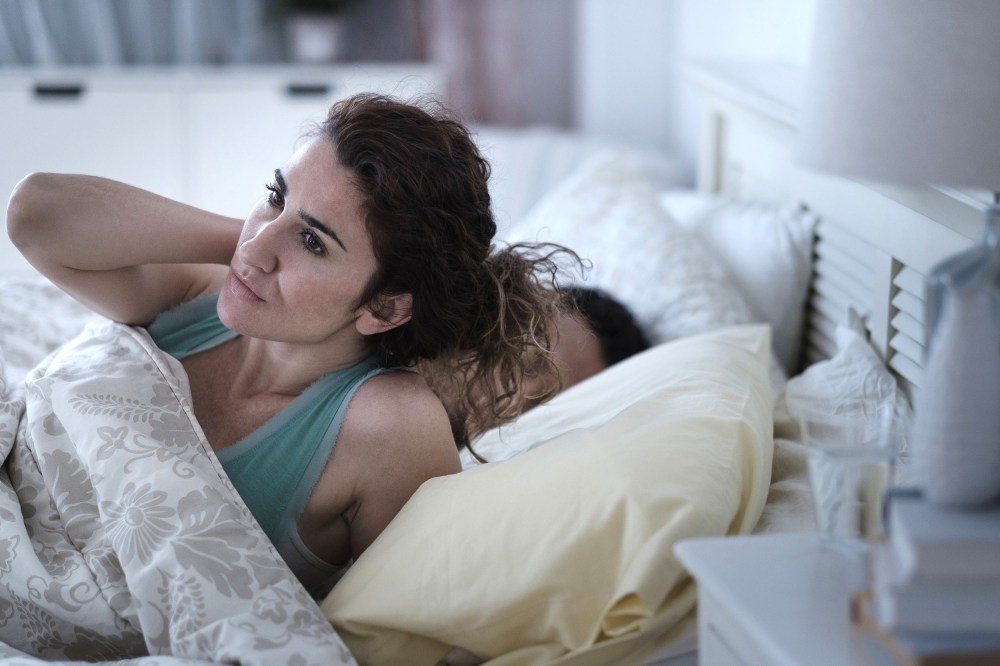
How’d you sleep last night?
If you answer poorly, you’re not alone. One in three American adults don’t get enough sleep. And to top that, years of research from the National Sleep Foundation show it’s even worse for women — particularly during the workweek. Some 63 percent of women compared to 54 percent of men find themselves staring at the ceiling or tossing and turning. Yes, the sleep gap is real.
And it’s taking a toll on our economy: about $411 billion is lost from our GDP annually due to bad sleep habits. More importantly for you, if you’re one of those women who are counting sheep, it often results in drowsiness during the daytime. It’s bad for your work performance and could hurt your trajectory up the corporate ladder.
“The effects of sleep deprivation are pretty complex,” said Scott Huettel, chair of the department of psychology and neuroscience at Duke University. “In some more recent studies, we’ve shown that sleep deprivation actually makes you less willing to exert effort to reach your goals.”
That effect can be especially troubling for a goal-oriented woman. Losing sleep can mean losing out on advancement at work, which can make you more stressed about money — and stress about money makes 65 percent of Americans lose sleep. It’s a dangerous cycle that can take a toll on your health, your work and your wallet.
Unfortunately, it doesn’t get any easier once you leave the office. Women are still disproportionately doing most of the organizing of housework and childcare along with working on their careers — all on less sleep than men.
“We have to think about sleep, work, and family altogether,” said Leah Ruppanner, senior lecturer at the University of Melbourne. “Women are experiencing this double whammy, this cyclical disadvantage of work stress, plus family stress, plus interrupted sleep, plus this interruption of family life into work life in a way that doesn’t happen for men,” she added. “That’s going to deplete women’s energy in a way that’s disproportionate to men.”
So how do you break these cycles?
Hack your sleep
There are a few tricks you can play with yourself — habits you can try to adhere to — that make it easier to get a little more shut-eye. For one, avoid coffee breaks at work. Hit the water cooler instead. Caffeine after 12 p.m. does affect sleep adversely.
Next, consider melatonin, a natural supplement that combats insomnia. Finally, adjust the temperature in your room. Research has shown that the optimal temperature for sleeping is between 60-68 degrees.
Although there are some stresses you can deep breathe away, money stresses aren’t among them. It’s important that you come up with a methodology to fight back. So, if you’re dealing with debt, develop a plan for how to repay it. You’ll sleep better knowing how and when you can be debt-free. And, if you’re fighting about money with your spouse? That’s doubly stressful. A way to combat this is for each person to have some financial autonomy. Talk about earmarking a bit of money each month that you and your spouse can use however you want. Leave your work at your desk. Taking work into bed is definitely not the best way to relax. Every woman’s job is different, but even if yours is especially demanding, designate one day of the week that you can forget about work when you go home. And then there’s that housework. If you have kids, sit down with your partner and create an agreement or schedule that determines nightly responsibilities for each family member. “We need to start thinking about sleep much in the way that we’re thinking about housework and childcare,” said Ruppanner. “We need to think about sleep as another site of gender inequality and another dimension on which, unfortunately, couples are going to have to negotiate around who gets the right to sleep.” Amelia Henry contributed reporting to this article. For more advice like this, sign up for the Know Your Value newsletter and follow Know Your Value on Facebook, Twitter and Instagram.
Jean Chatzky Recommended


Reduce your money stress
Set some boundaries to protect your sleep
