









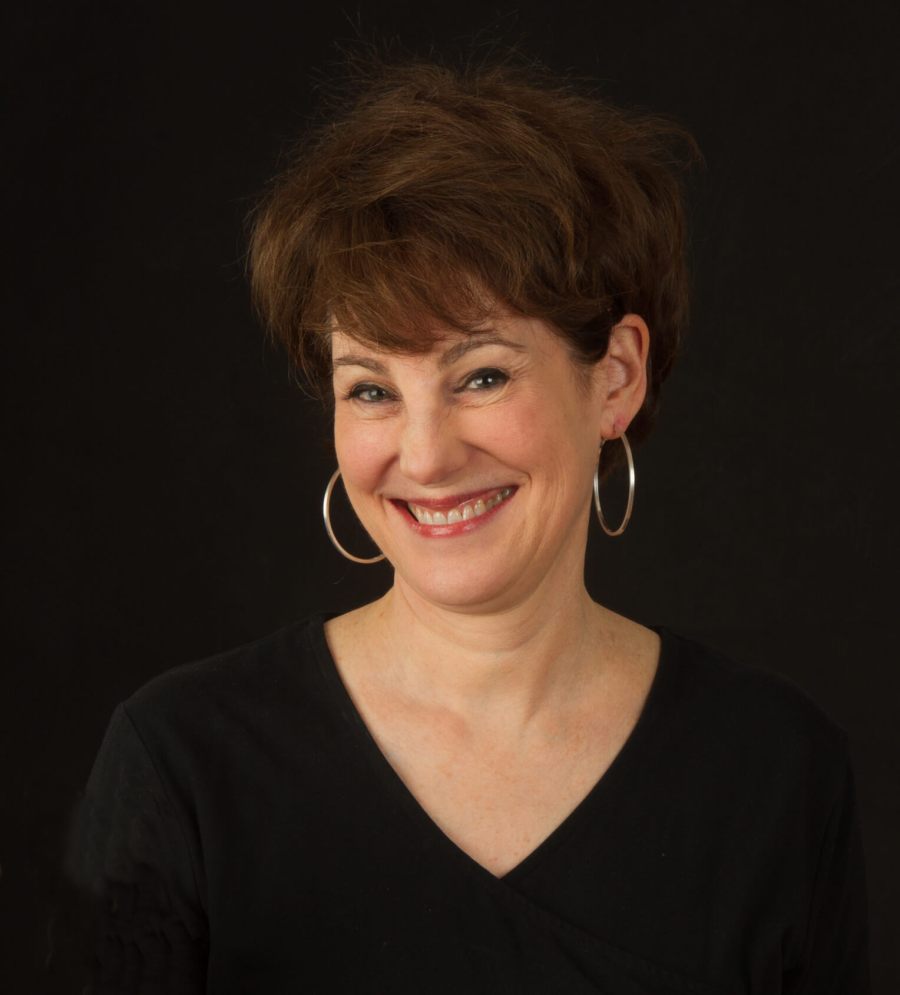
After many years as a speechwriter, speech coach, and judge for speechwriting contests, Dana Rubin was tired of hearing people always quoting historic men, including Winston Churchill, Abraham Lincoln, Frederick Douglass, Mohandas Gandhi, Martin Luther King, John F. Kennedy and more.
“Over and over I would hear the names of these lionized men,” Rubin told Know Your Value. “I began to wonder: Was it really true that the greatest speakers in history were men? Why do we almost never hear about women speakers?”
That led Rubin on a quest. She began buying speech anthologies in effort to find out what the historical consensus is about the greatest speeches in history.
“I became truly obsessed. I bought more and more speech anthologies, and when I had 230 of them I put them on an infographic. At a glance you can see that over the past two centuries, the field of public speaking has overwhelmingly been defined as a male pursuit. It’s something that ‘great men’ in history have done — and certainly not ‘great women.’”
Next, Rubin decided to do some research to find out whether it was actually true that women have mostly been silent in history. Or, if they did publicly speak, if their speeches were any good.
Rubin found out that women have been speaking in public throughout history — making speeches, advancing causes, introducing reforms, giving funeral orations, leading prayer services, presenting testimony, and more. She created an online archive, the Speaking While Female Speech Bank, which now has thousands of speeches by women from around the world.
As the second part of the project, Rubin has published a book that coincides with Women’s History Month called “Speaking While Female: 75 Extraordinary Speeches by American Women.”
Know Your Value recently chatted with Rubin about her new book. Below is the conversation:
Know Your Value: In the book, you ask, “Why don’t we read or hear about speeches given by women throughout U.S. history? Why do we assume all the greatest speeches were by men?” What do you think the answer is?
Rubin: I have been grappling with this question for years. Finally, I’ve concluded there are several factors. One is that throughout much of history, the men in positions of power recognized that public speaking was a powerful tool for leadership, for persuasion and influence, and they didn’t want women doing it. They wanted to reserve that function and power for themselves. They wanted women to keep to their own sphere.

Even with the temperance movement, which got underway in the 1820s, the clergy and laymen leaders initially leading the cause didn’t want women involved as leaders and speakers. Later in the century, of course, temperance and prohibition became primarily a women’s movement, and women became impassioned and persuasive speakers, organizers, and lobbyists, because women were the ones who experienced first-hand the devastating effects of alcohol on family life. The same was true with the famous anti-slavery convention in London in 1840 — even the six women who had been accepted as “delegates” (like Lucretia Mott) were forced to sit at the sidelines and not allowed to speak. The men did not want women to lead.
But in addition, I’ve come to realize something more. It’s that the so-called leaders of society, the men with institutional power, didn’t believe that women had much to contribute. They saw women as subordinate and inferior. Women’s place was in the home. Men were basically not interested in what women had to say.
As why we commonly assume, even today that all the greatest speeches were given by men, I believe it’s a historical gap that got replicated and reinforced over time.
Consider this: if a woman spoke at an event but no journalist was assigned to cover it, and no stenographer was on hand to take notes, then that woman’s words would not be recorded, and they would not appear in the newspaper the next day. Without that, her speech would not be reprinted as a pamphlet, or included in anthologies. She would not be quoted. As the years went by, the absence of women’s voices solidified as reality. With each new anthology came a reentrenchment of the idea that it wasn’t worth looking around for women’s speeches, because they didn’t’ exist.

Because we had never read women’s speeches, they didn’t exist.
Know Your Value: What are your favorite three speeches that are highlighted in this book and why?
Rubin: It’s impossible to name my favorite speeches. I love them all, for different reasons. Each one, in its place and time, served an important historic purpose.
I will, though, call attention to a few that stand out as publishing milestones:
— The wonderful 1893 speech “Public Defender Rights of Persons Accused of Crime” — in which Clara Shortridge Foltz lays out the rationale for a government-funded public defender system, has not been published since 1893. — The same is true for the 1884 testimony before Congress by Sarah Winnemucca in which she calls on legislators to take action to help her people. A copy of the testimony is in the Rare Manuscript Collection at Cornell University, but until now, her words have not been available to read. — The same is for Katharine Hepburn’s anti-McCarthy speech at Gilmore Stadium in LA in 1947. I created the transcript from audio files, but until now it has never been published. — To my knowledge, none of the speeches or talks by autism expert Temple Grandin have ever been transcribed or published. These are all speeches that simply have not been available to read until now. Several others in the collection have not been published in decades. Know Your Value: Why do these speeches matter, particularly in 2023? What impact can they make on future generations of female leaders? Rubin: These speeches matter for the same reason we need role models. Why does representation matter? It matters because it’s so important for girls and women to see what is possible. “You can’t be what you can’t see,” goes the saying. And it’s true. Many women today struggle with claiming their expertise, sharing their knowledge, and speaking up in meetings and other public events. And it’s not a level playing field — because when women do speak up, they so often get criticized more harshly and unfairly than do their male counterparts. Unfortunately, it is still far more challenging for women to speak in public, for a host of reasons. But when we learn that, despite the many challenges, women have indeed been speaking in public — and for a very long time, centuries — and making a difference with their public voices, it’s hugely inspiring and motivating. It’s a source of pride. Note also that my project is not just about excavating and rescuing women’s speeches from the dustbins of history. It’s also about promoting a plurality of voices in the public square, so that we benefit from the best ideas, creativity, and intellectual firepower. We need women’s voices in the mix. We can’t afford to leave anyone out of the conversation. Know Your Value: You’re also a speechwriter and speaking coach! What are your top tips for women who are about to give a big speech and presentation. How do they best harness their power and capture an audience? Rubin: My No. 1 top tip, always is “be prepared.” It’s always easiest to instill confidence and project a sense of mastery to your listeners when you know your material cold. Speak about what you know about, and make sure you know it really well.Recommended


