








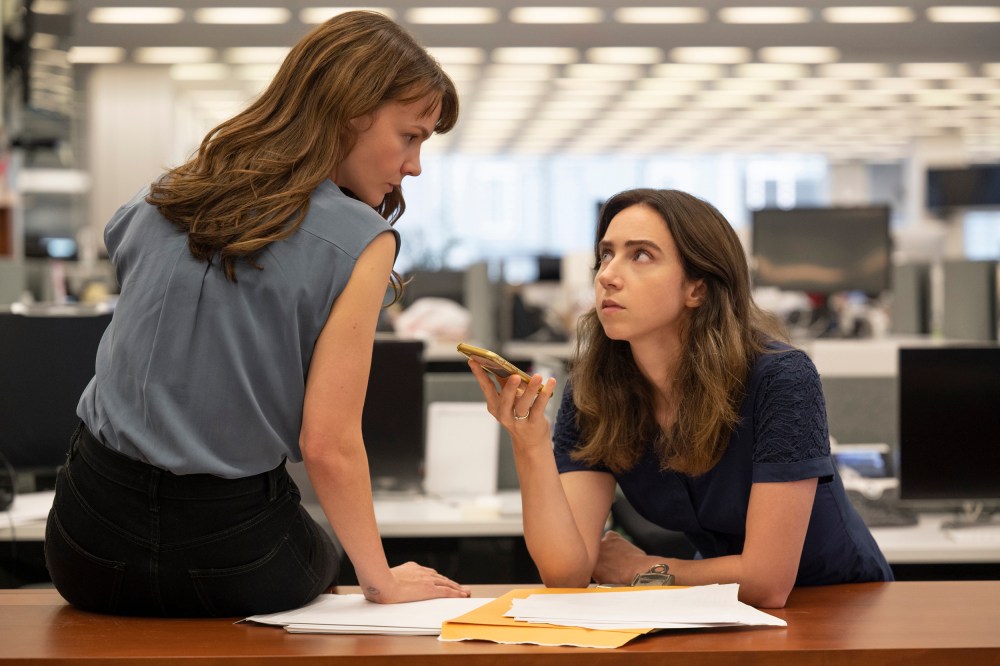
In 2017, the world came to know New York Times journalists Jodi Kantor and Megan Twohey when they published an explosive expose investigating sexual assault and misconduct allegations against prominent Hollywood producer Harvey Weinstein.

The women they interviewed who came forward with allegations inspired a reckoning over sexual assault – not just in entertainment but across workplaces and industries – reigniting the #MeToo movement that began a decade earlier.
Since that initial report, Weinstein – who has been convicted of rape and sentenced to 23 years in prison in New York – has been granted an appeal in the case. The disgraced movie mogul is currently on trial in Los Angeles where he has pleaded not guilty to separate sexual assault charges, including one lodged by former actor Jennifer Siebel Newsom, the wife of California Gov. Gavin Newsom. Weinstein has maintained he is innocent of the accusations.
As that trial unfolds, Kantor and Twohey’s investigation has emerged from the page to big screen in the feature film, “She Said,” starring Carey Mulligan and Zoe Kazan as Twohey and Kantor, respectively. Debuting on Friday, the movie – produced by Universal Pictures under parent company NBCUniversal – is directed by German filmmaker Maria Schrader and written by Rebecca Lenkiewicz.
The award-winning director recently spoke to Know Your Value contributor Joelle Garguilo about being a part of the film, which focuses on the personal lives of the Pulitzer Prize-winning journalists as well as the women who came forward, and what she hopes for the future of the #MeToo movement.
“I think back to what we all witnessed after the article was first published … what happened in the weeks and months after, and I think it’s an incredible testimony on how journalistic work can change the world,” she told Garguilo. “The reality of this project is that every character is a real person – Jodi and Megan – but also their witnesses … You truly want to get it right and treated with care.”

Based off Kantor and Twohey’s 2019 book of the same name, the drama approaches the investigation from the perspective of the reporters, both of whom grappled with the complexities and risks of the story while juggling motherhood. In Twohey’s case, the film shows her struggle with post-partum depression and for Kantor, her search to find a healthy work-life balance with two young children.
“We really tried to portray these incredible, professional and fierce journalists as normal women who ride the subway every day, who struggle with the time dividing between the work and the kids, but also their fears and doubts that they might not get this story out and their sadness also about what they find out,” she said.
For Schrader the movie centers around the power of working mothers. “[It shows] you do not have to be a superhero, you do not have to have superpowers to make a change,” she said. “That was something very important to us, not to portray these [women as] bigger-than-life movie heroes, even though I consider their passion, consistency and perseverance as much as the courage of the women who shared their stories with them as heroism.” To that end, Weinstein’s character hardly appears in the film. “[He] became this almost representative figure of the powerful man abusing his position,” Schrader explained. “It’s definitely not a movie about Harvey Weinstein, but about the women … [because] you don’t have to be that powerful to abuse your position.” Instead, Schrader asked some of the women who came forward to play themselves, including Ashley Judd. “She said it was an easy decision, and it felt validating,” the director recalled when she first spoke to the actress. “I said, ‘Look, you’re Ashley Judd, here’s your stage, you decide how you portray yourself and how to tell your own story.’” Five years later, Schrader said she hopes the film inspires others to carry on the movement toward ending the systemic barriers that silenced survivors of Weinstein’s abuse for decades. “Even though we touch dark subjects, you see people taking courage, connecting, sharing, talking and finding trust – sisterhood – and finding out they are not the only ones, they are not isolated,” she told Garguilo. “I think there is an awareness now, [our] voices cannot be wiped off the table or ignored.”
Bianca Brosh Recommended


