









This year may not be remembered as a paramount one for gender equity, but 2022 will go down in history as a testament to the grit, resilience and conviction of women everywhere who stood up to injustice – no matter what the cost – and demanded their fundamental freedoms.
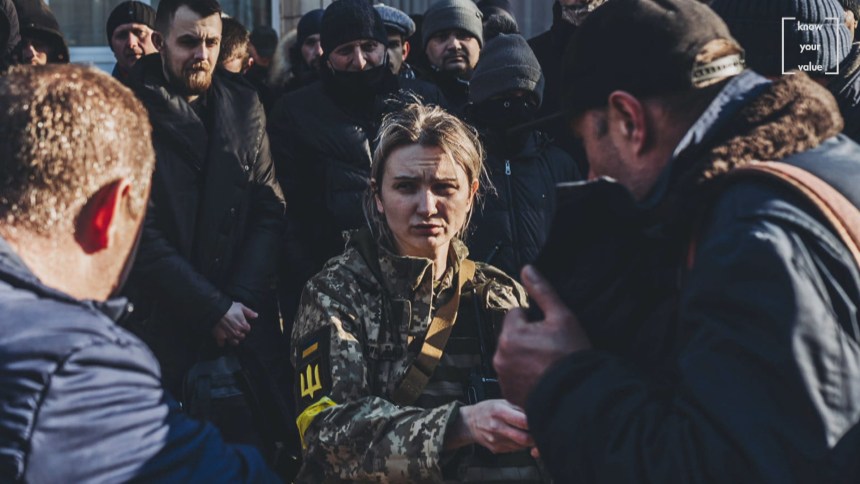
From the ballot box at home, to the streets of Iran, to the battlefields in Ukraine, women raised their voices and challenged oppression – many making the ultimate sacrifice.
This week “Morning Joe” co-host and Know Your Value founder Mika Brzezinski sat down with All In Together CEO Lauren Leader, the 19th’s Errin Haines and MSNBC host Yasmin Vossoughian to look at some of the key moments that defined the fight for gender equity, democracy and freedom in 2022.
When Roe fell, women raised their voices
In June, when the U.S. Supreme Court reversed Roe v. Wade – eliminating the constitutional right to abortion – 33 million people of reproductive age immediately lost an essential liberty. Since then, more than 60 clinics across 15 states have been forced to stop offering the procedure. Now about half of state legislatures have moved to impose new restrictions on abortion access, including most recently in Georgia, where the state Supreme Court reinstated it’s six-week ban on abortion.
In the months leading up to the midterm elections, the reversal of Roe galvanized women of all political stripes to the polls, where abortion proved to be one of the prevailing issues driving voter turnout.
“I think the lesson of the 2022 midterms is don’t underestimate the motivating power of women’s anger,” Leader told Brzezinski. “Lots of pundits were saying that other issues were going to be more important than abortion, but women said this mattered and it was part of what motivated them to register to vote, especially younger women who came out in new record numbers.”
In August, Kansas voters struck down a measure that would have removed reproductive rights protections from the state constitution. During the midterms, voters upheld reproductive rights in five separate state ballot measures in the states of Kentucky, Montana, California, Vermont and Michigan.
According to NBC News exit polls, abortion ranked just below inflation in terms of voter importance nationally. In fact, voters around the country rallied behind candidates pledging to protect abortion access, where at least seven pro-choice Democrats held on to or won their governorships.
New York Gov. Kathy Hochul – who made history as the first women elected governor – beat back a stiff challenge from anti-abortion candidate Lee Zeldin.
Democratic Attorney General Josh Shapiro beat Republican State Sen. Doug Mastriano in Pennsylvania, while Wisc. Gov. Tony Evers won his re-election bid as his administration challenges a pre-Roe ban on the procedure.
Kansas Gov. Laura Kelly has maintained a consistent veto against abortion restrictions and Michigan Gov. Gretchen Whitmer won her reelection bid, campaigning explicitly on protecting abortion rights.
“For people who were predicting a red wave, they were not predicting that abortion was going to remain front and center,” Haines told Brzezinski. “For a lot of voters … abortion is also an economic issue, we know a lot of people who need access to abortion care are mothers.”
The action around reproductive rights may have helped pave the way for a milestone election year: a record 12 women will now go on to serve as governors in 2023, up from nine in 2004, according to the Center for American Women in Politics.
Ketjani Brown Jackson makes Supreme Court history
Over the summer, Judge Ketanji Brown Jackson became the first Black woman to be elevated to the Supreme Court when the Democratic-controlled Senate confirmed President Joe Biden’s pick in April.
She replaced retiring liberal Justice Stephen Breyer, which preserves the 6-3 conservative balance. As the first former federal public defender on the Court, the liberal justices are now all female and multiracial.
Justice Brown takes her place on the nation’s highest court at time when public confidence in the judiciary has plunged since the fall of Roe. Only 25 percent of Americans have confidence in Supreme Court, down from 36% in 2021, according to a Gallup Poll.
But at 52, she could hold the position for decades and influence in the court’s decision making.
House speaker Nancy Pelosi’s legacy
In November, U.S. House Speaker Nancy Pelosi announced she would be stepping down as the leader of the House Democrats, after serving in that role for the last two decades.
Pelosi’s departure marks the end of an era, but her leadership as the first female speaker of the House represents one of the greatest political and legislative success stories in American history.
“Ultimately [President] Joe Biden’s legacy is going to be Nancy Pelosi’s legacy, as much as he accomplished, he did it because of her,” Leader said. “Her legislative record is unbelievable; Nancy Pelosi goes down as one of the most important political figures of the last 100 years.”
Pelosi was a central player in passing the most significant laws in recent history, from President Barack Obama’s signature health insurance measure and President Joe Biden’s climate change initiative to President George W. Bush’s Wall Street bailout and President Donald Trump’s Covid-19 rescue programs.
When she was first elected to Congress in 1987, only 12 women Democrats served in the House alongside her. Today there are 91.
And despite passing the gavel, she’s not done. Pelosi, who was easily re-elected in her California district, explained that she will remain in Congress as a Democratic member representing San Francisco.
For the last four months, mass demonstrations – led by women – have swept across the streets of Iran protesting the death of 22-year-old Mahsa Amini, who died after being taken into custody by morality police for allegedly breaking the country’s strict dress-code laws. According to police, Amini had a heart attack and fell into a coma while in custody, and she was declared dead on Sept. 16. Authorities denied mistreating the Amini, citing an investigation into her death is ongoing. Her father however told the BBC that she was not in bad health. Since then, the demonstrations have spurred what many call an outright revolution, and perhaps the strongest challenge to the regime since it came to power in 1979. Protestors have cut their hair, burned headscarves in bonfires, and vocalize their outrage at the brutality of the Islamic regime with the rallying cry: ‘Woman, Life, Freedom!’ “As I have been told by the Iranian diaspora here, this is the first female-led revolution ever,” Vossoughian told Brzezinski. “These are millions of women every single day, month in now putting their lives on the live because they recognize it is time to have equal rights.” Iran’s security and paramilitary forces have responded with violent crackdowns, formally executing at least two prisoners convicted amid protests. According to the nonprofit Human Rights Activists in Iran, nearly 500 people have been killed since demonstrations began. As the world reacts to the uprising, Iran was recently expelled from the U.N. Commission on the Status of Women over Tehran’s “systematic oppression” of women and violent crackdown on street protests. “When people ask whether this can really topple the government of Iran – whatever the end goal is – that country is never going back to what it was even three months ago,” Vossoughian said. “The diaspora here and across the world – they are helping push what these protestors want on the ground, supporting them, keeping their voices alive.” To that end, the women leading protests in Iran have been named as Time’s Heroes of the Year. Amini herself was also recognized among Forbes’ “100 Most Powerful Women” posthumously. Since Russian forces invaded Ukraine in February, more than 6,000 civilians have been killed, nearly 8 million fled the country and 6.5 million have been internally displaced, according to the UNHCR. For those who stayed in place, an estimated 57,000 women have served in the Ukrainian armed forces, including on the front lines as first responders and in combat specialties, including as armored vehicle gunners, infantry commanders and snipers. “Democracy relies on women,” Leader added. “Just the ways in which women hold the keys to democracy in their societies.” The number of women in the Ukrainian military expanded when Russia annexed Crimea in 2014 and again when women were granted the right to fight in combat in 2016. But following legislation passed in 2018 that ensured equal treatment of women in the military, they now make up 25 percent of the Ukrainian armed forces. By comparison, just 17 percent of U.S. armed forces are women. But they also bear the brunt of this crisis on two fronts: as refugees and as soldiers. Most men have been prohibited from leaving the country, and Ukraine’s population is 54 percent female. Delegations of women soldiers have emerged as the diplomatic face of the war as well, sharing their stories and perspectives on what it’s like to be fighting on the frontlines against Russia. Women-led groups have met with world leaders and have lobbied U.S. lawmakers for support and weapons. When asked what it’s like being a woman on the frontlines, Daria Zubenko, a senior sergeant in the Ukrainian military who travelled with one such delegation to the U.S. in Sept., told “Morning Joe”: “We fight for freedom. We fight for democracy. We fight for [our] values that Americans share.”
Bianca Brosh Recommended


A women-led revolution in Iran
Ukrainian women in the battle for their country

