








America will commemorate the 57th anniversary of the historical March on Washington on Friday. And while this year’s observance will feel different, amid COVID-19 and without the presence of the late civil rights icon Rep. John Lewis, the lessons learned from 1963 ring truer than ever before.
This past year has been marked by renewed calls for racial and social justice. Lewis’ death on July 17th came just seven weeks after news of the killing of George Floyd which reverberated around the world, alongside demands for justice for Ahmaud Arbery and Breonna Taylor.
Many took to the streets in protest. Others are advocating for change within their workplaces. Some feel uncertain about how they can respond — but they may find some answers in the U.S. civil rights movement of the 1950s and 1960s.
Voices of the Civil Rights Movement tells that story, in the words of the people who were there. It’s a multimedia platform that includes a repository of more than 180 video interviews with leaders and participants, segments about 52 major historical moments, two permanent museum installations and more.
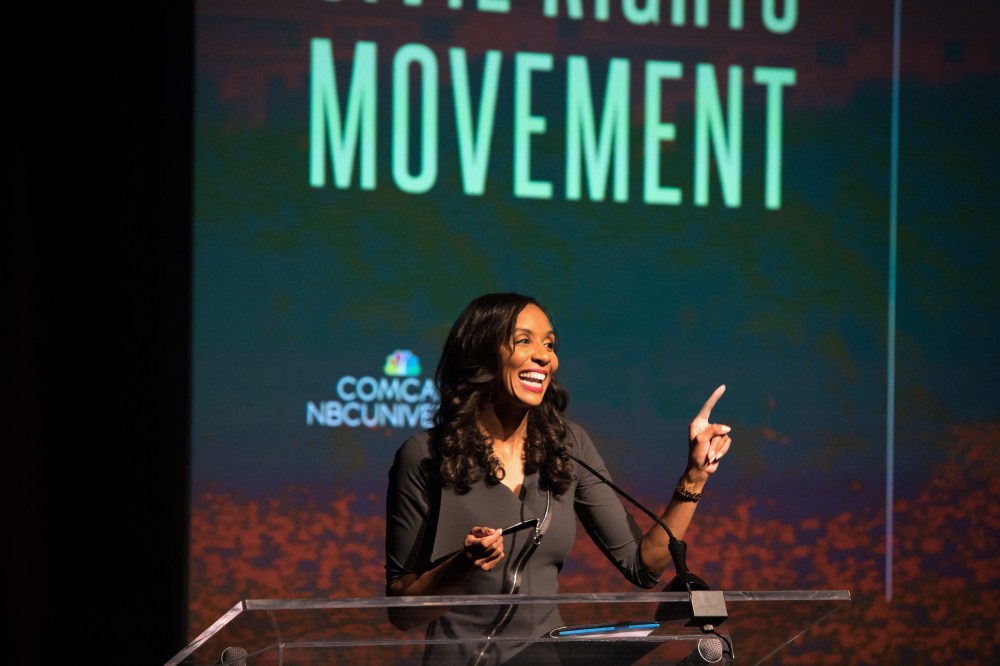
“Everyone we interviewed had an area of focus — not all marched with posters and chanted out loud. Their respective voices were at different volumes and in their corresponding spheres of influence,” Ebonne Ruffins, who leads Voices as Comcast’s Vice President of Local Media Development, told Know Your Value in an interview.
“The civil rights participants of the 1950s and 1960s teach us that activism is not uniform — it’s choosing to identify and then support what you’re for, rather than what you’re against,” she added. “People might say, ‘I don’t agree with protests in the streets.’ OK, so look at it this way: What do you believe in? Whatever that may be, identify what can be done in the spaces you occupy — whether that’s taking an hour to mentor someone, knocking on doors to register neighbors to vote, writing an essay on what you value — any of that is a form of activism.”
This sentiment reflects the variety of experiences in the 60s. The interviews captured by the Voices platform include scores of conversations with those who were on the front lines of the civil rights movement throughout history — from Freedom Riders and nonviolent student protestors to confidantes of Dr. King, Black Panthers, several first Black mayors and pioneering medical professionals, entrepreneurs and athletes.
The video collection includes roundups of historical moments in civil rights history like the Little Rock Nine and wide-ranging first-person interviews with people like the late Lewis and Rev. C.T. Vivian (who died the same day as Lewis) as well as Dr. Eugene Richardson, one of the 932 Tuskegee Airmen who served as distinguished military pilots. Some interviews are candid and raw, others are uplifting and hopeful — and they are all powerful.
The project’s tagline is: “One voice can make an impact. Many can change history.” That’s what it took in the 60s and beyond, Ruffins said.
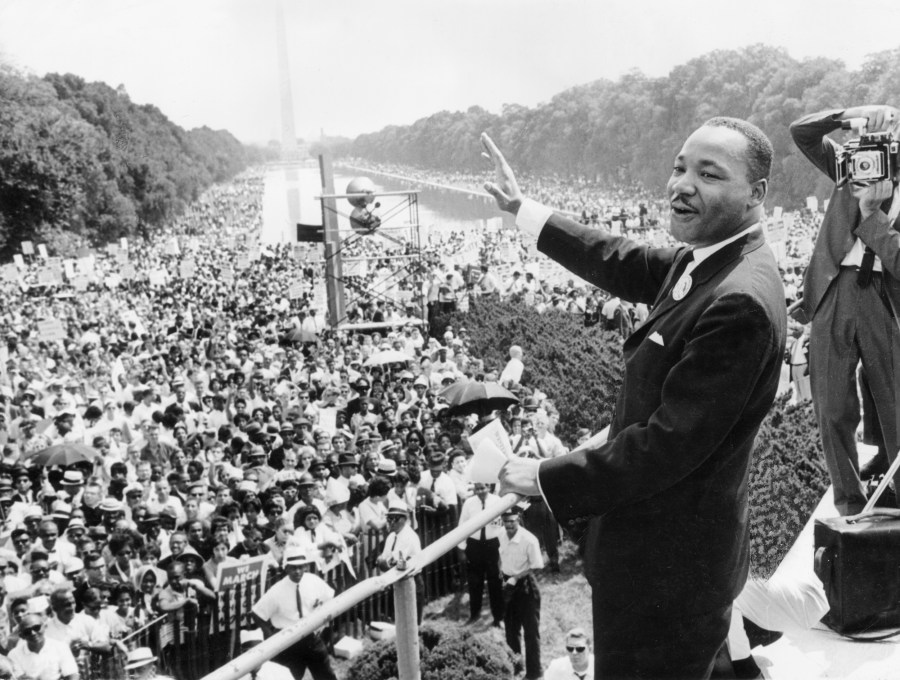
“When it comes to Black history, the general conversation is often narrow and incomplete: Lincoln freed the slaves, Dr. Martin Luther King Jr. gave the speech and eventually Obama became president,” she added. “But in between these milestones are rich contributions made by everyday people who never had the kind of scale Dr. King had, but who laid the groundwork for fair housing, for access to equitable education, for greater ethnic diversity in medicine and politics. That work sometimes requires a picket sign and sometimes it requires a different action. The collection reflects that.”
The seeds of Voices of the Civil Rights Movement began in 2013 with Comcast launching the project “His Dream, Our Stories” to commemorate the 50th anniversary of the March on Washington for Jobs and Freedom.
The original idea was to tap into NBC’s archives for its particularly broad coverage of the march, and it featured interviews with 50 people who planned or attended the historic demonstration. Audiences watched the collection on Xfinity On Demand and online, and they wanted more — as did the interviewees.
“People got in touch and said, ‘Hey, you spoke to my aunt; you’ve got to talk to her friend and this other person too,’” Ruffins said. “It all came from a very organic place and grew into a living, breathing platform.”
The project continued to evolve and, with the introduction of 52 historical vignettes in 2015, it was eventually renamed Voices of the Civil Rights Movement. As Ruffins took the helm of the platform in 2016, she assembled a team to expand its collection of firsthand accounts and host events across the country, which include traveling museum exhibits, documentary film screenings and salon-style dinners designed to honor and keep close ties with interview participants. The team often shows the interviewees their videos for the first time in a private setting.
“Every single time we have a dinner — whether it’s a Tuskegee Airman or a former Black Panther — when we do our presentation, there is a mix of emotions,” Ruffins said. “My team, we hold our breath. The participants have trust in us to get the story right. For the people we interview, it is a different experience to see themselves and to watch family and friends react to their stories — hearing it told in great detail sometimes for the first time. There’s gratitude throughout the room that these stories will keep living, that the record of their work will continue to resonate indefinitely.” (Note: Filming video interviews and hosting dinners for the activists are on hold during the pandemic.)
While some of the participants had never spoken about their experiences before Voices, others have written books or otherwise gone on record.
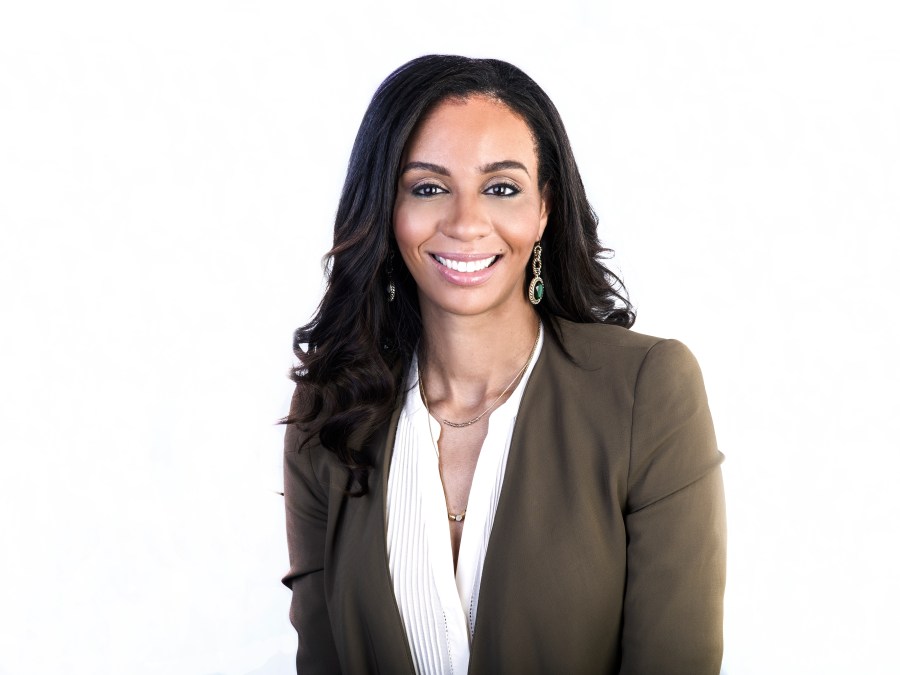
“The Voices platform is different because it is a collective, totally ungated and accessible to anyone for free online,” said Ruffins, who noted the content covers events as far back as 1619 and can be filtered by year, location and category. The platform presents a variety of viewpoints that evolved as the civil rights movement unfolded: supporters and dissenters of school integration, the role of children in protest movements, proponents of nonviolent direct action and advocates for armed resistance. While the featured interviews are individual narratives, Ruffins said one commonality remains the undercurrent throughout. “When we ask people: ‘Why did you fight? What did you hope for?’ It doesn’t vary, ever,” she said. “It’s always a focus on the future, the next generation. There was an acute awareness of what was at stake. The motivation may have been inspired by personal experience, but the fight was much more. It had magnitude. It was about doing your part with the resources you had and advancing a fight that began when our hands were literally tied to our backs.” The Voices collection is personal for Ruffins and her family. She has an ancestor who spoke about his life as a slave as part of the Federal Writers’ Project in 1935. Her own mother, one of a handful of black students at Northern Illinois University in the 1950s, had her books stolen on the first day of school and she couldn’t afford to replace them. Ruffins herself once dealt with a professor who publicly treated her differently, including giving her an earlier deadline on a project than her non-Black classmates. “At the end of the semester she said, ‘I don’t want to give you an A, but I have to. I didn’t think you’d hang in there,’” Ruffins recalled. “This was in the early 2000s. I was so disturbed by that experience that it gave me an intense fight — an awareness of the importance of my own success to provide a better way for others.” Her own experience “is miles away from the perils of 1968, but some parallels persist,” she noted. “The intense need to know the truth of where you come from and embrace your value for yourself is still very much required to exist and confidently pursue your goals, especially in adverse circumstances.” While every Voices interview has affected Ruffins, two in particular remain top of mind. The first is Dr. Albert Gaskins, a pioneering pediatrician who also helped desegregate the faculty of Girard College — a former all-white boarding school for orphan boys in Ruffins’ Philadelphia hometown. She was struck by his humility and sharp memory, and his Voices interview proved to be his last on-camera appearance before he died at age 99 the night the team was honoring 10 civil rights champions in Atlanta. The second is Sarah Collins Rudolph, a survivor of the Birmingham church bombing in 1963 that killed four other young girls. “Sarah’s identity isn’t generally associated with the four little girls in this story that is painfully portrayed widely, and often described inaccurately,” Ruffins said. “That’s because a key, living witness was largely overlooked. Sarah was barely 12 when the bombing occurred, and few thought to interview a child. The press at the time was largely focused on the clergy, the responders, on Dr. King who eulogized three of the four little girls who perished. The Voices platform is Sarah’s opportunity to tell us what really happened.” In fact, many young people who have watched Voices content say on social media and at Voices events that the platform is full of stories and facts they never learned in school. And the lessons they impart relate heavily to the present, more than five decades later. It’s also inspired families to connect and reflect together, as well as spurred young people to interview their relatives about life experiences and lessons in resilience and responsibility, Ruffins said. “Every Voices story is different, but each person felt a deeply personal call to act,” Ruffins said. “They ran their race and passed on the baton to the younger generation. It’s our turn to decide how we continue it.”
Julianne Pepitone
Julianne is the senior technology writer for NBC News Digital, covering large consumer tech companies' (Apple, Google, Facebook, etc.) news and trends, as well as cybersecurity. She also writes and appears in original videos for NBCNews.com, and speaks as an expert guest on live shows across the NBC and MSNBC networks.
She previously worked at CNNMoney.com where she covered large techs from a business angle, as well as the intersection of the tech and media industries.
In addition to NBC and CNN online properties, Julianne has written for several national magazines and online publications including Esquire, Self, Popular Mechanics and Cosmopolitan. Recommended


