









Oscar-winning actress and #MeToo activist Mira Sorvino recently tried to warn her 14-year-old daughter about the dangers of sexual assault. But the discussion did not go as planned.
“She freaked out,” Sorvino recounted to me at the recent Know Your Value conference in San Francisco. “She literally said ‘you ruined my night, can you stop talking about this, please?’”
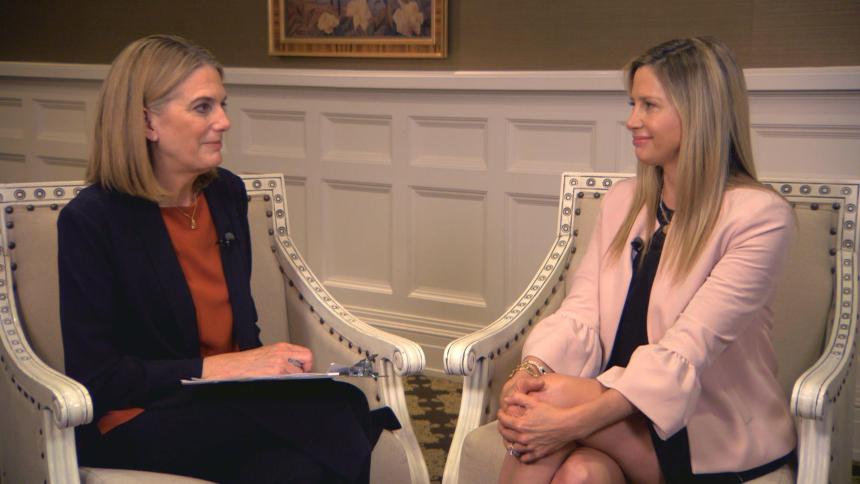
Sorvino, after all, has been in the media spotlight over the past year after she became one of the first women to go public with allegations of sexual misconduct against Hollywood producer Harvey Weinstein. Sorvino also recently revealed that she was violently assaulted as a teenager — bound and gagged with a condom and tied to a chair at the age of 16 by a casting director.
Like many mothers in the wake of #MeToo, Sorvino is trying to navigate how to talk to her own kids in an age-appropriate way about sexual assault without scaring them.
I feel like sexual harassment education begins at home, but it is really hard to do … I have to get more comfortable because I want it to be a safe space so they feel like no subject is off limits to them so I can be helpful rather than scary or judgmental.
Actress%20Mira%20Sorvino
“I realized that I had so much of this teeming energy of not wanting it to happen to her and arming her with things that would prevent her from being caught in the same types of snares,” she said. “I had to back up and realize that my trauma is not her trauma and I don’t need to traumatize her to educate her and empower her. What that’s gonna look like, I’m still working out.”
Sorvino—who has advocated for women and girls for nearly a decade as UNODC Goodwill Ambassador against human trafficking — told me that we need to warn our children about sexual assault but not make it so scary that they turn it off. “It’s better to not make it so fraught with ‘did somebody bad touch you?’ because then the child is going to internalize the fear that you have and feel that they will get in trouble if they tell you that something bad happened. They feel that you will be angry at them.”
Sorvino, who has four children, said the next steps of the #MeToo movement should include nationwide, early education programs focused on sexual assault prevention in schools. That means teaching kids as young as 6 about consent, empathy, boundaries and healthy relationships.
The problem, after all, is pandemic. The CDC estimates that by the age of 18, one in four girls and one in six boys have been sexually abused. According to America’s Promise, the numbers are even worse for harassment, which includes unwanted sexual comments, rumor spreading and touching. And a 2011 study by the American Association of University Women found that nearly half of students reported being victims of sexual harassment in grades 7 to 12.
“We need to get to people when they are young and their minds are open and teach them that other people have rights to their own body,” she told me. “You can teach them not to touch people who don’t want to be touched and verbalize that they don’t want to be touched. We want to stop the phenomenon of men growing into predators. We want to create a different culture.”
Sorvino thinks that teaching teens to be more empathetic is also key. “Programs like Youth over Violence creates young leaders and empowers teens to work with each other in peaceful, positive relationships,” she said, adding that she’d like to see similar programs in every school district. Sorvino also cited the bystander intervention program Green Dot, which provides young people with the skill and motivation to act to stop sexual harassment and violence by intervening if they see a situation that looks problematic. At least two dozen states this year considered legislation that would incorporate sexual violence prevention programs into their K-12 curriculum. For Sorvino, getting such programs into schools is personal. The actress said she does not want her experience to be her daughters’. She wants to empower them to say no, something she said she was unable to do. “The things that happened in the ’90s, I was unable to say ‘stop that’. I was not in my power. I’m all for respect for authority but at the same time you shouldn’t have to be deferential to someone who is doing something bad. That’s something we have to unlearn. I’ve had to unlearn it as an adult.” She continued, “I feel like sexual harassment education begins at home, but it is really hard to do. I am not comfortable talking to my kids about these things, but I have to get more comfortable because I want it to be a safe space so they feel like no subject is off limits to them so I can be helpful rather than scary or judgmental.”
Ginny Brzezinski Recommended


