This article first appeared on NBC BLK.
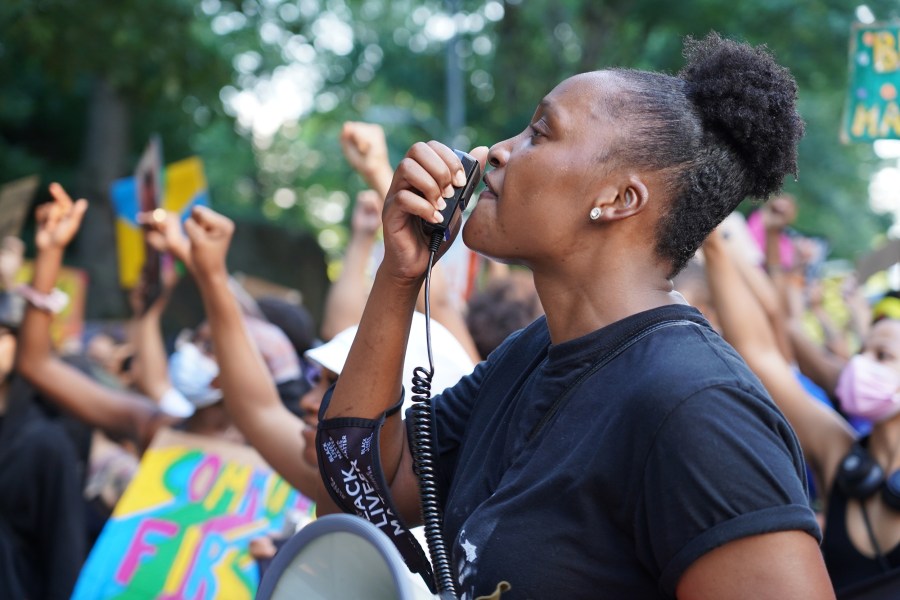
Days after the George Floyd protests began in New York City, Caroline Gombe joined the cause.
“The walking and the chanting helped me heal in a way,” she said. Before long, Gombe, an event planner, actress, and teacher, was helping organizers distribute water, hand out masks, dollop hand sanitizer into outstretched palms and wave the front banner.
But she noticed a glaring omission in the larger fight for racial justice and equality. When she asked organizers whether any protests were planned related to Black women’s issues, someone suggested that she start one.
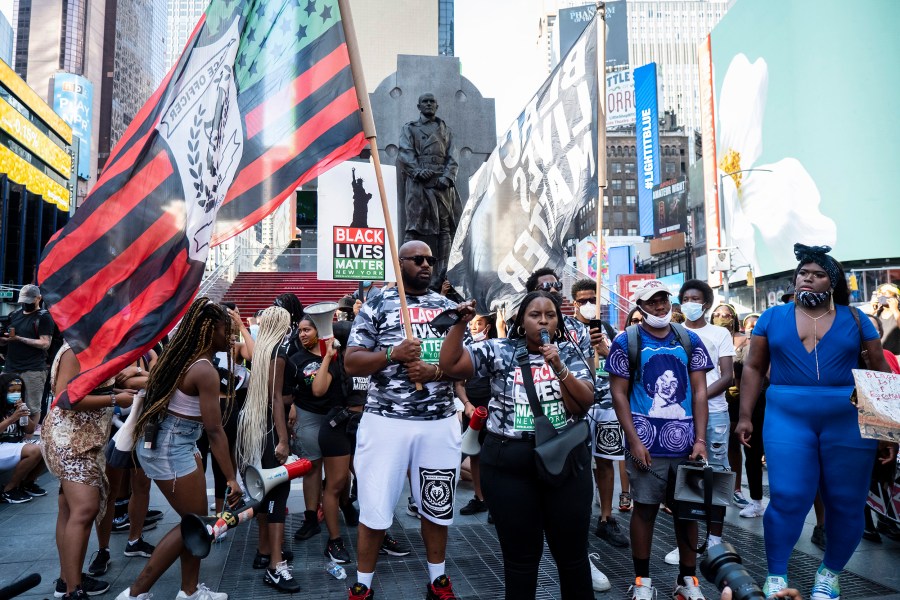
“So I went around asking African American women there if they would like to start a women’s march,” she said. “I wanted to create a platform for Black women to put their problems, issues, solutions, ideas and struggles on the table and start building together.”
With Kimberly Bernard, 31, and Monik Walters, 22, the Black Women’s March made its debut in Brooklyn at Herbert Von King Park in June.
Bernard invited Chivona Newsome, co-founder of Black Lives Matter of Greater New York, and Kristin Richardson Jordan, who is running for a New York City Council seat representing Harlem, to speak. “We had these two powerful women,” Bernard said. “Our message was clear: Vote for women of color. Protect and respect Black and brown women.”
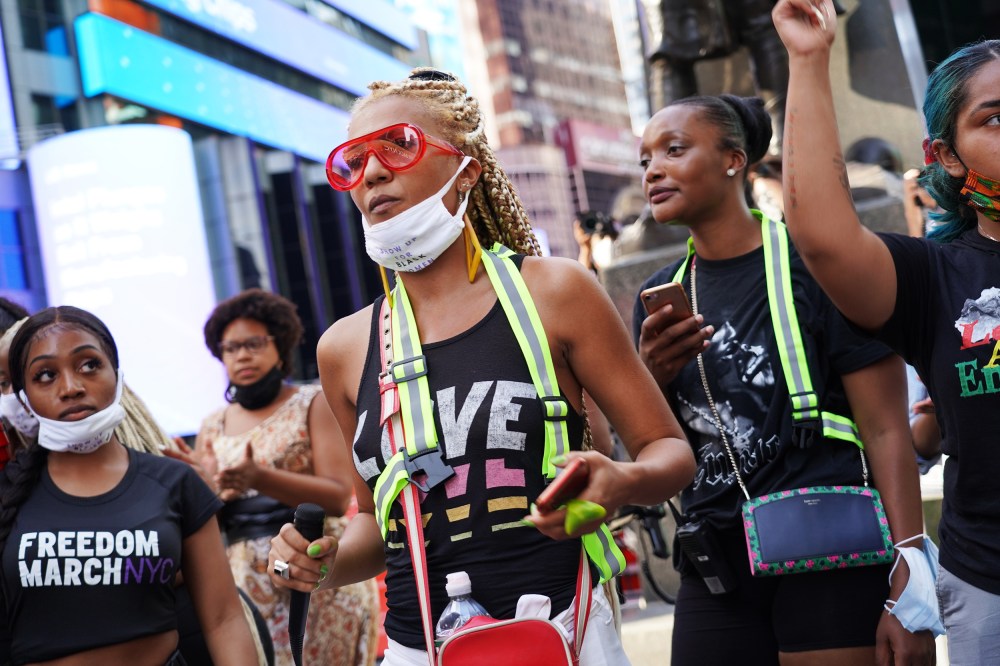
For weeks community members, white allies, men and other organizations led by Black women, such as Warriors in the Garden, Freedom March NYC and The Descendants 2020, approached Gombe about collaborating on the next program.
A month later, on July 19, the coalition held a candlelight vigil at the Brooklyn Museum dedicated to Black women and men who had lost their lives. Among the honored speakers was Gwen Carr, the mother of Eric Garner, who died in 2014 in New York while in police custody.
“Black Women’s March is an organization that’s part of the Black Lives Matter movement,” said Regine Shabazz, 26, an organizer, who joined Black Women’s March this summer. “We have more visibility for Black women and more inclusivity, especially for Black trans women.”
At the vigil, Shabazz introduced Gombe to Qween Jean, an off-Broadway costume designer who is an organizer for Black trans liberation.
They found a synergy, and Qween Jean teamed up with Black Women’s March. “We participate in a lot of community organizations throughout the boroughs, advocating for trans and queer youth who have been kicked out of their homes, who have food and housing insecurities,” she said. “So if we are going to be restructuring our language and advocating for Black lives and equality, trans lives need to be centered in that conversation also.”
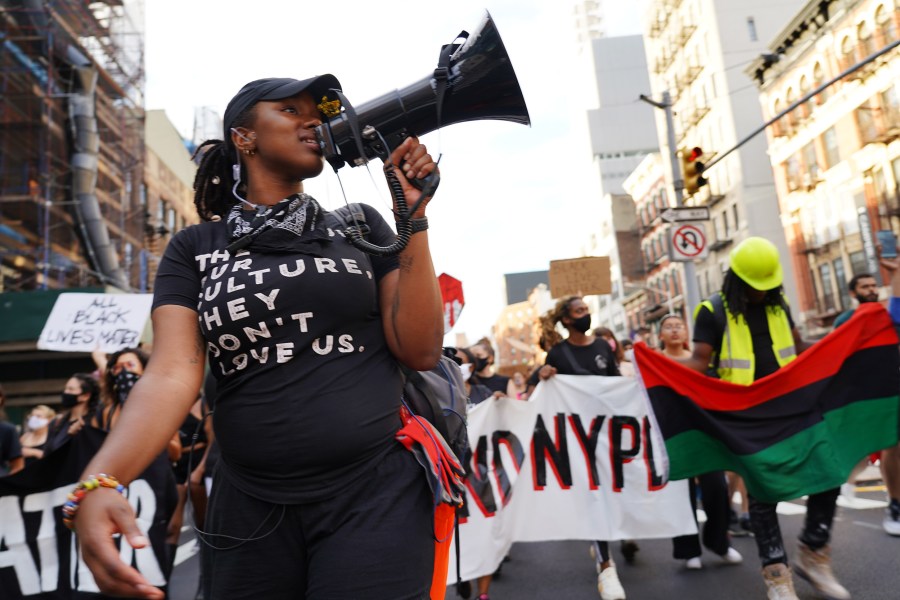
The Black Women’s March was held in Times Square a week later, on July 26, drawing hundreds of participants for a program of speeches that centered on dismantling systems and policies that entangle Black women and girls in the criminal justice system. “There are schools that function as entrees to detention centers, where armed police outnumber teachers, and unaffordable health care leaving Black women vulnerable to heart disease and cancer,” Bernard said. The crowd gathered and marched from 42nd Street to Harlem with a squad of bicyclists forming a protective barrier between the peaceful protesters and traffic along the FDR Drive. Two weeks later, the group organized a march dedicated to Breonna Taylor that snaked from Central Park over to the Henry Hudson Parkway. “Each event has grown exponentially,” Gombe said. The March on Washington is set for Friday to commemorate the 57th anniversary of Martin Luther King Jr.’s “I Have a Dream” speech. Black Women’s March organizers say it promises to be their most far-reaching alliance yet. For the past week, Gombe and her team have been collaborating with two other local charitable organizations, The People’s Bodega NYC and Save Our SISTERS NY, to collect feminine care products and blessing bags. The idea is to donate the items to N Street Village, the largest provider of housing and supportive services for homeless women in Washington, D.C. Attendance at what some have dubbed the “Get Your Knee Off Our Necks” March on Washington is expected to be in the thousands Friday, beginning with speeches at the steps of the Lincoln Memorial. In New York, Gombe hopes for one last march before the end of summer, with September focused on community actions, such as food and clothing drives, a fundraiser for mental health and finding ways to help New Yorkers facing eviction. To implement those actions, Black Women’s March has started a fundraising campaign with a $20,000 goal. “As founder of this group, I’m so incredibly proud of each member and the team work,” Gombe said. “It’s an amazing example of how Black women get things done.”
Giannella M. Garrett Recommended