









This article originally appeared on Invest in You: Ready. Set. Grow., a CNBC multiplatform financial wellness and education initiative, in partnership with Acorns.
One year into the coronavirus pandemic, women are not OK.
More than 2.3 million have left the workforce since February 2020, bringing their labor participation rate to levels not seen since 1988, according to the National Women’s Law Center. In December alone, women accounted for 100 percent of the jobs lost.
Whether they have been laid off or had to leave to care for children home from school, many are struggling to make ends meet. In fact, one in four women are considering leaving the workforce or downshifting their careers, according to a September “Women in the Workplace” report from Lean In and McKinsey & Company.
The implications are far-reaching — and could result in a widening of the gender pay gap, said Emily Martin, vice president for education and workplace justice at NWLC.
“Long-term unemployment, as well as leaving the labor force entirely for a spell, that is certainly going to show up in wages once you are again employed,” she said.
Currently, women are earning just 82 cents for every dollar earned by men, according to an analysis of U.S. Census Bureau data by the NWLC. That translates into $10,157 less per year in median earnings for full-time working women.

Then there is the so-called “motherhood penalty.” Working moms are paid only 70 cents for every dollar paid to fathers.
The pay gap, in turn, has a big impact on how much women can save for retirement. Nearly 1 in 5 women have nothing saved for their golden years, a 2020 CNBC/SurveyMonkey Women at Work survey found. A 2019 Bank of America Merrill Lynch Workplace Benefits Report found that women come to retirement with $70,000 less than men.
‘This is temporary’
Deborah Irlanda arrived in Providence, Rhode Island, in 2017 with just one suitcase. She had lost everything when her home in Puerto Rico was destroyed by Hurricane Maria, and she was hoping to start anew.
When the pandemic hit, Irlanda was a cook — working full time in the cafeteria of a Rhode Island hospital, as well as a local restaurant. The eatery immediately shut its doors, and her hours at the hospital were cut in half. By September, she was unemployed.
Fortunately, Irlanda, 48, was able to get a $1,500 Covid crisis relief loan from a local community development financial institution, Capital Good Fund, to enable her to move out of her rented apartment and in with a friend.
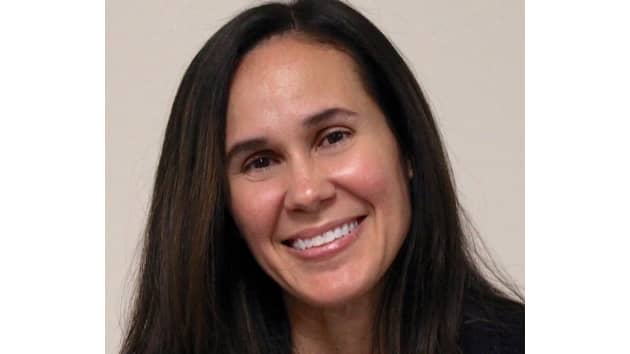
“This is temporary; I cannot keep staying here,” said Irlanda, a single mother to two adult daughters. She’s now training to become a community health worker.
Irlanda’s situation is far from unique. The restaurant industry, in which a majority of the workers are women, has been slammed by the pandemic.
“A lot of the jobs that have seen the biggest job losses during Covid are where women are the majority of workers,” Martin said.
‘Our income has been cut in half’
For 39-year-old Martha Wade Chaires, there was really no other choice but to step away from work when the pandemic hit.
Her 5-year-old son is medically fragile and has Down Syndrome.
“My son’s pulmonologist called and said we needed to keep him out of the world for the foreseeable future,” said Chaires.
At the time, she owned a mobile dance studio that taught pre-K students.
“Our income has been basically cut in half,” Chaires said.

“We have been really really tight with our spending,” she added. “We only buy groceries and gas. I’m worried about when we do go back out in the world.”
Women are the ones who typically step away from work during a caregiving crisis, Martin said.
Not only is there generally an inequity in gender roles at home, with women still holding the lion’s share of family caregiving, but women tend to make less than men. “The headwinds against women are just increasing in strength, and women are just continuing to fall behind,” said certified financial planner Stacy Francis, president and CEO of Francis Financial, a New York-based wealth management practice dedicated to services for women. This is an important moment for policymakers and employers to figure out how they are going to respond to the fact that, more than ever before, employees are being stretched to cover family caregiving and work obligations at the same time, Martin said. That means paid leave, paid sick days, support for pregnant workers and making childcare more available and affordable, she explained. “One of the things I worry about is the deepening of stereotypes that mothers are not reliable employees, given a crisis that makes it very difficult than ever before to be a primary caregiver to children and to be a perfect employee,” Martin said. “I question whether we come out of this with employers having a new distrust of parents as workers — mothers, in particular — or with stronger policies that enable people to do both.” In the meantime, women with partners can speak with them about a more equitable distribution of childcare and household duties. To close the retirement savings gap, you may have to change your mindset, if you still have an income, said Francis, a member of the CNBC Financial Advisor Council. “We often see that women tend to be a little more conservative with investment portfolios than men,” she said. “Unfortunately that can put us further behind.” The easiest thing to do is come up with a percentage of your income you want to save. While most financial advisors recommend 15% to 20% of your after-tax paycheck, start with what you can do. As you get raises throughout your career, then you can increase it. If you have no income, your goal should be staying out of high-interest credit-card debt. “When the dust settles from Covid, we are going to see the numbers of debt loads being carried by women higher,” Francis said. “We don’t see all the impact of Covid right now,” she added. “We are going to see it in a year or so.” Disclosure: NBCUniversal and Comcast Ventures are investors in Acorns.
Michelle Fox
Michelle Fox is a web producer for "Mad Money" and "Fast Money." Prior to joining CNBC.com, she spent nearly 20 years on the broadcast side of the business, including an earlier stint at CNBC. Fox has also worked at MSNBC, Court TV and WCBS-TV in New York City, where she earned an Emmy award for anticipated breaking news coverage. Recommended


What can be done
