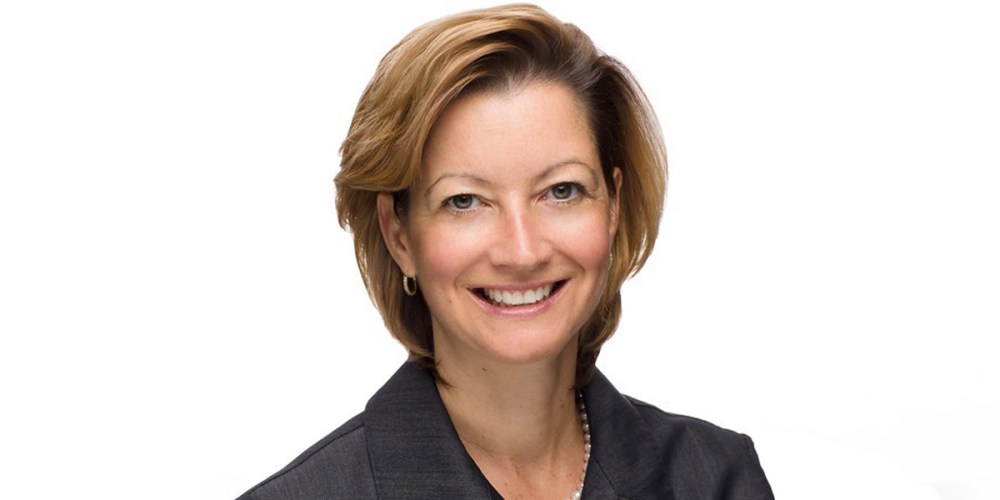
Heidi Crebo-Rediker is no stranger to taking bold and calculated risks. And one of her biggest pieces of career advice to women is to do the same, especially in the early stages of their career before starting a family.
“I seized big opportunities. I raised my hand at a very young age,” said Crebo-Rediker, an economist who is an adjunct senior fellow at the Council on Foreign Relations and partner at International Capital Strategies, a boutique advisory firm.
In a conversation with Know Your Value founder Mika Brzezinski, Crebo-Rediker, recounted one of the biggest risks she took when she was right out of college.
It was after the fall of the Berlin Wall, and one of the first free economic zones in the Soviet Union was opening on the isolated Sakhalin Island in the Russian Far East. In college, Crebo-Rediker had studied Russian, Soviet military strategy, literature, history and about centrally planned economies.
“Sakhalin Island is sort of north of Japan and south of Alaska. So, nobody else really wanted to go,” said Crebo-Rediker. “I raised my hand and I said, ‘Absolutely. This is one of the biggest opportunities at a very important time in history. And I’m in.’”
The experience paid off. Crebo-Rediker became one the first westerners to live and work in Sakhalin, which had previously been a closed military area. Her job was to work with the new Soviet regional government to introduce capitalism to their collapsing communist system.
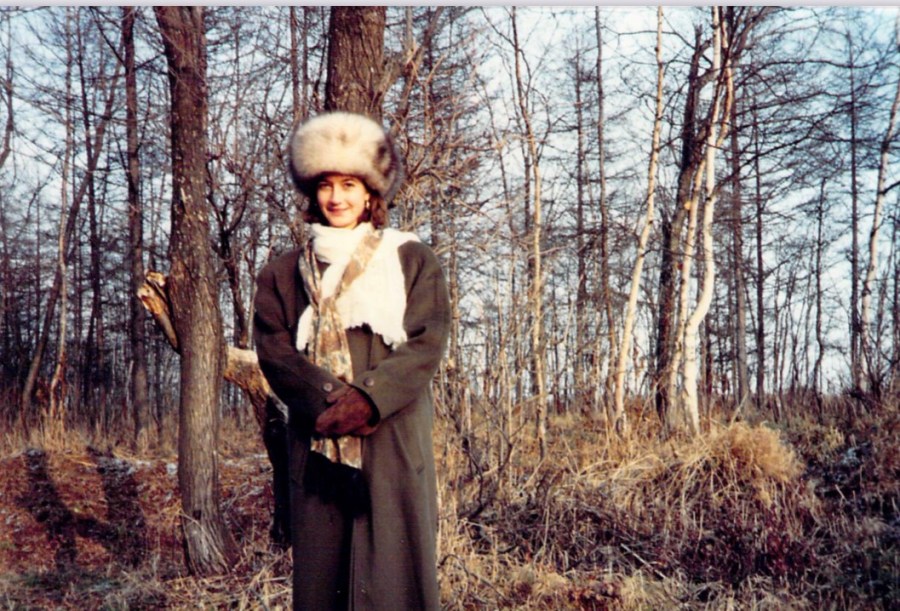
“My life there from 1990 to 1992 was crazy, creative, and entrepreneurial,” she said, noting she learned to catch salmon with her bare hands, was frequently on the lookout for wild bears that occasionally wandered the streets, and lived through a coup in 1991. “There were no rules …You could do this at 23 – no one else had done it before.”
She went on to a career in investment banking in Europe and then served as chief of international finance and economics for the Senate Committee on Foreign Relations. She also served as the State Department’s first chief economist, appointed by then Secretary of State Hillary Clinton.
Crebo-Rediker, chatted with Brzezinski about her unconventional journey, how she learned to advocate for herself to get paid the equivalent of her male counterparts, navigating her career in her 50s and more.
Below is their conversation, which has been edited for brevity and clarity:
Brzezinski: The start of your career sounds incredible. Were there a lot of women around doing the same thing you were doing in your industry?
Crebo-Rediker: …Before I moved to investment banking, there were actually quite a few women in finance and in senior positions in the Soviet system, because it was considered women’s work, ironically.
Later in my career, I ended up going into investment banking, and I was quite surprised in the very early days after the collapse of the Soviet Union that a lot of the CFO positions in what ended up being companies, state or corporatized or privatized companies, were women. So, if you looked early days, the telecom company CFO was a woman. And women trusted other women in finance. So … it was actually advantageous to be a woman working at that period of time immediately following the collapse of the Soviet Union.
Brzezinski: You’ve told a story about almost getting traded for a camel in Uzbekistan and the managing director you worked for going too far with what he thought was a joke. There were many dynamics to this story. What happened?
Crebo-Rediker: I was very young. I had just finished the same sort of corporate finance program that one goes into at the very beginning of an investment banking career. I was based in London, and one of the first deals I worked on was a mining deal in the Kyzylkum Desert of Uzbekistan. And no, there were not a lot of women who [made such] deals. And we were staying at a typical, Soviet style, not great hotel.
I was with the managing director that I worked with and traveled with him there. We ate dinner at the restaurant, and some Uzbek guy walked up to the table and started asking if he could trade me for some carpets and a camel. And then the managing director I worked with thought it was hilarious and a great joke to play on me. So he started bartering …and then finally he said I was not for sale and it went on for a long time. His Russian was much better than mine. I thought it was very insulting. [He thought] I couldn’t take a joke, but in the middle of the night with the flimsy doors of the hotel, this guy came banging at my door all night. So, it was one of those sort of aha moments like, “wow this is actually putting me in some danger” in what was supposed to be a funny joke. This was I think in 1993.
Brzezinski Know Your Value, my platform began because I realized I was severely underpaid compared to my male counterparts. And then I wrote a book about how I fixed it. And you have a story of how a secretary tipped you off that you were being paid less than your male colleagues. Tell me that story.

Crebo-Rediker: I ended up going into investment banking and working as one of the only women in this particular bank in London.
I worked hard. People will know from my generation that women had a tough time in the banking business and particularly overseas, so you worked twice as hard. The senior men that were there were very supportive of me so I considered them as mentors.
And this woman [secretary] … said, “you’re being paid significantly less, a whole lot less than all your male colleagues.” I didn’t come from investment banking. I thought I was being paid well. And I asked her how much less was I being paid? And she said “add a zero here,” and I was blown away. … I ended up going and working in different positions within this bank. And when I asked for the raise to equal what the men were making … I was told that because I was hired at such a low base rate that the gap was too far, too much to make that in one year … The woman, she did me a very big favor because she saw all the numbers and she gave me a heads up and she was right. And so, I decided that if they were not going to pay me and were going to say it’s two years, because we started you at such a low base rate, then I thought I’m going to leave and find a place where I could shine and get paid equal to my male peers. Brzezinski: Did you do that? Crebo-Rediker: I did. I had some help in getting myself all prepped to go and make that pitch for another job, a very big job at another bank. And literally, in the back of a taxi, my final round for this new position. I got cold feet about really going and playing hardball and I didn’t add the full extra zero, but I went for a pretty big number. My husband and best friend was in that taxi … And he told me to pretend I already have an offer from another firm. Just pretend it’s already there. internalize it. And he’s like, “no you’re not internalizing it enough. Repeat it, practice it out loud” in the taxi. And so I did that. And when I got to the interview, I followed the advice and the guy hired me at the end of the interview. And he paid me what I asked for. And at the end of it, he said he couldn’t help it because I came at him like a linebacker. I mean, I was not obnoxious but I advocated strongly for myself and he said, “how could I not hire you? If you could do that for yourself, I could only imagine what you were going to do for our clients.” And so I couldn’t believe it worked but this is one of those stories that I’ve told women that I’ve mentored over the years that it’s not necessarily “add a zero,” but you have to think that way and know what other people are being paid in those positions before you go in. Get the numbers in your head, get it down and just advocate for yourself … Brzezinski: I think it’s also really important what your boss told you. And that is, “well, gosh, if you can do that for yourself, imagine what you’re going to do for my clients, for my company.” I think many women get caught up in “I don’t want to look bad. I don’t want to look like I’m asking for too much.” Well, they’re missing the opportunity to show what they can do. Switching gears, I had this big initiative recently that’s going global. It’s called “50 Over 50,” and celebrates women who have achieved significant success later in life, often by overcoming significant odds or barriers. It’s a partnership with Forbes. Did you ever imagine when you were raising your hand and going to catch salmon with your hands at the beginning of your career, did you ever imagine your career after the age of 50? Crebo-Rediker: First off, I never thought of 50 as being as much of a marker, I guess, because I assume that I’m going to be working and going until I can’t anymore. So I never thought of 50 as a barrier. I do reflect on the fact that I’ve taken big risks. They were bold risks, and they were very calculated risks. And I also made changes when it came to having a family that were compatible with maintaining a very strong career path, but being able to also spend more time with my daughter than I had been able to when I was in London working often 100-hour weeks and traveling nonstop, I couldn’t have done that without my husband as a good partner. I think that you can really do whatever you want as long as you want. The question is are you happy? Are you fulfilled? Are you helping others come up the ladder with you? Are you mentoring and sharing the lessons that you learned often the hard way? Brzezinski: It’s so funny, the only other people out of about 50 women that I’ve interviewed when I ask, “did you envision your life after 50?” –most women have said “No. It was white space.” They never imagined it and did not think it was possible. Crebo-Rediker: I don’t think I’ll ever stop. I enjoy what I do.
Know Your Value staff Recommended