








Medicine ignored women’s health for years. That’s finally changing.
Throughout history, women’s medical issues have been systematically ignored, diminished and understudied. Just 30 years ago, women weren’t even allowed to participate in medical testing. However, scientists are discovering that common issues like Alzheimer’s, schizophrenia and heart failure manifest quite differently in women, therefore pushing doctors into taking women-specific issues more seriously than ever.
Pushed by consumers, some sponsors join soccer’s fight over equal pay
As the U.S. women’s soccer team enters mediation against U.S. Soccer for equal pay with the men’s team, sponsors are stepping up to defend the World Cup champions. Nike created an ad supporting the women’s team (a controversial move considering Nike is facing a few gender discrimination lawsuits, too). Visa will be giving more than half of its sponsorship money to women’s soccer. Secret deodorant, another sponsor, released an ad saying it was donating $529,000 to the women players.
Victoria’s secret casts its first transgender model
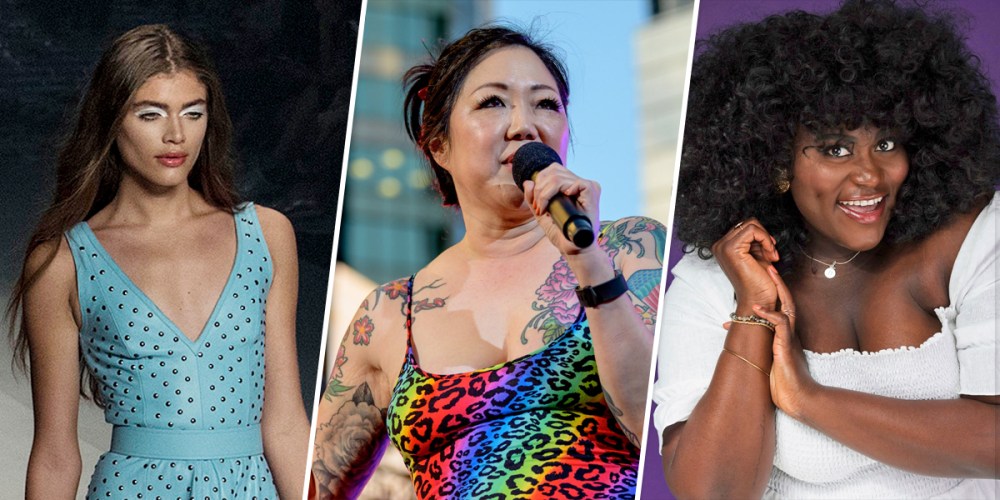
Victoria’s Secret has cast its first transgender model, 22-year-old Valentina Sampaio from Brazil. She was hired to work with the brand’s athletic line, VS Pink. Many believe the casting is long overdue. The lingerie brand was lambasted last year for being out of touch when their chief marketing officer Ed Razek said Victoria’s Secret had no interest in casting trans or plus-sized models. After the fallout, Razek retired, and the CEO. resigned.
Inside Earios, the first all-female podcast network
Fed up with pitching their podcast idea to all-male media groups, comedians Amanda Lund and Maria Blasucci launched their own, along with producer Priyanka Mattoo. Earios is an podcast network where everyone is female, from the hosts to the editors to the ad sales team. Margaret Cho and singer Feist are hosting podcasts on Earios, which is now home to 12 shows. Other topics on Earios include beauty for women of color, the underbelly of social media and motherhood.
Why women are less prepared for retirement than men
According to a recent study by Nationwide Advisory Solutions, only six out of 10 women — as opposed to three out of four men — have a retirement plan. In addition, women outlive men, they are paid less and their health care bills are higher, according to the study. They also tend to spend time out of the job market in order to care for their children. As a result, financial advisors are telling women to negotiate for higher pay rates and to invest in their retirement income as soon as possible.
It’s not women’s menopausal bodies that need fixing, it’s society’s attitudes toward them In light of a new U.K. fertility treatment that could delay menopause for 20 years, Guardian columnist Suzanne Moore argued that women need support first and foremost. While she contended that the treatment could be a boon to women who want to have children later, Moore argued that society’s overall priorities are misguided: “Or we could support women in the workplace, make childcare affordable and involve fathers? How about fixing all this cultural and social stuff, instead of fixing women’s bodies with expensive and invasive operations?” A new wave of American women tennis players is emerging A new wave of 20-or-under female tennis players is rising the ranks to defeat their elders. The players to watch include Sofia Kenin, 20, Cori Gauff, 15, and a slate of 17-year-olds including Amanda Anisimova, Whitney Osuigwe, Catherine McNally and Hailey Baptiste. Gauff and Anisimova are considered the standout prodigies to watch, having performed beautifully in Wimbledon and the French Open, respectively. Orange is the New Black celebrated diverse women. It also exploited their stories. Throughout its seven-season run, Orange is the New Black told stories of incarcerated women from diverse backgrounds. While the protagonist was white, many main characters throughout the series have been black, Latina or transgender. A critic spoke to Vox about the many times Orange is the New Black stepped out of its lane and exploited real-life tragedies for women of color
Halley Bondy Recommended


