









Vice President Kamala Harris, 56, has never used her age as a guide for her life plans— not even when others told her “no.”
“I’ve never been one to do a five-year plan. Never. I’ve never evaluated myself based on my age,” Harris recently told Know Your Value founder and “Morning Joe” co-host Mika Brzezinski. “…I’ve been told many times during my career, things from, ‘oh, you’re too young, ‘It’s not your turn,’ ‘They’re not ready for you.’ But I didn’t listen.”
The vice president added: “I eat ‘no’ for breakfast.”
The interview aired Tuesday on “Morning Joe,” coinciding with the kick off of Forbes and Know Your Value’s “50 Over 50” list, which honors women who are defying age and gender norms. The list, released in full on Wednesday, includes Harris among its honorees.
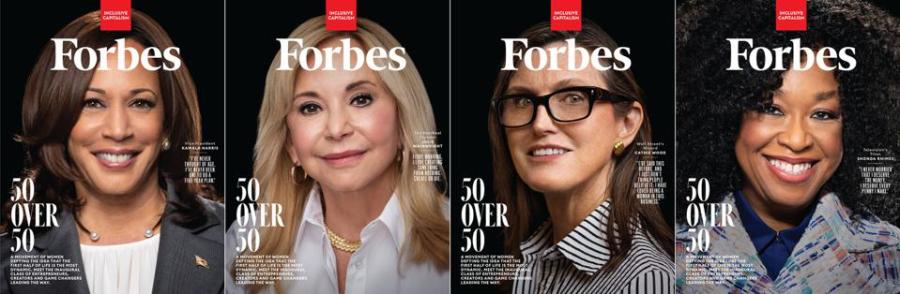
During the interview, Harris encouraged women not to view their age as a limitation and to follow their passions at every phase of their lives.
“There is so much that we still need to do to encourage girls and women of every age to know and internalize their capacity, and to internalize their strength and their gift, whatever that may be—and to not be burdened by other peoples’ limited views of their capacity based on who has historically done what,” she said.
In 2020, Harris became the first woman, the first African-American and the first South Asian to be elected Vice President of the United States. The daughter of Indian and Jamaican parents, Harris was also the first South Asian woman and the second Black woman to serve in the U.S. Senate in 2017. Her mother, Shyamala Gopalan, was a renowned scientist and civil rights activist who inspired Harris to follow her dreams.
At every turn, women are often discouraged from pursuing their passion, the Vice President contended. Many women don’t have access to affordable childcare or paid leave. Older women are often forced into early retirement, or they face hiring discrimination when they leave the workforce then try to return later on.
The pandemic only compounded the inequality. According to the Bureau of Labor Statistics, about 2.5 million women left the workforce during the pandemic. Women-owned businesses were disproportionately affected.
“There’s a whole push for legislation and for people to support those women’s right to be able to return to work,” said Harris. “…Women should not be penalized for a pandemic they did not create, and they should not be penalized for their age.”
Harris encouraged communities to improve women’s economic standing by investing in community-oriented banks, for example, which would uplift women-owned businesses when large banks won’t support them. Further, she encouraged women to feel entitled to these rights in order to push for change. “Continue with your ambition and don’t apologize for it,” said Harris.” Continue to believe that you can do whatever you want to do, but also know you have the right to expect things like affordable childcare. You have the right to accept paid family leave when you need to take care of your children or elderly parents. Do not accept false choices that you have to choose either this thing or that thing. Don’t accept it.” About 12,000 women were nominated for the Forbes and Know Your Value “50 over 50” list, including Harris. “Harris has made history as the first woman and woman of color selected as vice president. But perhaps more importantly, she’s utterly committed to making sure she’s not the last,” wrote Brzezinski.
Halley Bondy Recommended


