









Women must be treated as equals to their male counterparts if we want to close the gender wage gap. However, it’s also on women to step up and negotiate their salaries using confidence and logic, according to panelists at the ASCEND summit in New York City
At the event, which featured leading voices on advancing women into the C-suite and on boards, speakers tackled the most pressing issues and mistakes women make at the negotiating table, including apologizing, not doing their homework, not knowing their value and putting the desire to be liked above getting a raise.
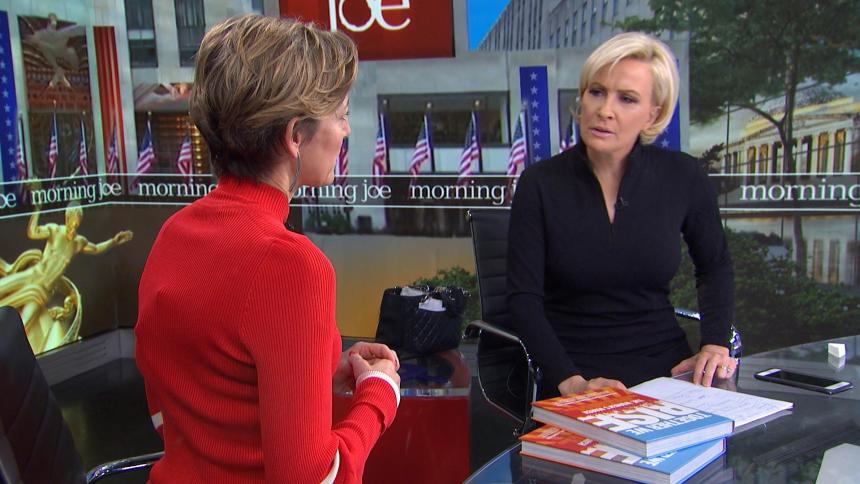
The panel was hosted by “Morning Joe” co-host and Know Your Value founder Mika Brzezinski, and featured former vice-chair of General Electric Beth Comstock, former chief content officer of Gannett Joanne Lipman, chief operating officer for FOCUS Brands Kat Cole and CEO of Cue Ball Tony Tjan.
Here is some important advice for women going into the negotiating room.
1. Do your homework
You need a solid argument if you want to get a raise.
Brzezinski said getting emotional and bringing in a litany of your personal issues is not a good argument. She knows from experience — she tried it at MSNBC.
“The first time I went in there, I was crying. Don’t do that …” she said. “Then I had issues with my salary. I said it was too hard to deal with, [I brought up] issues with wardrobe, things going on with my life — your boss doesn’t want to hear about it. And it’s not the reason you should get a raise.”
Cole outlined three pieces of homework in advance of your negotiation. Know the exact salary you’re looking for. Second, be able to explain what you bring to the table. And finally, know what you need to learn, so that you can be on the development curve.
“Think about your ability to demonstrate what you’ve accomplished … and benchmark your objective and yes, ask for what you deserve and a little bit more,” said Cole.
2. Be a woman, but take notes from the men
According to the panelists, men typically ask for higher raises without apologies. Unfortunately, this behavior might be more ingrained than we think.
Lipman cited a study in which 6-year-old girls and boys were asked to reward themselves with candy based on certain tasks they’d accomplished. Across the board, boys rewarded themselves more. Across similar studies in middle and high schools, she said, boys paid themselves more by 68 percent.
“We tell women to be paid what they’re worth, but often they don’t know how much they’re worth,” said Lipman.
“The boys don’t know either,” said Brzezinski, “But the women actually care that they don’t know … Guys are like, ‘let me make up a number.’ They’re okay with that, and that is fantastic. We get caught up on our own details.”
Tjan noted, however, that the onus is on men to understand this issue, too.
“What we should not try to lean toward is to assume that women should be more like men,” Tjan said. He then quoted activist Gloria Steinem: “‘I’m glad we’ve begun to raise our daughters more like our sons, but it will never work until we raise our sons more like our daughters.’ … Get men to understand the other side because that’s equally important.”
3. Don’t apologize
Panelists agreed that women apologize too much during the negotiation process, which is unnecessary and undermining.
Comstock said men mostly ask her for large raises without compunction. Women, on the other hand, approach her with guilty disclaimers, and they typically ask for much less than the men. “They act like it’s like an imposition,” Comstock said. “I want them to know that they deserve more.” Cole had direct advice for those who say “sorry” when asking for raises. “Do not apologize. Do not make excuses … This is a fantastic and important conversation to have, and I want you to succeed at it now, and later.” Brzezinski argued that some women’s desire to be liked is so strong, that it sometimes outweighs their desire for a promotion. “They’ll say ‘I don’t want you guys to think I’m a jerk.’ That’s more important to us than the $5,000 you’re going to hand to me. Please take it back!’ Those priorities get turned upside down. It’s supposed to be a little awkward,” she said. Comstock admitted she struggles with this issue. “I’m so guilty at wanting to be liked. I’ve struggled my whole life with it,” she said. “I had to come to terms the fact that it’s okay to be respected. That’s what I’m looking for now.” While women need to hone their negotiating skills, the gender gap won’t shrink until leaders demonstrate equitable practices. A Harvard study found that women actually ask for raises with the same frequency as men, but they get raises 5 percent less often than men do. Brzezinski recounted a personal story in which she sponsored a young woman who was making less money than her male counterparts. Brzezinski said she wrote a letter to NBC, called out the disparity on behalf of the woman and got her the raise she deserved. “If you have a position of power and influence, if you’re a woman or a man, step it up and make it happen,” Brzezinski said. Cole noted that the responsibility on leaders goes double for women of color in their organization. “It is many times worse for women at any intersectionality — women of color, LGBTQ — there’s already this feeling of otherness that affects their confidence,” Cole said. “It is the responsibility of all leaders to make sure males and the majority of companies recognize this.”
Halley Bondy Recommended


4. Look to be respected, not liked
5. Make change
