








This article originally appeared on Invest in You: Ready. Set. Grow., a CNBC multiplatform financial wellness and education initiative, in partnership with Acorns.
There’s no doubt the coronavirus pandemic has hit small businesses hard.
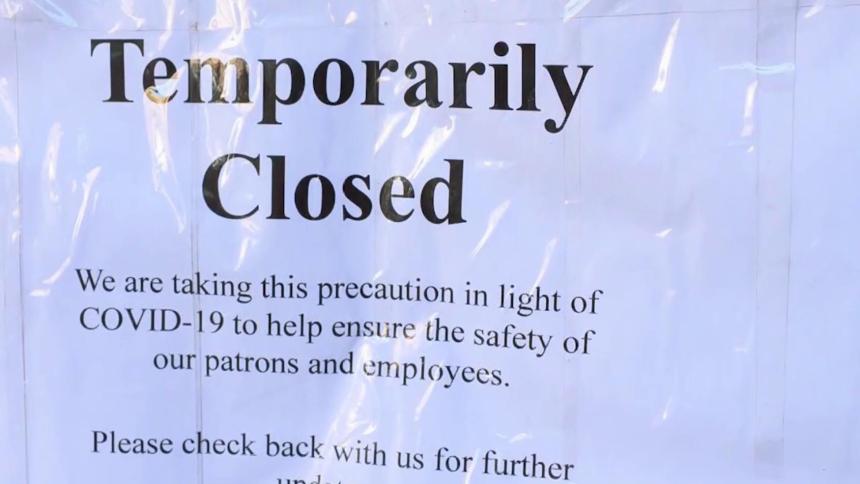
For some, like retail and wholesale bakery Ovenly, it meant completely shutting down their operations.
The New York-based business had to lay off its entire staff of 66 employees, said Agatha Kulaga, the co-founder and CEO.
“It was … just survival mode,” she said.
“It was really about, ’What are we going to do? What are the decisions to make right now to save our business so we can reopen successfully when this crisis is over?”
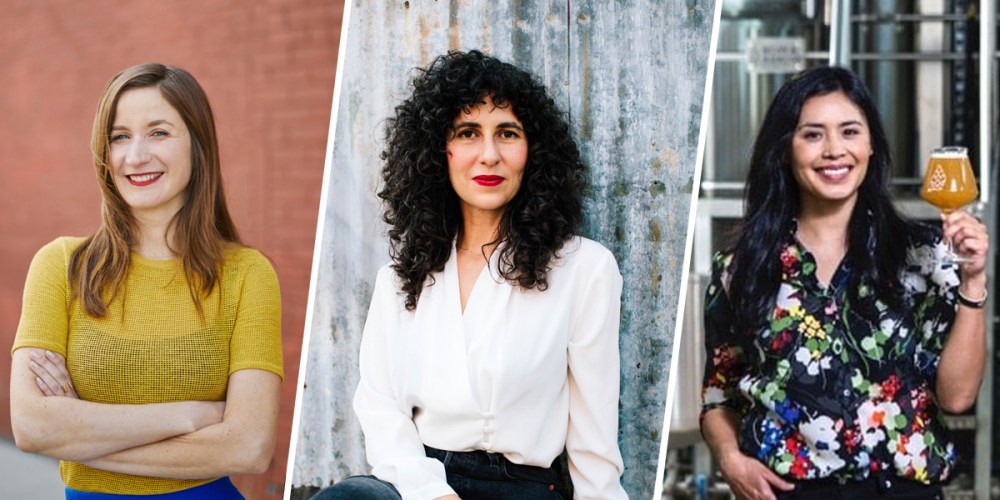
Kulaga was part of a live roundtable discussion streamed on both CNBC’s and Glamour’s Facebook pages on Friday, hosted by Glamour Magazine editor-in-chief Samantha Barry. CNBC reporter Kate Rogers joined in, as well as Shyla Sheppard, founder and CEO of Bow & Arrow Brewing Co, and Erin Patinkin, co-founder and CEO of Seemore Meats & Veggies.
Almost a third of small-business owners have had to close their in-person business operations because of government regulations put in place as a response to the pandemic, according to the latest CNBC|SurveyMonkey Small Business Survey. In addition, 23 percent have temporarily closed their entire business.
That’s led to cuts: Thirty-six percent have reduced their own pay, 8 percent have cut their employees’ pay, 13 percent have furloughed some or all of their employees and 11 percent have laid off some or all of their employees, the survey found.
“In these times, it’s really important to just dig deep, have grit and determination,” said Sheppard, whose brewery and beer hall is located in Albuquerque, New Mexico.
“It’s really critical right now to pivot in this environment.”
The quick pivot
Pre COVID-19, the majority of Bow & Arrow Brewing Co.′s revenue came from customers visiting its taproom.“Over the last two months, we’ve had to both pause and accelerate a few big changes,” Sheppard said.
“Since the to-go-only restrictions went into place, we’ve been scrambling to package product in glass growlers, growlers cans that are filled on demand,” she said. “Right now they are literally picked up at our side door.”
The company has also put up a new website for online beer orders and is trying to leverage technology to reimagine the virtual taproom existence.
Most recently, Bow & Arrow Brewing Co. bought a candy line, to get more products on retail shelves and at its to-go counter.
The loss of funding
For Erin Patinkin, the coronavirus’ impact on the stock market in March led to the loss of $1.25 million in Series A funding she was expecting to get for Seemore Meats & Veggies, which only officially launched in February.
While her first thought was empathy for the funding company, which lost money in the market, she was also concerned about the future of her business.
“I was really anxiety-ridden and really stressed but my only thought was, ‘I have to make a strategy to move forward,’” Patinkin said.
That meant she had to let go of some of the “ego” she thought she would have around the company’s valuation and get the proper amount of money, even if it was fewer dollars, to fund the business.
“For a seven-day period, I didn’t even think about emotions,” she said. “I was just driving forward in order to ensure we had a runway for at least a year because I am concerned about fundraising even three to six months from now.”

Navigating PPP
All three women applied for and received The federal Paycheck Protection Program loans. However, they are still unsure about the right way to use the money and are hopeful there may be adjustments in the requirements.
The federal PPP, which offers forgivable loans to cover payroll for eight weeks after the loan is signed, was supposed to help. In order to get the forgiveness, at least 75% of the money must go to payroll. The rest is to be used for other business-related purposes.
The first round of $349 billion in funding ran out in a matter of days. However, an additional $310 billion was approved, and, as of Thursday night, there was still about $100 billion left in unallocated capital. “There’s a lot of pressure to use [the money] on payroll versus sustaining your business through several months of uncertainty,” said Ovenly’s Kulaga. She decided to put the money away and use it slowly, as needed, without feeling the pressure of having to use it for payroll when they weren’t rehiring back 66 employees. That means, with the guidelines in place now, the loan will not be forgiven. Therefore, she’ll have to raise capital to pay it back. Bow & Arrow Brewing Co.’s Sheppard has also been conservative in using the funding from her PPP loan. “I’m really hoping they extend that 8-week timeline,” she said. “I’m hoping to see some more flexibility in that 25 percent for things like rent and utilities.” Sheppard also sees challenges around what reopening will look like, when it does happen. “We don’t know how long the restrictions will remain in place,” she said. “We have a very large beer hall, so top of mind these days is our staff’s safety, our customer’s safety.” Ovenly is slowly starting to get business back up, opening two locations last week and rehiring some staff. “For us, it’s important to … re-envision what this company looks like in this economy,” Kulaga said. “It’s really important to figure out how to do it in a slow and steady way.” It has also provided a chance to look at what is not working and to focus on strengths. “It has been an opportunity to take a step back and really rethink how we are doing our operations.” —CNBC’s Kate Rogers contributed to this report. Disclosure: Invest in You: Ready. Set. Grow. is a financial wellness and education initiative from CNBC and Acorns, the micro-investing app. NBCUniversal and Comcast Ventures are investors in Acorns.
Michelle Fox, CNBC
Michelle Fox is a digital producer for CNBC. Recommended


The future
