








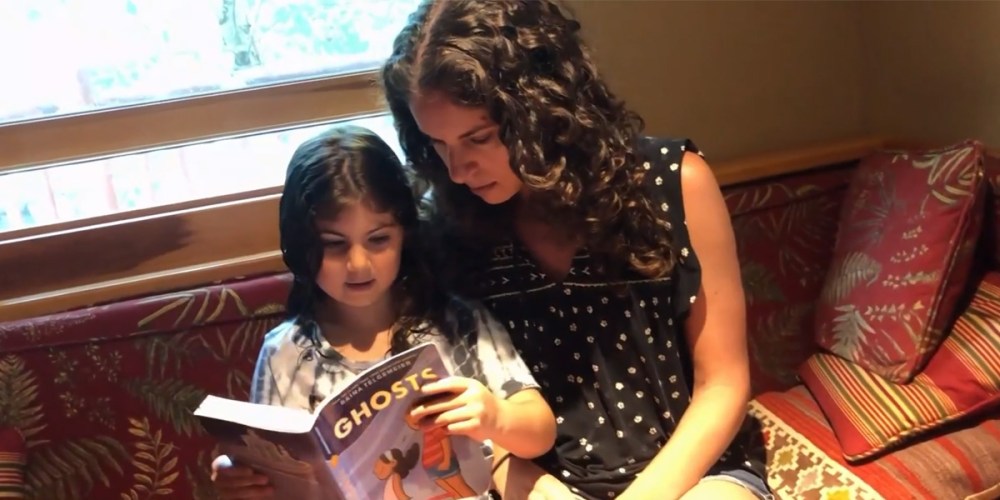
Ali Dixon’s days are a blur.
Before the coronavirus pandemic hit, the 29-year old new mom to 8-month-old Henry was gearing up to go back to work as a therapist in Atlanta, Georgia. She was excited to reconnect with patients, co-workers and a career that had understandably taken a back seat during her maternity leave.
Then, the stay at home order came — and, like millions of other Americans, their childcare plans vanished. Her husband, Joe, is the family’s primary breadwinner, whose job provides their healthcare. So, they decided Ali would scale back her practice, going from her usual 20 clients to just half a dozen.
“It came down to the fact that I have the more flexible job and flexible career,” she told NBC News. “I could scale down and eventually hopefully recoup my practice later on … It just makes more sense financially and logistically for me to become a full-time mom and scale back drastically.”
But still, she’s wondering: “how do we have a career and have kids right now? … It feels impossible.”
Dixon’s not alone in grappling with that question. It’s one working moms asked themselves long before COVID-19 hit. But with the double whammy of an economic recession and Americans still being advised to err on the side of staying home, traditional gender roles are seeping in.
RELATED: a ‘full-blown she-seccion’: How COVID-19 is economically hurting women, minorities the most
“Like everything, the pandemic is putting a spotlight on a pre-existing problem,” Soraya Chemaly, an author who focuses on the role of gender in culture, told NBC. “Exacerbating it, blowing it up.”
Sometimes described as women’s “second shift,” women do almost double the hours of unpaid work per day, compared to men. In 2019, American women did $1.5 trillion in unpaid labor, according to an OxFam study. And in spaces where women are compensated — a notable marker for what work society chooses to compensate or not compensate people for, Chemaly pointed out — there’s still a persistent wage gap. White women earn 80 percent of what their white male colleagues do. And for or Black and Hispanic women, it’s even less; 66 percent and 58 percent, respectively. It’s an old reality, now amid a new pandemic.
For Elissa Ehrlich — a mom to two girls who also owns her own public relations consulting business — the choice to scale back her practice to have more time for helping with homework and doing housework didn’t really feel like a choice at all.
“It wasn’t a conscious choice we even made,” said Ehrlich, who lives in Westchester County, New York. “We have no choice. This is how the chips fall, and we’re each doing what we have to do to keep our family going strong during the pandemic.”
RELATED: The she-seccion has begun: What to do if you’re worried about getting laid off
Like Dixon, Ehrlich’s husband makes more money and his job provides their healthcare. She doesn’t fault her husband — he’s feeling the pressure of the times, too, and Ehrlich is quick to say she’s grateful to be able to make this choice to step back at all. But there’s still frustration. “I feel like with the pandemic, women like me, who still have a legitimate career but are the more flexible person in the household, and often a freelancer, they’re the ones who are losing,” Ehrlich said. To Chemaly, these are symptoms of a modern day system that isn’t modern at all. “The problem is that it is a rational choice to make, in the context of a system that is irrational,” she said, hearing the dollars and cents-based decisions Dixon and Ehrlich were making. “Someone has to do this work, and someone has to be earning money…If you are a person living in a family with other adults, or a spouse, if that spouse is a man and you’re in the more traditional heterosexual relationship — which we know is a factory of gender norms — those relationships are just ultimately much more gendered than any other type of relationship.” Male-female couples rely overwhelmingly on gender to delineate responsibilities around the home, according to a study from the National Council on Family Relations. And in same sex couples, those divisions of labor also tend to break down along the lines of gender expression. With certainty scarce and the pandemic’s end, so far, unknowable, Dixon took matters into her own hands: she and her husband set a date to reassess their home structure, to make sure it’s working for all of them.
Molly Roecker
Molly Roecker is a journalist for NBC News in New York.
Ali Vitali is MS NOW's senior congressional correspondent and the host of "Way Too Early." She is the author of "Electable: Why America Hasn’t Put a Woman in the White House … Yet." Recommended



