








We all know that it’s hard work to regularly exercise and eat healthy. But the journey can be even more difficult if your partner doesn’t share your enthusiasm for a healthy lifestyle, or isn’t a particularly healthy person themselves.
So what do you do if you feel like your partner is sabotaging your own best efforts? Here are seven of the most common partner-related health problems you might come up against – and how to fix them.
The live now, worry-later partner
Signs this is your partner: He or she doesn’t have a primary care doctor or a dentist and just “wings it.” If a problem comes up in the future, that’s the time to worry about it.
The solution: Set a good example, and don’t be an ostrich by hiding your head in the sand and ignoring preventive health. Choose your own primary care doctor (who is also focused on preventative care) carefully. This can be a family or internal medicine physician, or even a gynecologist. And suggest your partner do the same – with a gentle reminder now and then –but no nagging!
The invalidator
Signs this is your partner: He or she doesn’t acknowledge your commitment to fitness, healthy eating, or stress management.
Solution: If you don’t expect praise from your partner, you’ll never be disappointed. If you need added support, find some like-minded healthy focused friends, co-workers or relatives. Or join an online program or group for support. It’s all about self-motivation, and feeling good about your own efforts. While some people are fine on their own, others need support.
The caloric rewarder
Signs this is your partner: He or she believes that food is love, and regardless of your own preferences, shows affection with food.
Solution: While your first instinct might be to start yelling, fight that impulse and express yourself calmly and quietly that while you appreciate the gesture of support, please do not use food as a “reward.” This is particularly true for a well-meaning partner who feels “you’ve been working so hard on your dieting” and you deserve a “treat.” Suggest some alternates, like a manicure or a night out at the movies.
The ‘me first’ partner
Signs this is your partner: He or she isn’t on your sleep schedule, but seems clueless on noise, lights or other “sleep hygiene” factors that support a good night’s sleep for you.
RELATED: Mika’s top-5 tips for sleep success
Solution: Suggest some compromises that are fair for everyone. Suggest headphones for your partner, or an attached light for a book or back-lit tablet. For yourself, get a comfortable eye mask and ear plugs. Agree on a comfortable room temperature. While a cooler room is better for sleep, it’s easy to add a blanket for the person who likes it a little warmer.
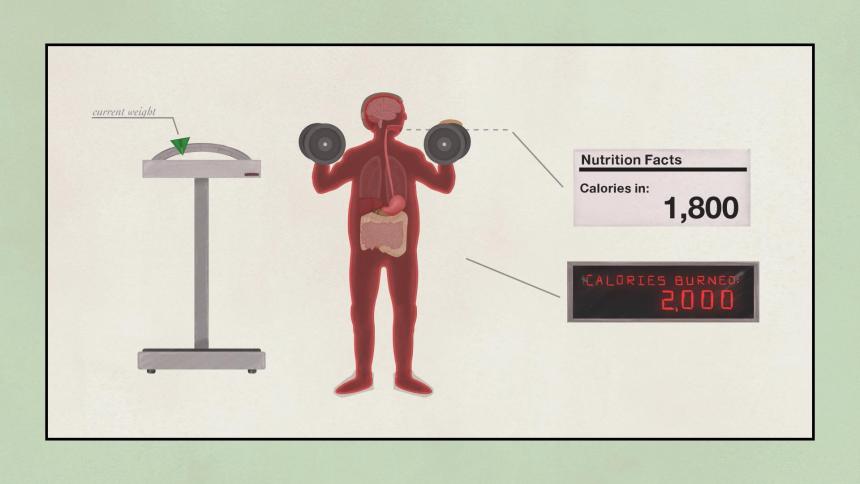
Signs this is your partner: You’re always going solo for healthy shopping, cooking and eating. It’s usually a “no” from your partner when you suggest being active together (even just to take a walk) with a reply of “too busy” or “too tired.” Solution: Keep setting a good example, and prepare foods when you’re together that are healthful and tasty. Don’t expect a rousing cheer or enthusiasm, but keep trying to engage your partner. Manage your expectations, and if your partner is not engaged, find a friend, co-worker or family member to share in your enthusiasm. But don’t let it deter your own efforts. Signs this is your partner: He or she has time but no interest in an active life, choosing Netflix over exercise and takeout over a healthy, home-cooked meal. Solution: While you expect a “no” response, keep trying to engage your partner in a walk or other low-key activity, because you’re leading by example. Don’t let your channel surfer talk you out of an activity to “relax and hang out.” There’s always time for that later. Accept that a physically active life might not be something you share with your partner (but keep trying!). If you’re not a solo exerciser, find a buddy or take a class. Signs this is your partner: He or she is blessed with a speedy metabolism, and often super-fit (with a high muscle mass), eating with abandon, without a thought to calories. Often, the focus is on healthy foods, but with treats galore, that don’t add an ounce to your partner. All that extra food around is tough to resist. The solution: You’re not competing with your partner here – everyone’s metabolism and “steady-state” is different and related to age, gender, genes, body weight and muscle mass. Often the super-fit person doesn’t even realize how “loose” their eating has become, with all the added physical activity (and other calorie-burning factors). So telling your partner about your concerns is often a welcome wake-up call. Refocus on your own mental discipline, and keep up your efforts for calorie control, and inclusion of “treat foods” in a plan that works for you. Don’t try to compete, and boost your calorie burn to unrealistic levels. Size yourself up for both caloric intake and expenditure to maintain a balance that works for you. Madelyn Fernstrom, Ph.D. is the NBC News Health Editor. Follow her on Twitter @drfernstrom.
Madelyn Fernstrom, PhD
Madelyn Fernstrom, Ph.D., is the Diet and Nutrition editor for TODAY.
Fernstrom is a professor of psychiatry, epidemiology and surgery at the University of Pittsburgh Medical Center and a board certified nutrition specialist from the American College of Nutrition. She is the founding director of the UPMC Weight Management Center. Recommended



The buried-in-work partner
The couch potato
The naturally fit partner
