









The 1960s were considered the “Golden Age of Travel,” and many women were drawn by the seemingly glamorous profession of airline stewardship. To their dismay, however, the job wasn’t cracked up to what they thought it would be.
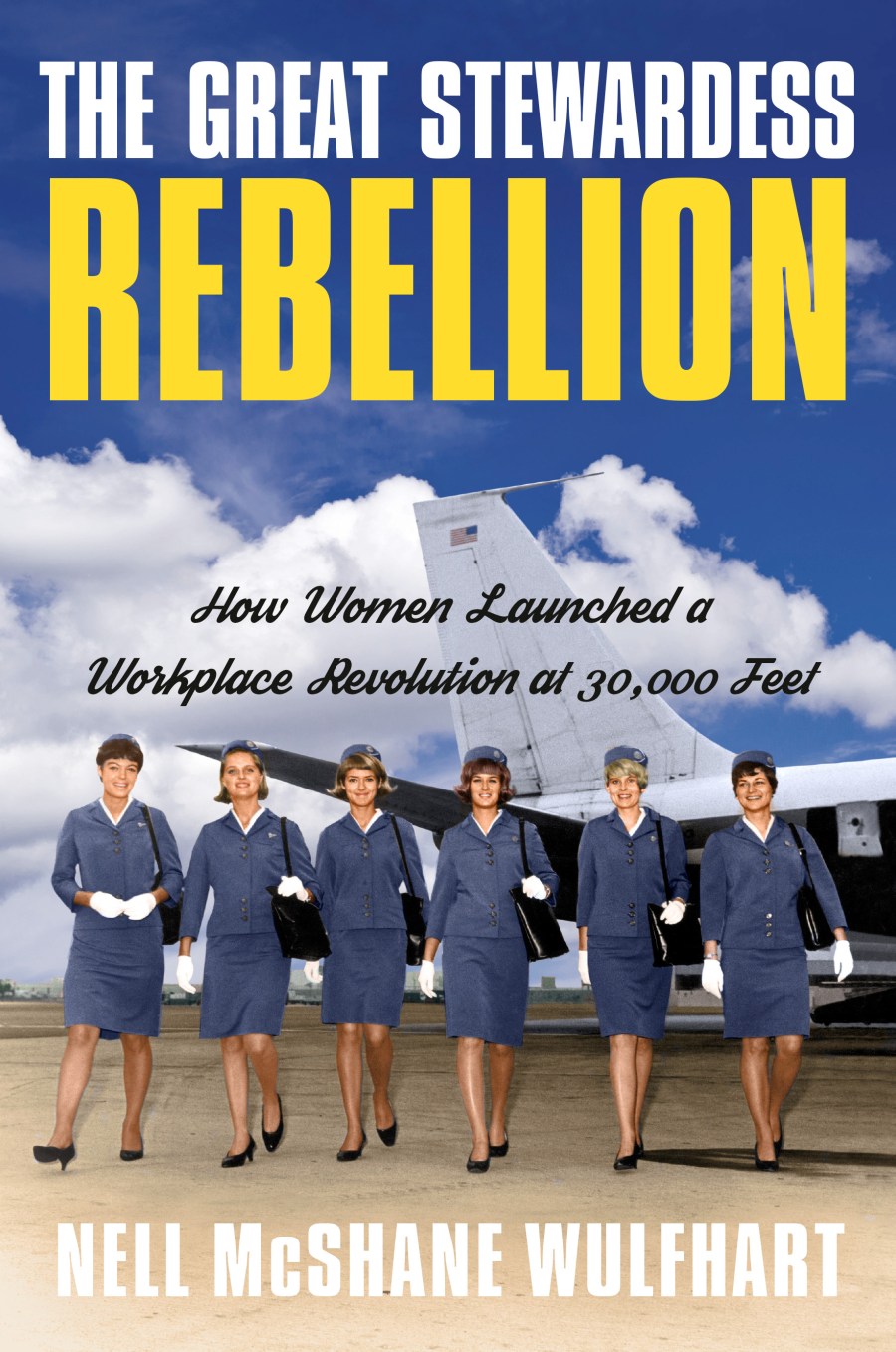
As Nell McShane Wulfhart documented in her new book, “The Great Stewardess Rebellion: How Women Launched a Workplace Revolution at 30,000 Feet,” the stewardesses faced many sexist constraints, including weight restrictions, a ban against marriage and children and forced resignation at the age of 32.
Luckily, many of the stewardesses banded together to push back against their employment conditions, a move that McShane Wulfhart said greatly influenced the modern labor movement for gender equality in the workplace.
Know Your Value recently chatted with McShane Wulfhart about her new book and what women today can learn from this group of courageous women who stood up for themselves – and each other.
Below is the conversation, which has been edited for brevity and clarity:
Know Your Value: Tell us about the genesis of the book. How did you decide to write a book about airline stewardesses and their decision to stand up to sexist working conditions and big corporations?
Nell McShane Wulfhart: Like most journalists, I’ve been tossing around book ideas for years. But when I stumbled on this untold history of how flight attendants changed the American workplace, I know this was the one. It was all about two of my biggest passion, feminism and the labor movement. Plus it had stewardesses! And everyone loves a stewardess.
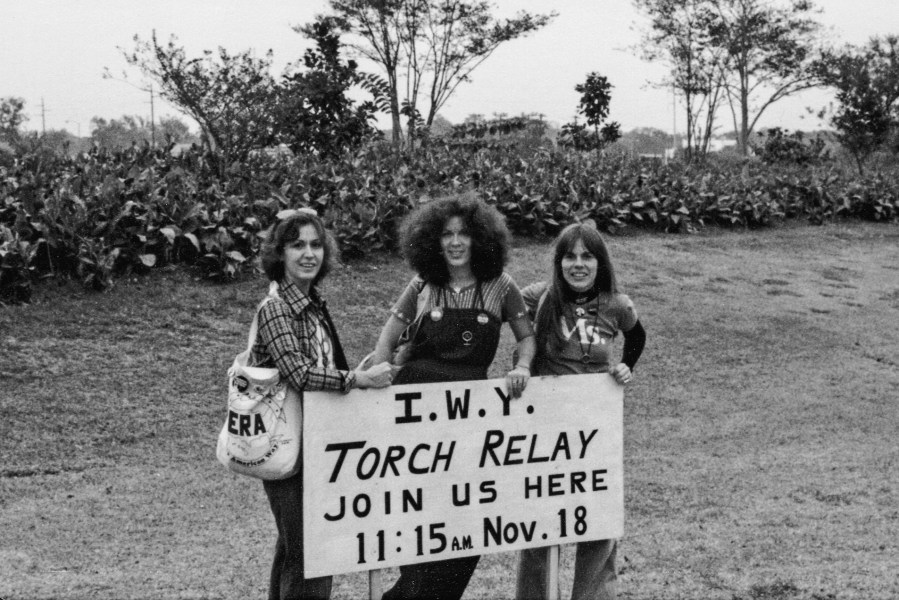
Once I started speaking to the women who had actually engineered this workplace revolution, I was even more hooked. The women in the book, my three main “characters,” are three of the most interesting, feisty, and surprising people I’ve come across. “Inspiring” is an overused word, but the things they did—in an era that was so sexist—are truly inspiring.
As I learned more about what life was like as a stewardess in the 1960s and 70s, I also got mad. When Patt and Tommie, two of the women in my book, told me that you would be fired upon marriage, pregnancy, or turning 32, my jaw dropped. When I read that you wouldn’t be hired if you wore glasses or had crooked teeth, I was raging. And when I learned about the weight limits—how you had to stay under a certain maximum that was determined by height, and that you could be pulled off a flight if you were a few pounds over the limit—I was looking for the time machine to go back and kickstart the revolution myself.
Luckily, I didn’t have to! It turned out that the stewardesses in The Great Stewardess Rebellion led their own revolution, battling all these sexist regulations, standing up to the men who ran the airlines and viewed stewardesses as simply “Playboy bunnies in the sky,” and making change that actually opened up the workplace for working women in America today. It was a story that resonated with me and one that I think every working woman can relate to.

Know Your Value: In your research, what was the most surprising thing you learned? Is there a particular story or interview that jumped out to you?
McShane Wulfhart: The working conditions for stewardesses were truly shocking, but some of the other surprising things I learned were how the stewardesses were viewed by the public. And that was thanks to the airlines, which decided in the 1970s to use the stewardesses as marketing tools. They put the women in some truly astounding uniforms—miniskirts that barely covered their bottoms, hotpants paired with go-go boots, racoon caps and tartan skirts, dresses made out of paper—to try to attract more male business travelers.
And they created some jaw-dropping advertisements that made no bones about selling sex. National Airlines ran a hugely successful campaign that used photos of working stewardesses smiling at the camera (smiling was a nonnegotiable part of the job), with the tagline “I’m Linda. Fly Me.” Linda, or Cheryl, or Cindy, were the real names of the flight attendants. This was not the most subtle of ads, but it made National a ton of money. Continental Airlines did a similar campaign, with the line “We Really Move Our Tails For You.” It was made very, very clear to passengers that stewardesses were on board to serve drinks and look good. But the stewardesses knew they were there as safety professionals. This is where the action starts!
Know Your Value: What can women today learn from these airline stewardesses of the 1960s and 1970s, especially in terms of taking on sexist workplace environment? What strategies worked – and what didn’t? McShane Wulfhart: I love this question! I learned quite a few lessons from what the women in my book did, and I’m excited to share them. First of all, they used the media to their advantage, doing a fantastic job of counteracting the sexist airline ads with protests of their own. They even made a counter-commercial, in which a flight attendant declared, “I don’t think of myself as a sex symbol or a servant. I think of myself as somebody who knows how to open the door of a 747 in the dark, upside down and in the water.” And they got out there protesting! When the “Fly Me” campaign came out, they picketed the ad agency that had come up with the idea. They marched outside the New York office holding signs that read “Go Fly Yourself!” They were also very clever at using their public image–the caring, beautiful woman who’d do anything for you–to get things done. In the 1960s, when hiring was restricted only to thin, conventionally attractive, young, and mostly white women, they pushed back against those restrictions. They didn’t fight them by saying the obvious: that the job should be open to women of every age. Instead, they would turn up at government hearings neatly turned out, wearing their uniforms, smiling—and then ask the people in charge to guess which one of them was over 32, or married, or had kids. It was a way of using the sexist regulations against the companies that had imposed them—and it worked. And, and this is the most important thing, they leveraged their union to get what they needed. This was tremendously effective. They used the power of numbers to do things like get rid of the requirement that stewardesses wear high heels on the plane. They could easily clock up eight miles of walking in a single flight, and male flight attendants wore flat shoes. So they bargained to get that requirement out of the contract. They used their unified strength to get single rooms for female flight attendants on layovers (male flight attendants and pilots always got their own rooms). They managed to achieve so much through the power of their union, in a way that we can also see today at other places that are unionizing, like Starbucks and Amazon. Know Your Value: While the working environment certainly has changed for the better for airline stewardesses, you have said that the “myth of the promiscuous cocktail waitress in the sky remains.” What are the biggest challenges that remain for these workers? McShane Wulfhart: Getting respect as safety professionals has always been a problem for flight attendants, particularly women. Whether it’s running a safety demonstration while wearing hotpants back in the 70s, or being called “sweetheart” by the pilots, or getting passengers to keep their masks on today, flight attendants still struggle to be taken seriously. Back in the time period I write about, there was a perception that flight attendants were promiscuous jetsetters who were on the plane to flirt, and maybe find a husband. And that idea hasn’t entirely gone away! And in the COVID era, with tensions running so high, and extra regulations in place for travel, flight attendants are expected to be safety professionals, waitresses, and security guards all at the same time (and to do it all with a smile!). Right now, dealing with passengers who don’t want to wear masks, or who have drunk too much, or who just don’t feel like following the rules has become truly hazardous—there are stories in the news all the time about passengers screaming at, spitting on, groping, and even punching flight attendants. And I think a lot of that comes from the long-held idea that flight attendants aren’t “real” workers. So there are still plenty of battles left for them to fight! But I think flight attendants of today can learn a lesson from the flight attendants in my book, who were fighting for workers’ rights and respect 50 years ago….and whose efforts have made the American workplace one that’s fairer, more open, and getting ever closer to equality.
Know Your Value staff Recommended


