








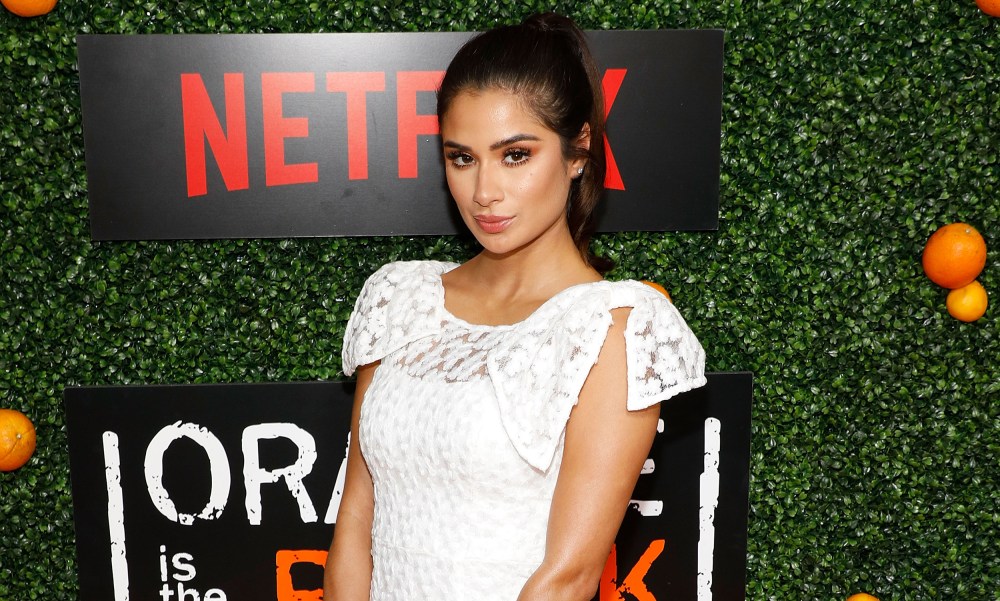
Few TV shows have impacted diversity on screen like “Orange Is the New Black” and “Jane the Virgin.” Breakthrough actor Diane Guerrero happens to star in both hit series and is doing her part to make minority voices heard and seen – in more ways than one.
I asked the 32-year-old about her personal impression, as a Latina, seeing herself for the first time on television, “It didn’t seem real to me,” she responded. “I almost thought it was fake, like no one’s going to believe this – who’s going to believe this?!”

Her immediate sense of disbelief, she said, is due to the lack of Hispanic talent in film and television. “Even when there’s a moment where we see one of us represented we’re like, ‘What? That’s not real. We don’t believe that.’ … We’ve grown up not seeing ourselves. So that took a while to get used to and accept.”
Guerrero was born in the U.S. and raised by Colombian parents, growing up with both Hispanic and American traditions. But like many other cross-cultured young adults, she found herself facing an identity crisis.
Recently Guerrero contributed to fellow actor America Ferrera’s new book, “American Like Me: Reflections on Life Between Cultures,” where she wrote about her experience. “The sad thing growing up was feeling like you had to choose one [culture] and that you weren’t enough for either one.”
She encouraged other young people to “embrace the gray area,” and reject the notion that cultural identity falls into rigid categories.
“We’re taught that if we don’t fit into a box then we’re not safe,” she added. “[But] the more boxes you fit into, the safer you are because the more people you can connect with, the more people you have in your corner, the more people understand you or you can understand them.”
Her message was simple: “Love yourself no matter who you are or where you come from.”
She quickly realized that embracing her Latino roots would became an indispensable asset.
Guerrero recalled a rewarding moment when she worked at a Barnes & Noble café, before launching her acting career. A woman who spoke Spanish struggled to communicate her order. She turned to Guerrero and pleadingly asked if she spoke Spanish and could assist. Guerrero’s simple act of doing her job and connecting with the woman – who was desperate to be understood – proved to be incredibly fulfilling.
Guerrero immediately thought of her parents – how proud they would be. She was only 14 years old when she came home to an empty house after realizing that her mother and father, who were both undocumented immigrants, had been deported. She tells this story in detail in both of her memoirs, “In the Country We Love: My Family Divided” and “My Family Divided: One Girl’s Journey of Home, Loss, and Hope.”

Helping the woman at the café was a small but powerful way to pay tribute to her roots in her own way: “I thought about all of the moments my parents stood there not knowing a lick of English and thinking ‘Can somebody help me? Can somebody connect with me?’”
Unheard, dismissed, and brushed off: These are circumstances not always understood by everyone, but they are all too familiar for first-generation immigrants who struggle with the language barrier. Reflecting on her Hispanic heritage, Guerrero said, “I love how we care for one another. I love our community, our traditions, our music, our food. I love that idea that we always lend a hand to our neighbor.” The actor and activist is doing her part to lend her voice to underrepresented groups, especially in Washington, D.C.: “We’re seeing an administration that is literally the opposite of helping your neighbor and I don’t want to live in a country like that. I want to live in a country where we believe in helping each other, where we see where resources are lacking. In order for us to move on and survive, that includes the survival of others.” Ahead of the midterm elections this year, she is not only speaking out on immigration reform and the family separation crisis, but also on mass incarceration. “Whether it’s joining an organization, being informed, or educating yourself – [that’s] revolutionary,” Guerrero argued. She points to the lack of education, health care and access to mental health resources for why many Latino communities continue to struggle. To be seen and represented in this country, you have to vote, she stressed. “It is a huge myth that our voices don’t matter, that our vote doesn’t count. That is complete bull. We have to realize that if we ban together, and if we all vote, then it does make a difference.” And for those disillusioned millennials who are dissatisfied with the current political climate, Guerrero had this message: “If you think it’s not going to get any worse, think again. It will get worse, if you just let it slide and let somebody else handle your lives … It is reported that 800,000 Latinos turn 18 every year [in this country]. Don’t tell me you don’t have power. Don’t tell me your vote doesn’t matter.” Daniela Pierre-Bravo is Know Your Value’s millennial contributor. Read more about her here. Follow her on Twitter and Instagram @dpierrebravo.
Daniela Pierre-Bravo
Daniela Pierre-Bravo is a journalist and author and founder of Acceso Community. She is a co-author of “Earn It” with Mika Brzezinski. Her solo book, “’The Other: How to Own Your Power at Work as a Woman of Color,” is out now. Follow her on X and Instagram @dpierrebravo. Recommended


