








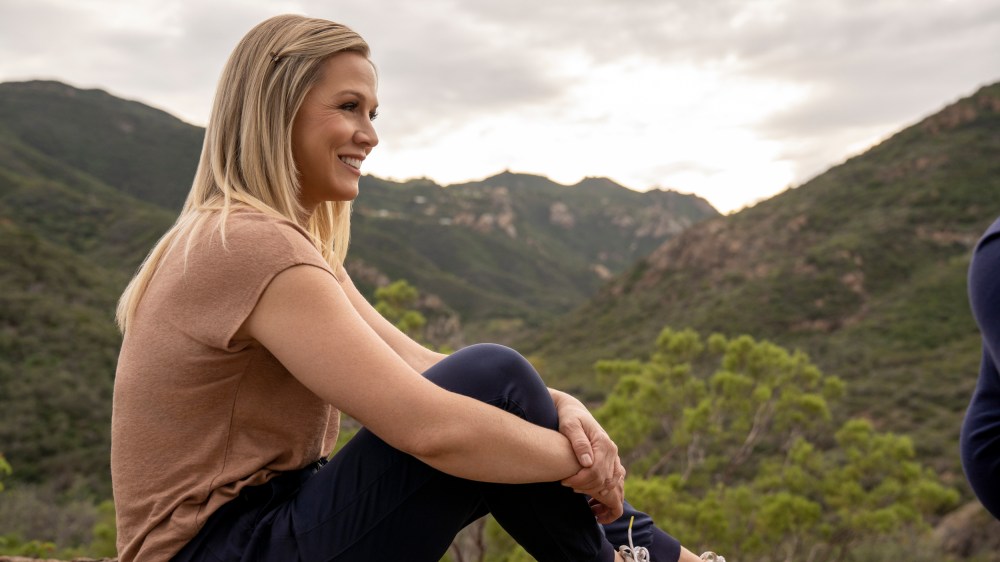
When she was in her mid-40s, actress Jennie Garth — best known for her role as Kelly Taylor in “Beverly Hills, 90210” — realized that her body wasn’t working in quite the same way as it did in her younger years.

“I started to feel different when I was bending down to pick stuff up or getting in and out of a car. I just started to feel more aches and pains than normal,” Garth told Know Your Value.
She eventually sought medical advice. The doctor quickly diagnosed Garth with early-onset osteoarthritis, a common form of arthritis that occurs when the cartilage that protects bones wears down over time. At 47 years old, Garth was shocked at the diagnosis.
“I’ve lived a lot of life. I’ve ridden horses all my life. I’ve danced all my life … So my body has had a lot of wear and tear,” said Garth, now 50. “For me it was weird to accept [the diagnosis] because there’s such a stigma around arthritis — that it’s just for old people. I didn’t think I would be getting it at this age.”
And because she wants to eliminate that stigma around the condition, Garth opened up about how she copes with chronic pain while caring for her family — and how she still manages to make time for herself.
Living with chronic pain
Over 32.5 million Americans are affected by osteoarthritis. Age, injuries, obesity, genetics and gender are all risk factors. Though there is no cure and damage is not reversible, people with osteoarthritis can treat symptoms with physical activity, muscle-strengthening exercises, surgery or medication.
In Garth’s case, arthritis runs in her family. And though it affects her daily life, she is confident that she can manage the symptoms.
“It’s good to know what’s going on in my body. So talking to a doctor about it was really important. But now it’s just something I manage through different [over-the-counter] products and staying really active and mobile,” Garth said. “I think when people are in pain, especially with joint pain or arthritis pain, they stop moving because it hurts to move. But one of the best things you can do for your arthritis pain is to keep moving.”
Taking care of others
In addition to raising three daughters, Garth took on the role of adult caregiver for her father (who lived with coronary heart disease) for years before his death in 2008. And now she’s caring for her aging mother.
“I’m a nurturing person by nature. I like to take care of people,” Garth said. “But when you’re an exclusive caregiver to someone — as so many people out there are — it can really be a very isolating experience.”
Caregivers are either paid or unpaid individuals who assist someone else with daily tasks or medical tasks. More than 75 percent of caregivers are women and the emotional and physical strain often contributes to their health issues like depression, anxiety, lowered immunity, obesity — and chronic diseases like osteoarthritis.
“A lot of times so much of the focus is on the patient and not the caregiver,” she said.
A caregiver’s health can easily break down from mental stress and physical strain when they prioritize other people’s physical and mental health — and regular check-ups — before their own. Recently, Garth teamed up with Voltaren Gel’s Care Walks campaign, an initiative to support caregivers living with osteoarthritis. She hopes the campaign will help “flip the script and put the spotlight on the caregiver and let their voices be heard.” The “90210” star also urged others to acknowledge and support the caregivers in their daily lives, whether they are raising children, taking care of elderly parents or caring for an ailing spouse. “When you feel like you’re alone in something, there’s such power in talking about [your situation],” she said. In raising her daughters (one of whom has Juvenile Rheumatoid Arthritis), Garth prepared them to be self-sufficient. “You’re focusing on everything that they’re going to need to be without you,” she said. On the other hand, being a caregiver for her parents required, “a different level of patience, compassion, empathy and understanding in preparing them for something that’s so, so scary for them.” Like many women in the sandwich generation, it has taken Garth time to find the right balance between caring for others and addressing her own needs. “The last couple of years have been an opportunity for me to slow down and figure out what my mind and body need to feel better,” she said. To heal her body and mind, Garth meditates, goes on nature walks and solo golf outings. “Mostly I need movement and stretching and staying in tune with the mental noise that’s going on in my head,” she said. “[I do] what I can to settle it and sort of control it.”
Rosie Colosi, TODAY
Rosie Colosi is a reporter for TODAY Parents. Recommended


Caring for caregivers
Taking care of herself

