








If Congress needed another reason to hurry up on striking a debt ceiling deal, Fitch Ratings gave them another one Tuesday evening: they put the U.S. on “rating watch negative.”
The ratings firm didn’t downgrade the U.S., but they served up a serious warning.
“Although Fitch continues to believe that the debt ceiling will be raised soon, the political brinkmanship and reduced financing flexibility could increase the risk of a U.S. default,” Fitch said.
The Fitch news was just the latest in a slew of signs that just encroaching on the debt ceiling deadline — not even hitting it — is itself a problem.
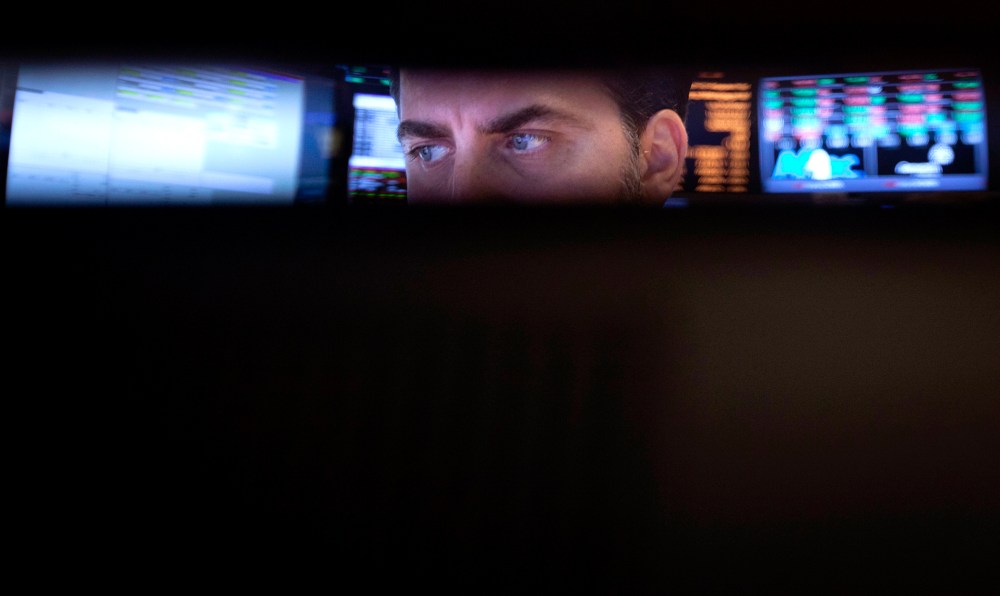
The stock market took a tumble after negotiations in the Senate reportedly stalled Tuesday afternoon, leaving the United States less than two days away from running out of money.
The Dow Jones Industrial average dropped by more than 100 points from Monday’s close amid the latest impasse in Congress over negotations to reopen the government and lift the debt ceiling. On Tuesday afternoon, the Dow was 0.64% lower, while the Standard and Poor’s 500 was down 0.5% and the NASDAQ was down 0.4%. But over the past four days, stocks have remained stable and the Dow managed to gain 525 points.
Most economists agree that the results would be catastrophic if U.S. breaches the $16.7 trillion debt ceiling. Suddenly, Uncle Sam wouldn’t have the cash to pay his bills, the U.S. would default on its debt, the country’s credit rating might get hammered, and investors around the globe would likely no longer see U.S. Treasuries as the super-safe investment they’ve long assumed to be backed by the full faith and credit of the world’s most powerful economy.
But even if we avoid a debt-ceiling breach, the consequences even of coming irresponsibly close to defaulting could permanently cripple the U.S.
John Coleman, a professor at Duke University’s Fuqua School of Business who previously served as an economist on the Federal Reserve System’s Board of Governors, told MSNBC.com that even if there’s a chance of hitting the ceiling, many will be “more cautious about buying U.S. debt if they attribute any expectation that there might be a default.” That, he said, could lead to a higher cost of borrowing for the U.S. government.
Sen. Sheldon Whitehouse of Rhode Island, who sits on the Senate Committee of the Budget, told MSNBC’s Rachel Maddow that the U.S. is already coming into dangerous territory.
The Democrat said even when you get close to default, “Other countries, bankers, people buying treasury securities look around and think ‘this security doesn’t seem quite as secure as it used to. I think I’m going to have to charge a little bit more in order to come and be a buyer.’” Whitehouse added that “because we pay the interest, that comes right out of the taxpayers’ pocket. He added it would cause overall “uncertainty in the economic world.”
Of course, the markets aren’t completely freaking out just yet, likely out of hopes there will be a last minute deal. Coleman said “investors see this as a political game and the crisis will be averted.”
As of Tuesday afternoon, bipartisan negotiations in the Senate stalled, according to NBC News. Meanwhile, House Republicans writing their own proposal met swift disapproval from Dems. Senate Majority Leader Harry Reid said he felt “blindsided” from the measure, that it was a “blatant attack on bipartisanship” and said it “can’t pass the Senate and won’t pass the Senate.” Republican sources told NBC News that the House bill called for extending spending through Jan. 15 and the debt limit until Feb. 7 –similar to the Senate proposal. The House measure woul also delay the medical device tax in Obamacare for two years and take away lawmakers’ subsidies to purchase insurance under Obama’s healthcare act. If you look at two recent examples of Congress waiting until the last minute to raise the debt ceiling, there were indeed (expensive) consequences. In 1979, a slow-as-molasses Congress waited until the last minute and partially defaulted on its debt, temporarily. It was attributed to a “technical default” when some payments went out late after Congress came too close to the deadline. The drama resulted in interest rates being hiked about ½ a percent – adding about $12 billion to the cost of the national debt. And in 2011, the U.S. got awfully close too, resulting in the country’s credit rating getting downgraded for the first time in history. According to the Government Accountability Office, that setting back the government $1.3 billion in borrowing costs. Of course, some fringe GOPers are arguing the consequences of hitting the debt ceiling wouldn’t be so bad. Rep. Steve King of Iowa called the talk over the debt ceiling limit and default “false demagoguery.” Rep. Ted Yoho of Florida has even argued it might even “bring stability to the world markets” because people would be assured the U.S. was making moves to curtail its debt. Whitehouse dismissed such rhetoric as crazy talk, and that the consequences would be horrible. “It’s like climate denial,” he said of the GOPers. “It’s really hard to reconcile it with reality.”Recommended


