








Following the House’s lead, the Senate is poised to pass a budget deal this week despite major opposition from conservative groups.
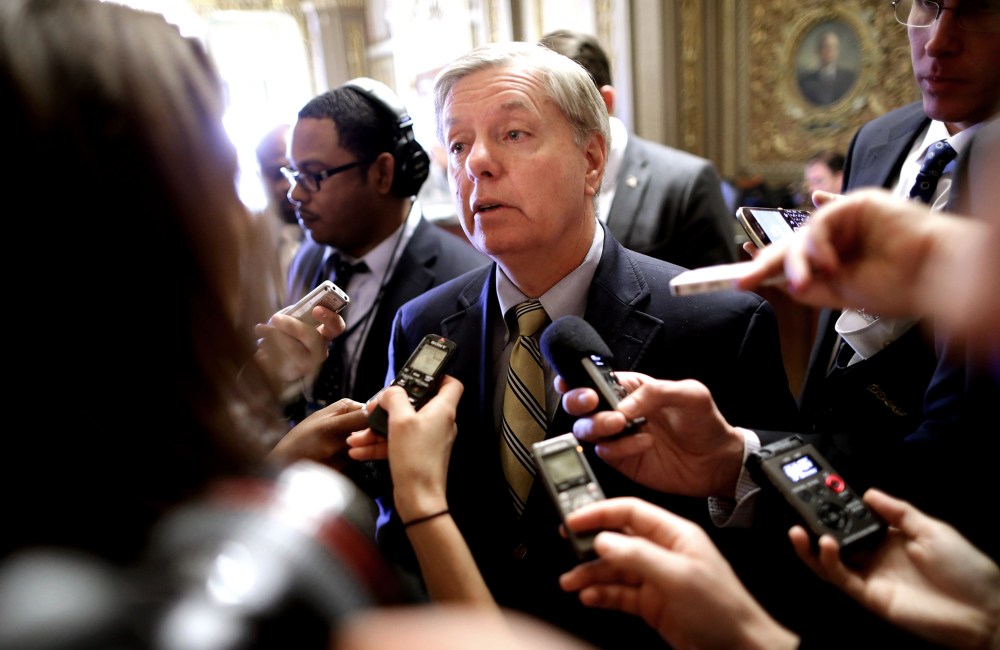
For a brief moment, there was a scare as Senator Lindsey Graham of South Carolina, who often helps shepherd bipartisan deals to passage, announced his opposition. Senate Minority Leader Mitch McConnell, who like Graham faces a primary challenge from the right, is also against the bill. But Republican Senators John McCain and Jeff Flake of Arizona, Susan Collins of Maine, Richard Burr of North Carolina, Ron Johnson of Wisconsin, and Orrin Hatch of Utah are publicly on board. That should be enough to carry it past an expected Republican filibuster.
Bob Corker of Tennessee told reporters Monday evening that while he opposed the budget deal, he was still on the fence about whether the procedural vote to advance it.
“I’m definitely voting against the policy. With all the effort that I know our office has put in place to live within the caps, we’re disappointed with the outcome,” Corker said.
Conservative activists have decried the bill for replacing short term sequester cuts with promises of future savings down the line. Their opposition led to a rare rebuke from Speaker John Boehner, who said groups critical of the deal “have lost all credibility.” Republicans in the House largely sided with Boehner, easily passing the bill 332-94.
But just because the Senate seems poised to follow suit doesn’t mean we’ve reached the end of crisis politics. They’ve only agreed on the overall level the government will spend over the next two years — they still have to do the hard work of passing appropriations bills to work out individual agencies’ spending. And the debt ceiling, which needs to be raised by February 7, is still a live issue.
“We don’t want ‘nothing’ out of the debt limit,” Ryan told Fox News Sunday. “We’re going to decide what it is we can accomplish out of this debt limit fight.” President Obama has maintained throughout the previous debt ceiling fight that he would not negotiate over the debt limit, which he considers a basic obligation Congress must fulfill and — given its potential to cause a financial meltdown — too dangerous to subject to repeated brinksmanship. But it’s still an open question how much of an appetite for another knockdown fight Republicans will have after the shutdown. The budget deal could signal that the GOP is unwilling to risk that much now that they’ve focused attention on the health care law’s difficult rollout. Or, they could be trying to get the issue out of the way so they can better prepare for a staredown on the debt ceiling. “I think that’s what some people are looking to: ‘We need to go ahead and get this done and get the appropriations process going and then we got another fight to come soon after this,’” Republican Senator John Boozman of Arkansas told msnbc Monday.
Benjy Sarlin Recommended


