








Let me finish tonight with this.
I enjoyed Cita Stelzer’s new book, Dinner with Churchill: Policy-Making at the Dinner Table. While managing the war, the British prime minister maintained an active palate, a taste for whiskey and cognac, and a nose for a fine Cuban cigar.
But the real takeaway from the book was that this so-called Man of the 20th Century was more productive at the dinner table than the conference table, and as we look to the start of the president’s second term on Monday, it’s a lesson which needs to be appreciated by modern day Washington.
That we live in polarized times is not subject to debate. Just look at the difficulty politicians had in navigating the fiscal cliff, or the looming disagreement over gun control.
One of the causes is incivility. Elected officials spend very little social time with one another. They don’t move their families and settle here anymore. They’re too busy running home to raise money.
To spur a climate where collegiality reigns will require both sides extending themselves. The president has many attributes, but this sort of socializing doesn’t appear to come to him naturally the way it did to, say, JFK or Reagan.
He disagrees. Here’s what he said when asked about the insular nature of his White House at this week’s press conference: “Most people who know me know I’m a pretty friendly guy. And I like a good party.”
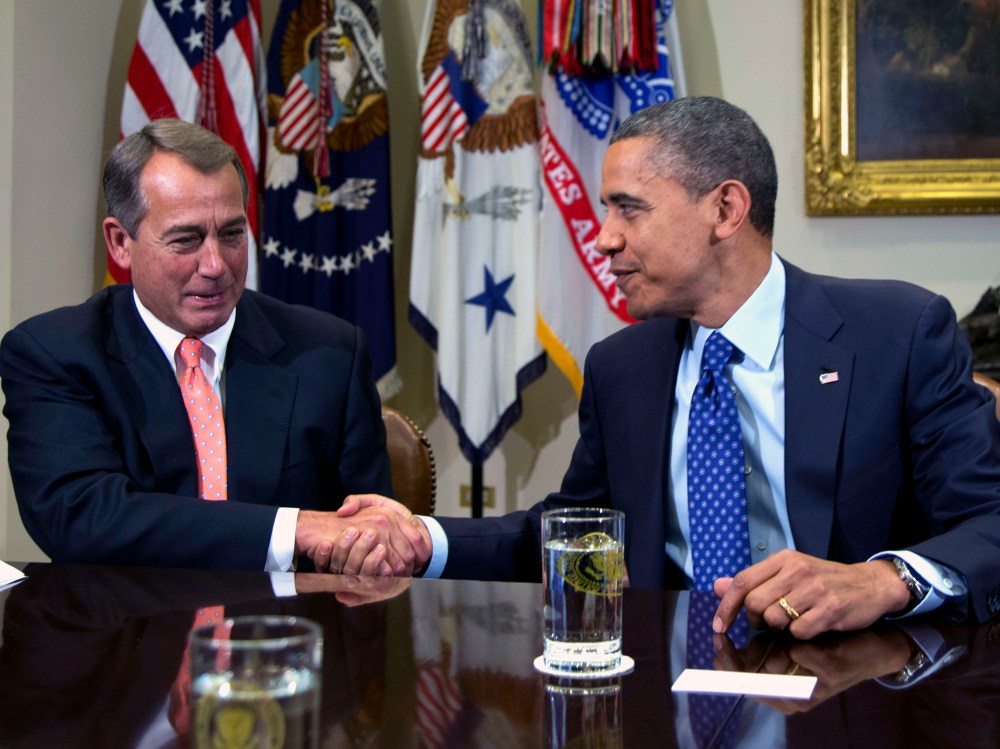
Still, when he extends himself, his overtures need to be reciprocated. Last week, ABC reported that Speaker Boehner has turned down an invitation to every formal state dinner President Obama has held—six in total. And that Senate Minority Leader Mitch McConnell had turned down at least two. And that McConnell even declined an invitation last spring when the University of Kentucky men’s basketball team was honored at the White House for winning the national championship.
In 2011, the White House held a reception for newly elected members of Congress. Only 27 of the new Republican House members showed up out of the record freshman class of 87. And more recently, no elected Republicans attended a White House screening of Lincoln last month. Had Mitch McConnell, John Boehner, Lamar Alexander, and Tom Coburn attended (they were invited), they would have joined Nancy Pelosi and Harry Reid—not to mention Steven Spielberg, Daniel Day Lewis, Sally Field, James Spader, and Tommy Lee Jones! As Tip O’Neill famously said about his political foe Ronald Reagan: “Love the sinner, hate the sin.” We need to get back to a time when a President Reagan would invite a Tip O’Neill over to the White House for drinks despite their ideological disagreements. Raise a glass to each other. There’s no shortage of parties planned around Inauguration 2013. Here’s hoping that conviviality spills over to the next four years and both sides of the aisle make a move to be more social, more civil, and more productive.
Michael Smerconish Recommended


