









In 2013, Morgan DeBaun had a job in Silicon Valley that seemed perfect on paper: great work perks, flexibility and upward mobility on the corporate ladder. But something didn’t feel right.

At just 23, she felt drained, dissatisfied and uninspired. Quietly, she was building a side hustle that would become one the largest media startups and lifestyle brands for Black millennials: Blavity, Inc.
“I’m quitting,” she revealed to her father over the phone at the time. As a successful doctor who wanted her daughter to thrive, he told DeBaun it was an “irresponsible decision” to walk away from her tech job.
And after all, the data was stacked against her. Only two percent of women receive venture-backed capital. Not only that, but DeBaun seemingly lacked the traditional background of other women entrepreneurs, her father pointed out.
How a career pivot at age 32 led Ava DuVernay to become the first Black woman to direct a $100M film
“Every single one of them, at the time had a master’s degree, they were either a lawyer or they had an MBA or an accounting degree,” DeBaun recalled her father telling her. “He was doing that to show me, ‘this was their pathway — these were the rules that they followed — are you sure you want to do this?’”
But DeBaun persisted, and against all odds, what started as a whiteboard vision in her San Francisco apartment living room exploded into a multimillion-dollar media empire.
Today, Blavity, Inc. reaches more than 100 million people each month and has a growing brand portfolio that includes Blavity News, 21Ninety, AfroTech, Travel Noire, Shadow And Act, and Blavity TV.
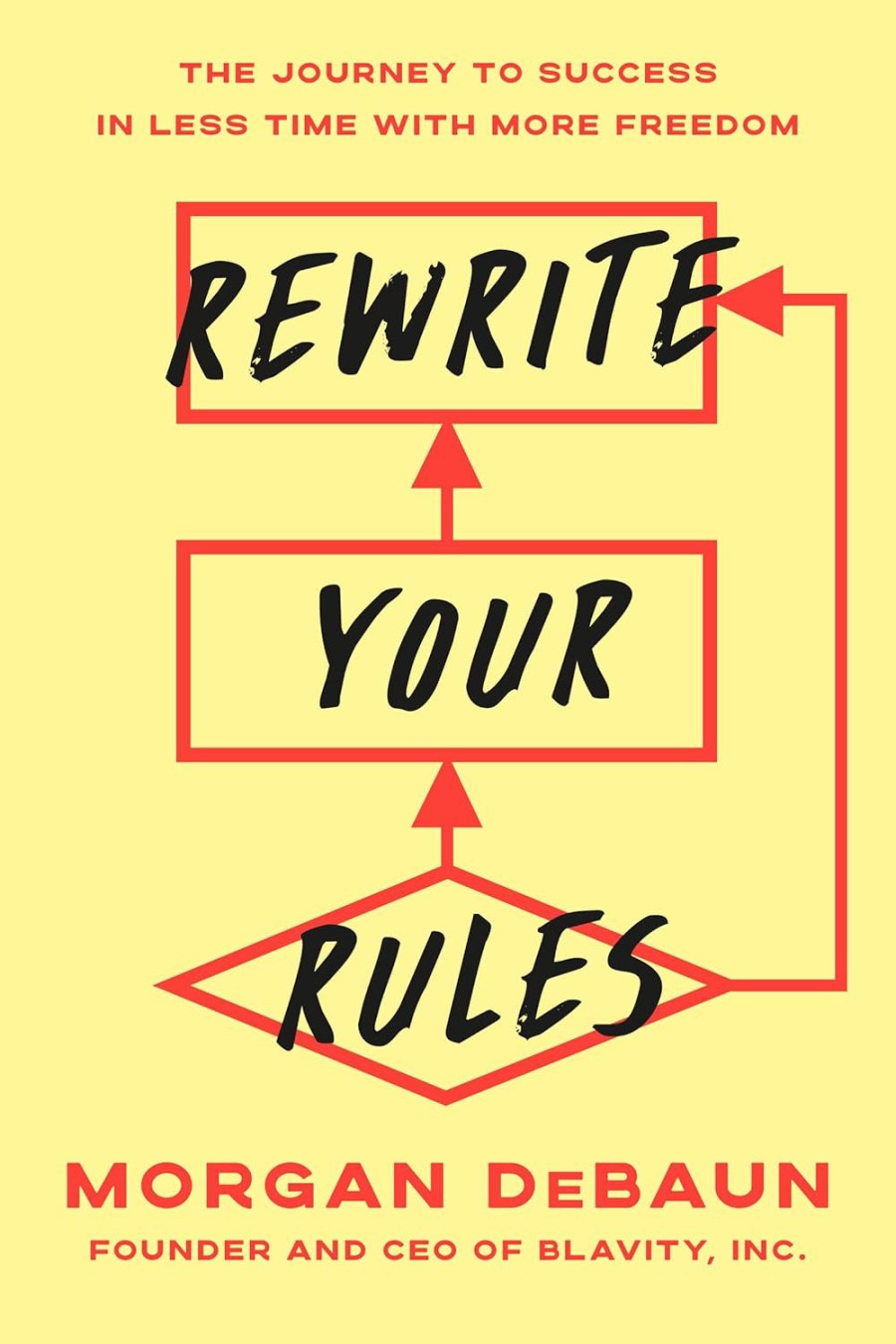
In her new book, “Rewrite Your Rules: The Journey to Success in Less Time with More Freedom,” DeBaun, now 35, chronicles the unorthodox path that led to her entrepreneurial success.
“Breaking free from societal conditioning requires continually questioning the status quo,” she writes. “It’s about being OK with the idea that your journey might look different from others.”
Recently, DeBaun shared her framework for balancing ambition with purpose. For the founder and CEO, that starts with working smarter, conquering fears along the way and rejecting toxic hustle culture.
Below is the conversation, which has been edited for brevity and clarity:
Know Your Value: In your book, you have a chapter on fear management. What is your toolkit for dealing with those moments of fear or anxiety?
DeBaun: I’m very much an introvert, and I had a lot of social anxiety being a woman in these rooms where I was around CEOs.
Google Ventures (GV) was my series A investor, and it’s one of the top venture capital firms in the world. They do an annual dinner and I was invited because Blavity was a company that they invested in.
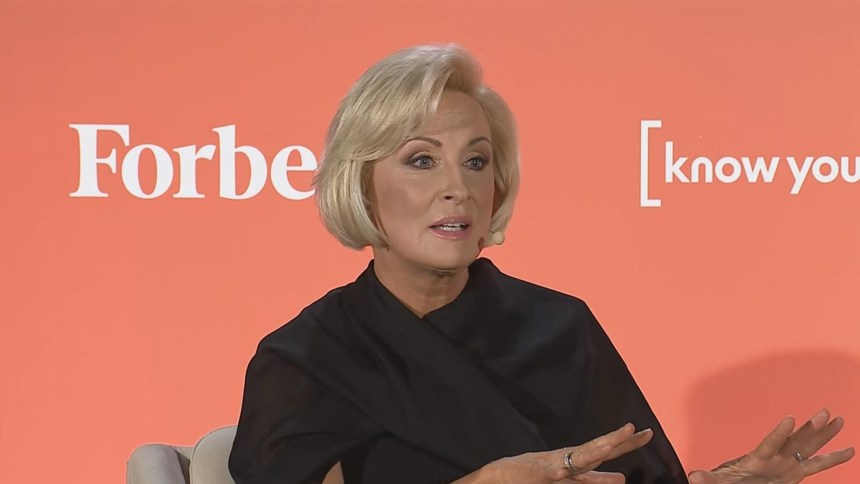
Sitting to my right was Evan Williams, the co-founder of Twitter. To my left was [someone] who was building proteins from labs so that you could create artificial food. And I’m like, “I have a website!”
It was a moment where I said [to myself]: “OK, they raised money from the same people who vetted me. Like, get over yourself — sit at this table — you’re already here.”
And then the second thing I realized — that I had to continue to talk myself through — is you worked so hard to get here, and there are thousands of others who are also working so hard to get here [who] will never be in this room.
So, there is a bit of privilege that I have to accept and acknowledge … because there’s some other person who works just as hard and is not here. It’s my responsibility to represent our business, our employees, our investors — to represent all of the people who aren’t here — and take advantage of it.
‘Your ambition scares people’: Here’s why that’s a good thing.
Know Your Value: In the book, you talk about how to work smarter, not harder. What are some tips to do that?
DeBaun: I believe everyone is a CEO of their life. You can choose to be an employee of your life or you can choose to be the boss.
In the chapter, “Building your team like a CEO,” one of the frameworks is called your “CEO task versus your operating task.” What are the things that you want to do as a CEO of your life? What are the things that only you can do?
If you are a mom, you might say the things that I can do and want to do are: “I want to pick my kids up in the morning because I enjoy the cuddles in the morning out of their crib,” or “I want to drive them to school because I enjoy the conversation that we have.”
And then there are operating tasks, like laundry. We walk through how to … build teams, tools, resources, to start to do the things that you don’t really want to do but you’re doing because there’s no one else to do it.
Figuring it out within your own network, your neighborhood, your resources, what you can even barter. Maybe your neighbor has a beautiful garden and you really love cooking, maybe you start making batch meals, bringing it to them and they maintain your garden once a week. There are ways to have a fulfilling life where you’re doing more of what you want to do and less of what you don’t. Know Your Value: What you’re describing is a solution to the hustle culture mentality, where we do everything ourselves. DeBaun: Who does it serve? When we all work as hard as we possibly can, regardless of the impact to our personal lives, it almost always serves the person in power. Until we decide that we want to be the people in power, we will continue to be burned out. So in order to build the muscle and the skill set to know when you’ve hit your personal threshold — when it’s time to step off the hamster wheel [and] rebalance your life — you have to have a center and something that is worth stepping off the hamster wheel for. Know Your Value: You talk about a three-part framework as the antidote for toxic work culture: Master yourself, Master your method, Master your growth. What does that entail? DeBaun: Master yourself is all about focusing on who you are, what your purpose is. How do you define your relationship with money? Typically, hustle culture is tied to value at work and value to accumulating money. And what does real wealth look like? Wealth in relationships? Wealth in time and freedom? [It’s] not just having a lot of zeros in your bank account. Once we have some clarity, we need to work on how you’re going to get there because everybody can build a beautiful vision for their life. That’s the fun part. But what are the strategies and tradeoffs that you’re willing to make to get there? Who are the people that you need beside you, building your team? What’s the how on managing your time? And then the last chapter is mastering your growth. Now that we have a plan and a strategy and a framework … there’s other things that have to happen in order for you to be able to grow repeatedly at scale. That is what master your growth is about … I teach the frameworks that I’ve learned in Silicon Valley about fast growth. We talk about things like sprinting and the agile methodology of building teams and building products really quickly and getting things out into the world. Know Your Value: You’ve had several transitions — from corporate to creative — then stepping back to be a mother. How do you navigate those life transitions without losing sight of your own career goals and personal happiness? DeBaun: It’s something that I think requires a strategy. You can’t go with the momentum, because the momentum will put you exactly where the system already is. If I went with the momentum of my life as a CEO, I would continue to be operating full-time as CEO. When you want to change course, you have to start to move the momentum against what is natural. For me, what it looked like was hiring a professional operating team at Blavity because if I was going to step away, the business still needed to grow and be stable. I needed to replace me with something else. Same thing now, I have a 17-month-old son. I’m also pregnant. That’s a whole different level of management. So, I’m managing with the team, and we’re talking about transitions. We’re talking about what timing is going to look like and getting everybody on board. Too often, people don’t keep their goals public, they keep them internal. And I believe the more we talk about our goals — talk about where we’re going, and we give people time to adjust around us — the more they will adjust around you. Even when it’s personal and a little uncomfortable, it is absolutely worth it.
Daniela Pierre-Bravo
Daniela Pierre-Bravo is a journalist and author and founder of Acceso Community. She is a co-author of “Earn It” with Mika Brzezinski. Her solo book, “’The Other: How to Own Your Power at Work as a Woman of Color,” is out now. Follow her on X and Instagram @dpierrebravo. Recommended


Vontelle eyewear founders on why ‘your network is your net worth’
Why taking a career pause to raise your kid could help your long-term success
