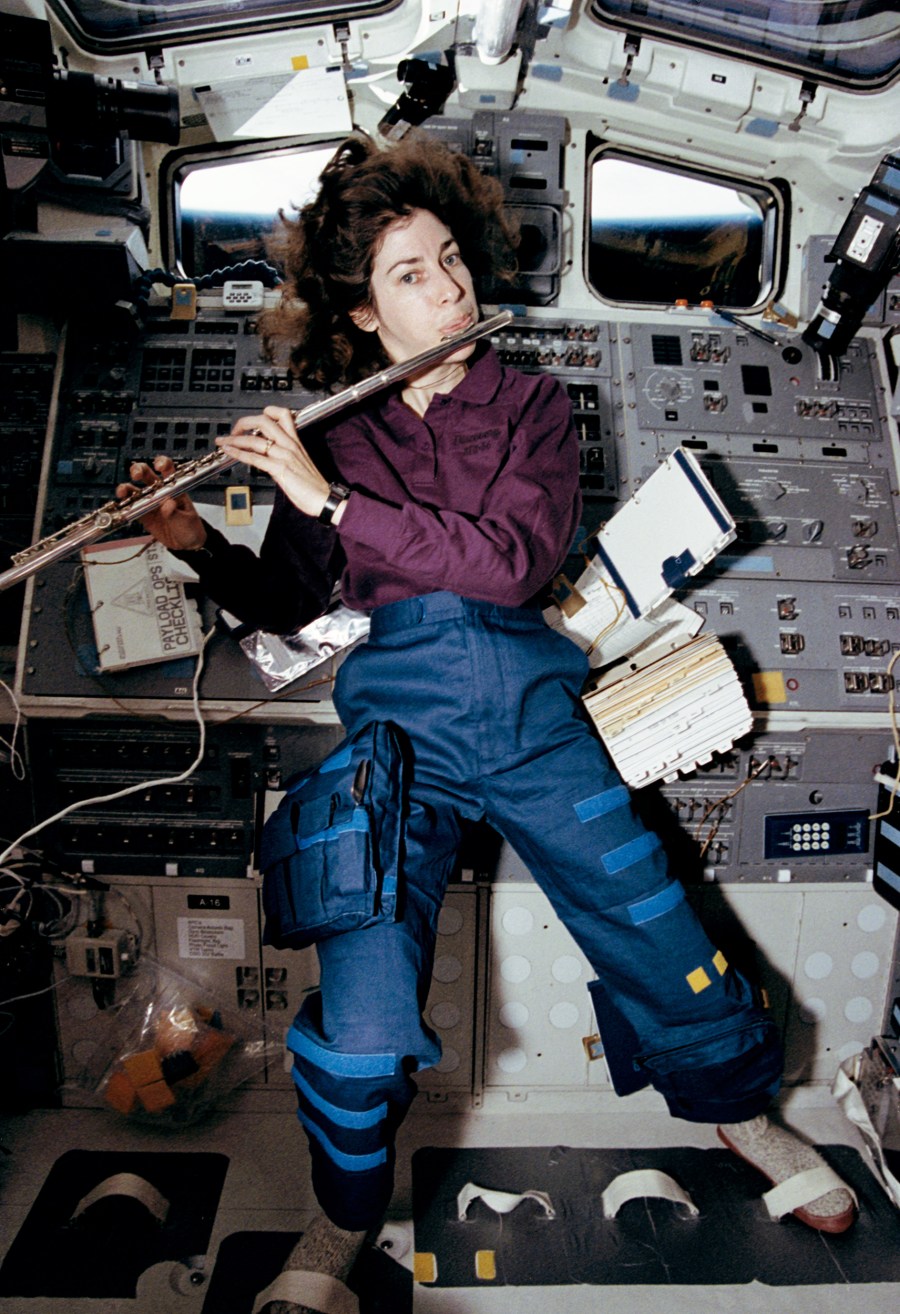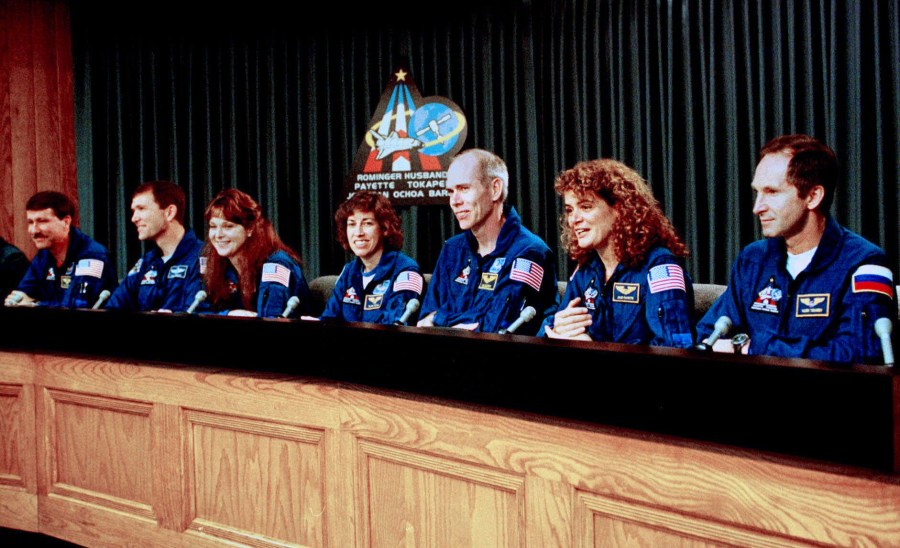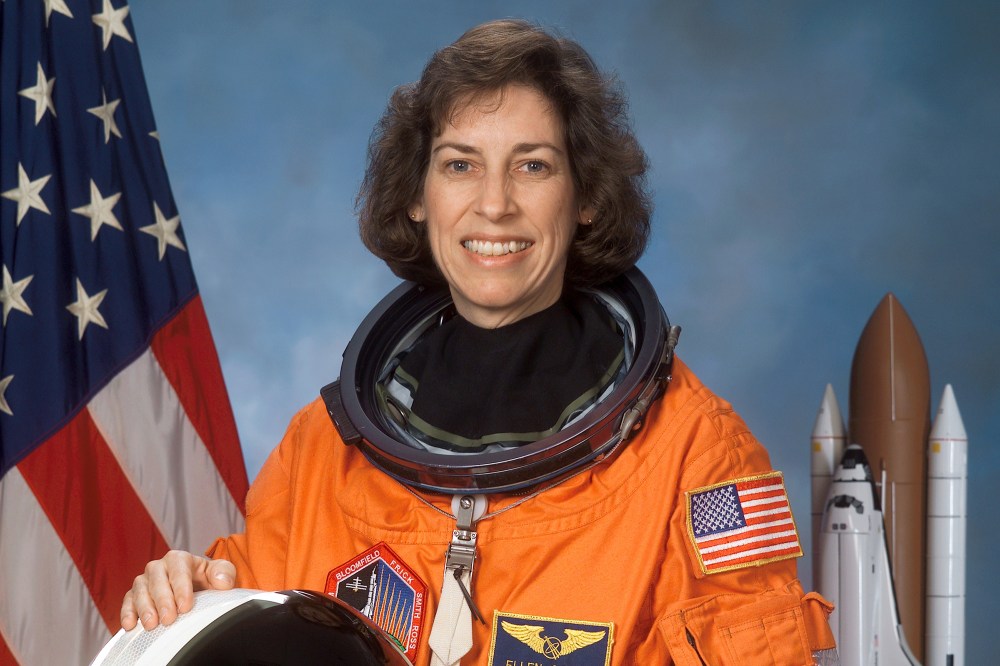
When former astronaut Ellen Ochoa was young, she never dreamed her future would be in science and engineering, much less space exploration. She knew she liked math but had no idea where that interest would lead until she reached college.
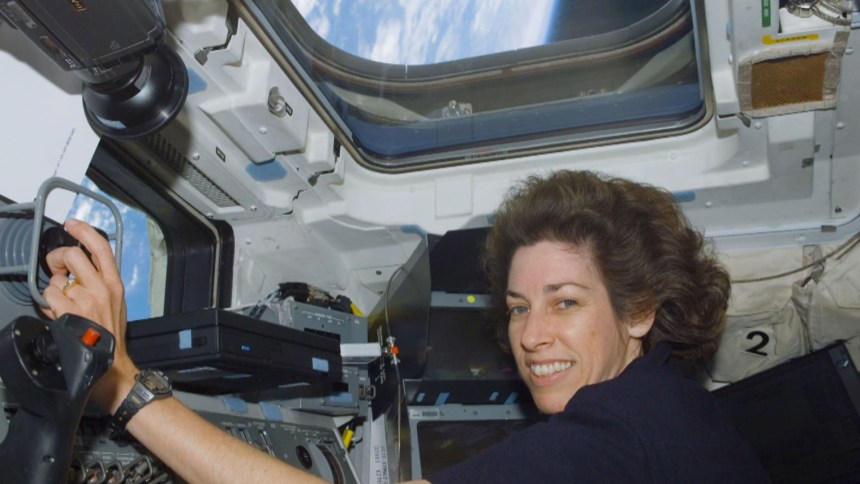
“I didn’t really know any [role models],” Dr. Ochoa recently told “Morning Joe” reporter Daniela Pierre-Bravo during Hispanic Heritage Month. “And as you read about scientists or engineers, you hardly ever see women, certainly not Latinas … so it just wasn’t something that I was thinking about.”
Now, after a 30-year career with NASA as an engineer, astronaut and director the Johnson Space Center, Ochoa, 64, wants the next generation – especially young children of color – to see what she didn’t initially: a future in science, discovery and exploration.
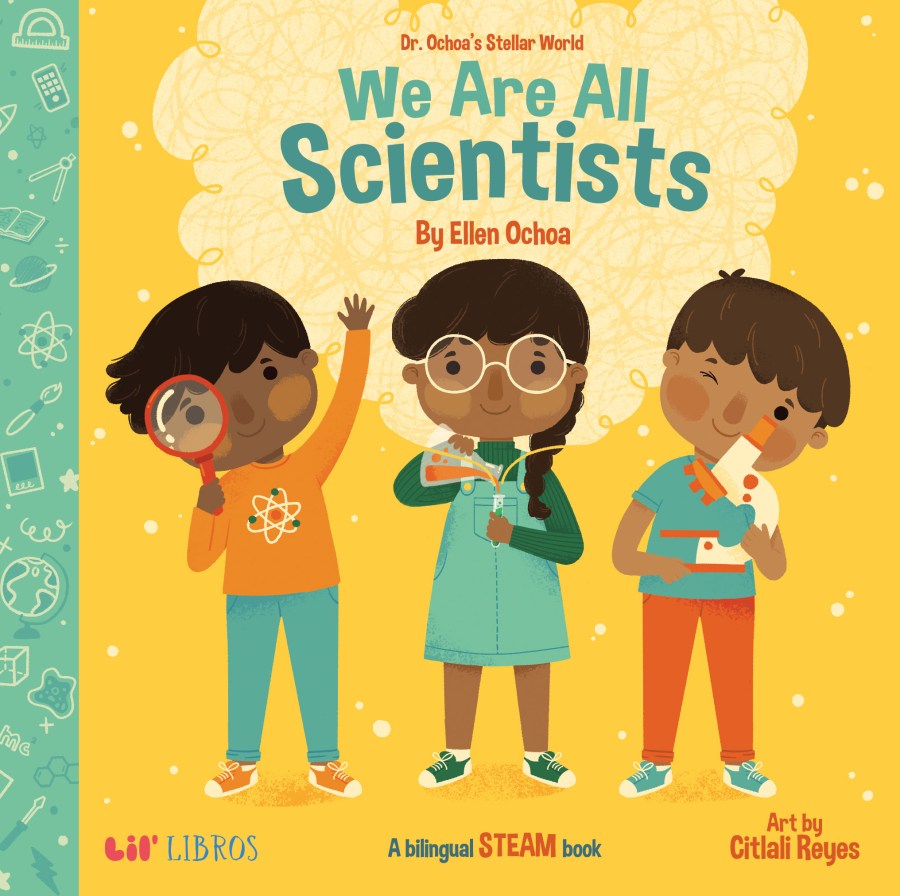
That’s why she teamed up with bilingual publishing house, Lil’ Libros, to impart the lessons she’s learned about science and its opportunities in her debut English-Spanish children’s book, “Dr. Ochoa’s Stellar World: We Are All Scientists / Todos somos científicos.”
“Science is all around us, and children are born with a keen desire to explore, making them natural scientists,” Ochoa said. Hers is the first of five concept board books in Lil’ Libros’ STEAM Series (Science, Technology, Engineering, Art, Mathematics).
For the Astronaut Hall of Famer, her path to becoming the first Latina in space didn’t begin until she finally found a source of support. “I definitely ran into to some professors who didn’t see me as somebody who should be pursuing engineering,” she said. “But I ended up majoring in physics partly because of my physics professor who talked to me about some of the careers people can have when they study physics, and told me he thought I could do well because of my math background.”
While that encouragement initially launched her on a research engineering path, it was NASA’s astronaut class of 1978 that really got her thinking about a career with the space agency.
“[That class] was the first group that included women and astronauts of color,” she told Pierre-Bravo. “And a few years later, when I was in graduate school, Sally Ride flew – the first American woman in space – that was a huge milestone and it really illustrated that this was a career that was now open to women that had not been before.”
Ochoa realized the space shuttle program presented a ground-breaking opportunity. “[It] was a unique laboratory in space, and so I could combine my interest in doing research with the excitement of space exploration.”
When she was selected for the astronaut program in 1990, Ochoa made history when she served on a 9-day mission aboard the shuttle Discovery in 1993. Over the course of her four space missions, she logged nearly 1,000 hours in orbit, studying the Earth’s atmosphere and helping to assemble the International Space Station. Eventually she went on to become the director of NASA’s Johnson Space Center in Houston, TX – only the second woman do so and the first Latina to take the helm. “I do think it was quite meaningful for a lot of the other people at the center who maybe didn’t know me personally to realize NASA has changed, it’s got a much more diverse workforce not only across the board, but in leadership and visible positions,” she said. “But for me it was all about what every leader needs to worry about: Accomplish the mission and take care of your people, all of your people at the center.” Nonetheless, Ochoa’s climb to the top of her field wasn’t without its challenges. “What I tell others now is that the people that were trying to discourage me, or at the very least not encouraging, didn’t actually know me at all,” she told Pierre-Bravo. “I mean it was really just sort of this unconscious bias that people have when you look different than the other people that they know in that field. But the people that knew me were always really encouraging, because they understood that I could bring the things to this field that are really important for success: hard work, dedication, intelligence … just the motivation to do well.” Since Ochoa retired from the space program, she’s been inducted into four Halls of Fame and has no less than six STEM-focused schools named after her across the country. “It’s kind of like the highest honor you can get really, that your name is associated with getting an education, where students think about setting goals and what they might be able to accomplish later in their life,” she said. Ochoa hopes that work comes full circle with her children’s book. “I did think a lot about what I wish I had known about science when I was younger, and what I wanted to get across is kids naturally ask questions about the world around them and that’s exactly what scientists do, which can be something that actually leads to a career later on.”
Bianca Brosh Recommended