









For years, all that tech executive Deborah Liu wanted to do was leave behind her past growing up in South Carolina. But as fate would have it, last year she became the president and CEO of the $4.7 billion company Ancestry.com, the largest genealogical services provider in the world, which specializes in connecting people back to their roots.

The daughter of immigrants from China, Liu experienced a childhood in the south where she was relentlessly bullied for her Asian background. “To be told that you were different, to be told that you were the other, to be told that you don’t belong, that you should get out – it was very alienating as a child,” she explained to Know Your Value. “It was the rocket fuel that led me to say you know what, I’m going to get a scholarship, I’m going to college and I’m never going to look back.”
She rose through the ranks at PayPal, Ebay and launched Facebook Marketplace as VP of product development there. She also co-founded the nonprofit, Women in Product, dedicated to empowering women in product management roles while advocating for equal representation in the male-dominated field.
But despite her many accomplishments, the tech veteran realized she would never fully move on from the painful memories of her upbringing without reconciling them first. “Now it’s finding that level of forgiveness about what the past was for me,” she said. “It’s been a process.”
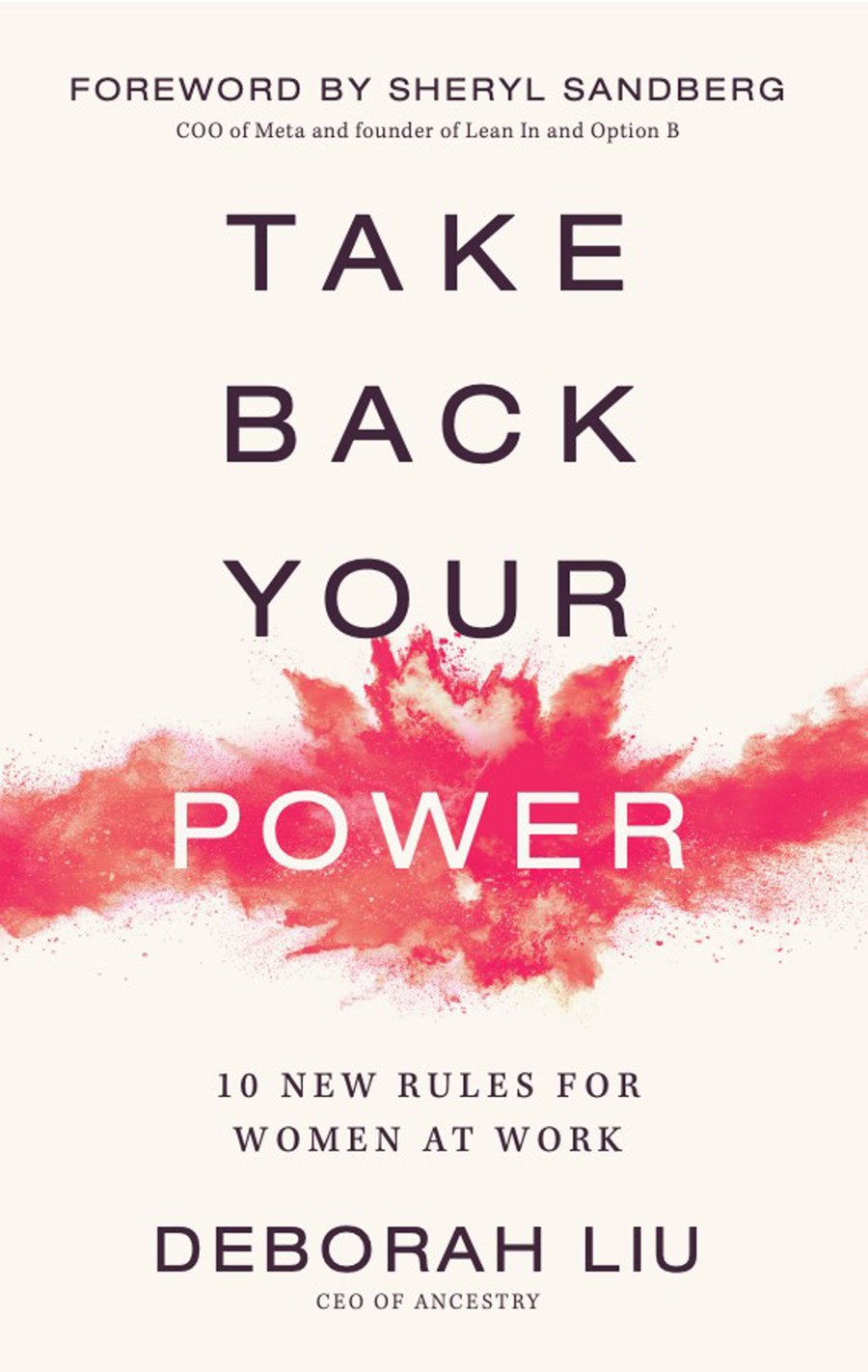
One that she shares honestly and openly in her debut book out this month, “Take Back Your Power: 10 New Rules for Women at Work.” Part memoir, part career guidebook, Liu shares her triumphs and challenges as a woman of color who climbed the corporate ladder from South Carolina to Silicon Valley.
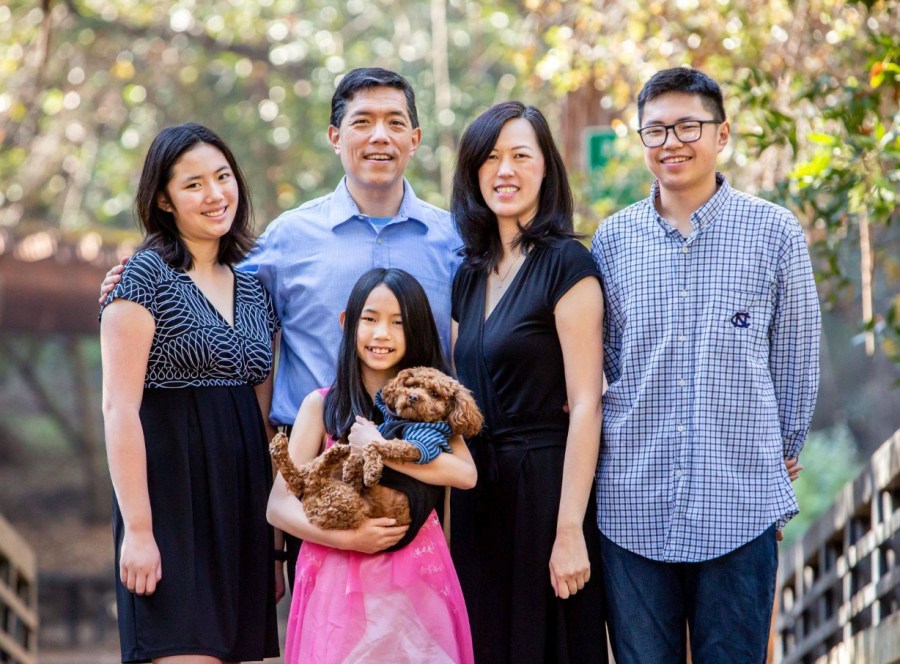
The mother of three recently spoke to Know Your Value about her rise in tech, as well as her top advice for women to advocate for themselves at work, in their relationships and in their communities.
Below is the conversation, which has been edited for brevity and clarity:
Know Your Value: What prompted you to write this book?
Liu: Over the course of the last eight years, I have coached women individually, where someone would just bring me a problem and I would coach them through it. I noticed there were a lot of commonalities among these women: problems with getting stuck, having a bad manager, feeling like they weren’t being heard. I felt if I had book, I could send them that to read first and then have a richer conversation.
I was also inspired by Jeffrey Pfeffer’s “7 Rules of Power” but felt that it was over the top for many women. Instead it pushed me to write a book geared toward women.
Know Your Value: What would be your most important lessons from the book?
Liu: It would be the one many people don’t realize: that the most important career decision you’ll ever make is who you marry. It’s absolutely true. Your home life affects your work life. For me, this makes the biggest difference. When you’re 20 years old, you don’t know this, but when you’re 40 and you’re driving the kids, managing the household and walking dogs, everything falls to you.
Looking back, I met my husband when I was 18 and never thought about any of these things. How many times have you filled out roommate surveys that are more comprehensive than the surveys you do – if any – before you get married? We prepare so much for the wedding, but we don’t prepare for our marriage or long-term partnership, and that balance affects what happens at work.
And for younger women, it’s about charting your own course. When you get into the workforce some say, ‘Where’s the roadmap’? There are so many options, and you always feel like someone’s ahead of you. Charting your course is saying maybe you should do your own thing, set your own milestones as opposed to living with someone else’s idea of success.
Know Your Value: What’s your advice for women who had to leave the workforce or take a sidestep in their career during the pandemic?
Liu: In times like these, your allies are your best resource. It is that network, the people you trust, your former team, who are going to find you your next role or help you negotiate your next offer. We’re afraid to ask sometimes for what we want.

That’s what made a huge difference in my career – having a supportive manager. When I came back [from maternity leave with my third child], my dad was in hospice and the baby was colicky and I thought I just couldn’t do it. When I considered dropping out, he pointed out the executives above us, and they all had wives who stayed at home or had a part-time job. He said, “They don’t do it alone, why are you expected to?”
If I had not had him as my manager I probably wouldn’t be here today. Eventually he gave me his job when he left, then I took his manager’s job and I became the first non-developer to run the platform. If you can find that manager or company, that’s how you rise. When your manager has your back, you feel it.
Know Your Value: How are you helping to retain and advance other women and parents in the industry?
Liu: I founded a nonprofit, Women in Product, and it has 30,000 members. I started it because … when I got to Facebook, there were less than 10 percent women [in product management]. I found out it was because Google ended up requiring a computer science degree for their product managers and typically 20 percent of these degrees are earned by women.
So suddenly women who has successful careers in this field could not enter Facebook as a product manager. I spent years investigating and then realized that this requirement … screens out people who could be the future leaders. [At Facebook] we started advocating to drop the degree requirement, then the technical interview, then changed the interview process to be more fair – over time we’ve been able to change the numbers. I explain this because there wasn’t some plot to discriminate against women, it was just a choice one company made that spread through the industry. We lost an entire generation of women [this way], so we’ve been advocating to change that through the nonprofit. Additionally, since the pandemic, the remote work policy became a focus for women [at Ancestry]. Before I started, the company decided to do three days a week in the office. But after it was announced, employees said their lives had changed … and this was not what they wanted. Only five percent wished to come back to the office. So I said look, why don’t we just let people choose? After that, so many women came to me and said thank you. While that change was not made specifically to support women, it shows that flexibility is usually most valued by the person who has to manage the household. [It] allows those who manage the household to advance in their careers and enables women to stay in the workforce longer. It is that inflexibility that drives the wage gap between men and women. Know Your Value: In the book, you talk about being bullied as a child because of your Asian heritage. How did you build resilience and how did that experience shape your path? Liu: Being a kid and being different is really hard – when no one looks like you, when people have no idea… [my community] was less than 1 percent Asian. You think about what you represent to someone else. People would say go back to where you came from – imagine someone saying that to a 6-year-old! I tried to be quiet and unassuming, thinking if no one noticed me then maybe the kids would stop talking about me. Other people build up their confidence by tearing others down – that is exactly what growing up was like. I’ve learned to come to terms with it, but it was very difficult [and] took me a long time to find forgiveness, honestly. … The reason I was so attracted to Ancestry was that I believe we have more in common than we have different. My parents picked up from a country they never left and came to America, a place they had never been. How many hundreds of thousands of stories are there of people who just picked up, because of famine, because of schooling, because of so many reasons? The immigrant story is one of resilience and that is what makes America amazing. I hope it’s what we continue to remind ourselves, that we all came from some place and we’re all here. And we’re all connected in some special way. Know Your Value: What have you learned since taking the helm at Ancestry during the pandemic? Liu: This is an unprecedented time in our economy and in the world. Leaders are expected to step up and becoming a CEO has given me a vantage point around a lot of these issues. I walked in not knowing what it was going to be like; I had not met anyone from the company before I joined. I waited several months before I met anybody. But we are evolving and changing faster in our society than we ever have before. The thing that I’ve learned is that humans are very adaptable and that we rise to the occasion when asked to.
Bianca Brosh Recommended


