








Democrats have vowed to undo the across-the-board spending cuts under sequestration in the next budget fight, with some even threatening to shut down the government if it doesn’t happen. “I’m not eager to do it. There is no honor in shutting the government down,” New Jersey Rep. Rob Andrews declared in July. “But I would like to make that case strongly and see how far we can go.”
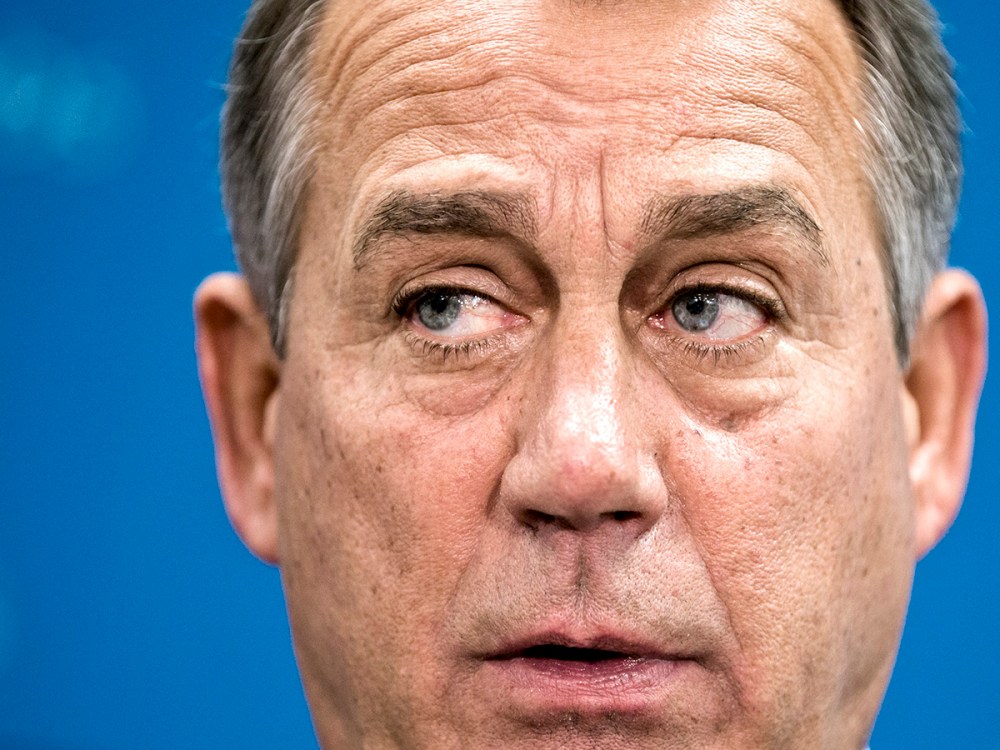
But as the U.S. approaches the Sept. 30 deadline for funding the government, there’s little talk of such threats. House Speaker John Boehner Tuesday unveiled a stopgap solution that keeps the government funded after the deadline by continuing sequestration and current spending levels through Dec. 15.
It’s already being described as a “non-controversial” stopgap that’s likely to pass the Democrat-controlled Senate, especially given the added time crunch as Congress debates possible intervention in Syria. But if Boehner’s budget passes Congress, Democrats will have even more trouble making good on their promises to undo the automatic cuts and increase spending.
Boehner is attaching a separate measure to the stopgap budget that would defund Obamacare, using a procedural measure that will allow Congress to vote on cutting the health care reform’s funds without jeopardizing the short-term budget. The move is meant to placate restive conservatives who’ve threaten to shut down the government over the Affordable Care Act. But it’s essentially an empty gesture since the Senate will inevitably vote it down.
The party’s right flank is already unhappy with Boehner’s gambit. “I do not support the #hocuspocus plan that doesn’t really defund #Obamacare,” Michigan GOP Rep. Justin Amash tweeted. But fiscal conservatives will be scoring a victory nevertheless if the stopgap measure passes Congress, as it will be yet another step toward turning the spending cuts under sequestration into the status quo.
Here’s why: Boehner’s short-term budget bill is expected to fund the government at fiscal year 2013 levels for the next three months, continuing to keep the sequestration cuts in place. If that happens, the bill will parcel out funding under a budget that assumes $988 billion in spending for the year. It’s not House Republicans’ ideal solution: It’s slightly higher than the $967 billion House GOP budget for fiscal year 2014, to the tune of $21 billion, and it would continue defense cuts that members have loudly protested.
But such a stopgap would be far closer to the overall spending levels that the Republicans want than what the Democrats have proposed in their $1.058 trillion budget for fiscal year 2014. That’s the level mandated by 2011’s debt-ceiling deal, before sequestration, and it’s a whopping $70 billion higher than the stopgap bill that Boehner is expected to bring forward this week.
Leaders of both parties are likely to argue that it’s a pragmatic way to buy Congress more time to work out a longer-term budget agreement by just continuing current spending levels for a few more months. “In a perfect world we would love to see Republicans willing to work with us on an actual long-term budget deal that replaces sequestration, but that is not likely at this point before Sept. 30, of course,” says one Senate Democratic aide.
Democrats will also point out that Republicans will have more at stake under sequestration come December: If sequestration continues through 2014, the $988 billion in spending will get reduced to $967 billion, and all of those cuts will come from defense spending due to an agreement that was worked out in January’s fiscal cliff deal.
But if Democrats continue the fiscal status quo without a fight, even for a short-term stopgap, it could also take the wind out of their earlier threats to draw a firm line on sequestration. Even now, it’s easy to imagine the argument: If the country could manage three more months under sequestration, why not continue for nine more to finish out the fiscal year? “By extending last year’s post-sequester levels, Speaker Boehner is trying to lock those additional spending cuts into place and create a new baseline from which future negotiations must begin,” write Neera Tanden and Michael Linden of the Center for American Progress. Boehner, in the mean time, could tell Democrats that he averted an Obamacare and shutdown disaster by proposing legislation that wasn’t as bad as it could have been. He could then use the same gambit when it comes to the debt-ceiling. On Friday, House Majority Leader Eric Cantor reiterated the party’s demand for “major spending, fiscal, and regulatory reforms” in exchange for raising the debt ceiling—and told Republicans on Tuesday that they’d propose delaying Obamacare’s individual mandate for a year, the National Review reports. Any such changes will be a victory for Republicans, as President Obama vowed not to negotiate over the debt limit. And even if Republicans whiff again over the debt ceiling—as they did back in January—the GOP leadership will frame that as a “concession” that should give them more leverage when it comes to negotiating the 2014 budget. That’s how fiscal conservatives could still prevail amid the chaos that’s splintering the Republican Party right now. The caucus can’t agree whether they’d prefer to defund Obamacare over entitlement cuts, and it can’t even pass its own budget. But such fights also allow Boehner to shift expectations in his direction. If his first job is to contain his own caucus, preventing the extreme outcomes of a shutdown, then the status quo of austerity will look like more of a compromise.
Suzy Khimm Recommended


