








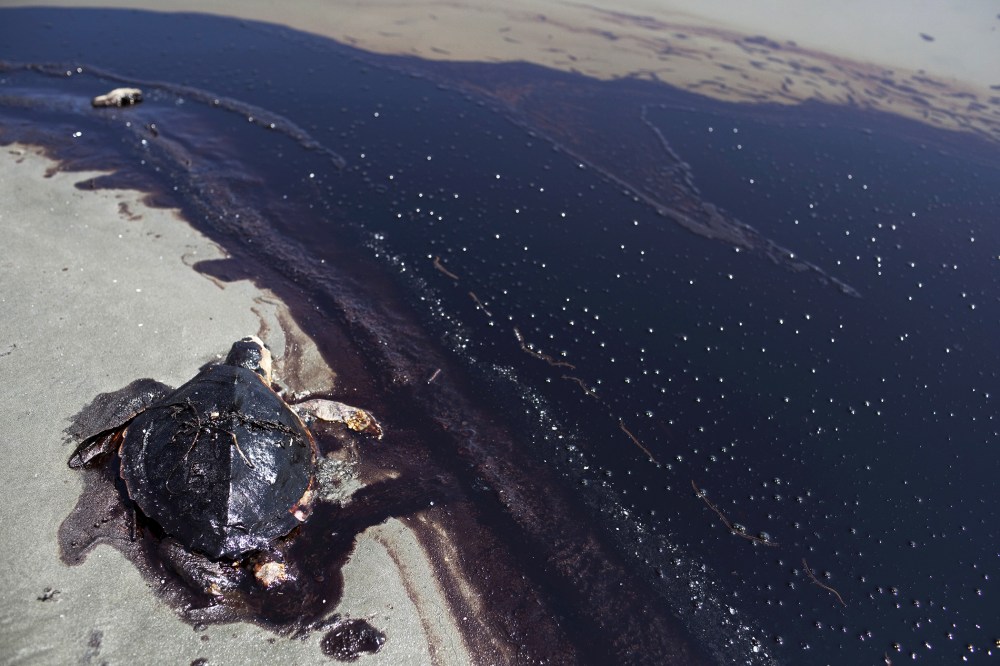
The effects of the 2010 Deepwater Horizon oil spill continue to threaten the Gulf of Mexico’s animal population, according to a report prepared by the National Wildlife Federation, which warned of damage to 14 native species including bottlenose dolphins and sea turtles.
The report warned that animal species are dying in record numbers, four years after the biggest oil spill in U.S. history and one of the worst environmental disasters the country has ever seen. The number of bottlenose dolphins found dead or stranded in the spill zone since April 2010 totals more than 900, with many more found underweight and suffering from liver and lung diseases. Around 500 dead sea turtles have been recovered by scientists every year since the spill, with many more likely unaccounted for.
The Gulf is home to endangered Kemp’s ridleys, loggerhead, and green turtles, a “large number” of which have been found stranded since 2010. Researchers found increased levels of “toxic oil compounds” in the blood of loons and “DNA-damaging metals” like chromium and nickel, which were used in the well, in the bodies of sperm whales. The report also described damage to embryos of bluefin and yellowfin tuna from an oil chemical that researches fear causes premature death.
When a BP-operated oil rig exploded in the north-central Gulf of Mexico on April 20, 2014, 11 workers were killed and more than 200 million gallons of oil spewed into the environment, causing immeasurable damage.
BP criticized the study as “a piece of political advocacy—not science” that “cherry-picks reports to support the organization’s agenda, often ignoring caveats in those reports or mischaracterizing their findings.” “For example, the report misrepresents the U.S. government’s investigation into dolphin deaths; as the National Oceanic and Atmospheric Administration’s own Web site states, that inquiry is ongoing,” the statement said. “The report also conveniently overlooks information available from other independent scientific reports showing that the Gulf is undergoing a strong recovery. Just this week, a study published by Auburn University researchers found no evidence that the spill impacted young red snapper populations on reefs off the Alabama coast.” With a vast quantity of oil still unaccounted for, the report warns that the “full scope” of the disaster on the Gulf’s ecosystem “will likely unfold for years or even decades to come,” and notes that the effects of the Exxon Valdez oil spill a quarter century ago are still being felt.
Erin Delmore Recommended


