








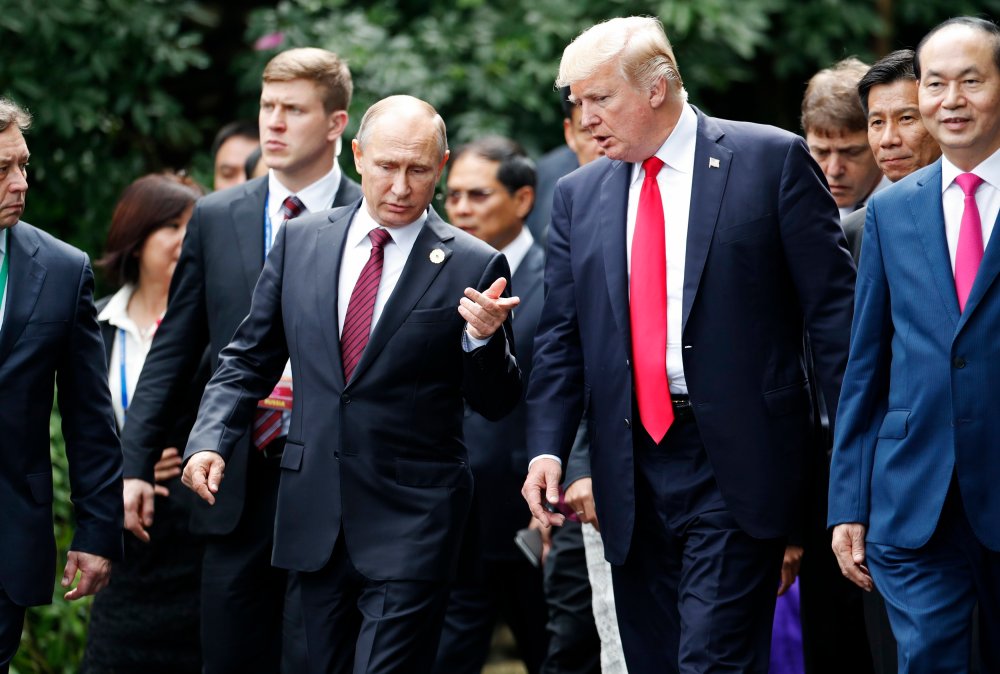

NBC News published an interesting scoop yesterday about the Trump-Russia scandal that’s worth considering in detail.
In the weeks after he became the Republican nominee on July 19, 2016, Donald Trump was warned that foreign adversaries, including Russia, would probably try to spy on and infiltrate his campaign, according to multiple government officials familiar with the matter.
The warning came in the form of a high-level counterintelligence briefing by senior FBI officials, the officials said. A similar briefing was given to Hillary Clinton, they added. They said the briefings, which are commonly provided to presidential nominees, were designed to educate the candidates and their top aides about potential threats from foreign spies.
The candidates were urged to alert the FBI about any suspicious overtures to their campaigns, the officials said.
Raj Shah, a White House spokesperson, dismissed the significance of the revelation, telling NBC News that both major parties’ nominees received “a standardized briefing on counterintelligence,” which is “hardly a news story.”
At first blush, that may seem persuasive. The FBI didn’t warn Trump about the possibility of Russian infiltration in his campaign because they suspected the Republican candidate of anything untoward; the bureau provided the warnings to both candidates. Had there been a different GOP nominee in July 2016, he or she would’ve likely received the same information.
But then there’s the larger context, which is much harder to dismiss.
As Rachel explained on the show last night, we’ve been keeping track of the large roster of Russians connected to Putin’s government who were in contact with the Trump campaign or the Trump transition before the president’s inauguration. It’s not a short list: there are 19 different Russians in all.
And yet, neither Trump nor anyone on his campaign thought to mention this to the FBI, despite the warning from the bureau. In fact, by the time Trump received his first classified intelligence briefing, which came a month after the FBI warning, more than a half dozen Trump campaign staffers, including members of his own family, had already taken high-level meetings with Russians and people who were sent as emissaries from the Russian government. They just didn’t think to tell intelligence officials about any of this. The FBI effectively said, “Let us know about suspicious overtures to your campaigns,” and Trump World, after hearing from a whole lot of Russians who wanted to partner with the Republican campaign, didn’t say anything. It’s possible, of course, that the campaign’s communications with the Russians were benign. But if so, why not let U.S. officials know about the contacts, especially after the FBI specifically urged Trump and his team to report foreign overtures?
Steve Benen is a producer for "The Rachel Maddow Show," the editor of MaddowBlog and an MS NOW political contributor. He's also the bestselling author of "Ministry of Truth: Democracy, Reality, and the Republicans' War on the Recent Past." Recommended


