








Updated 9:15 p.m.
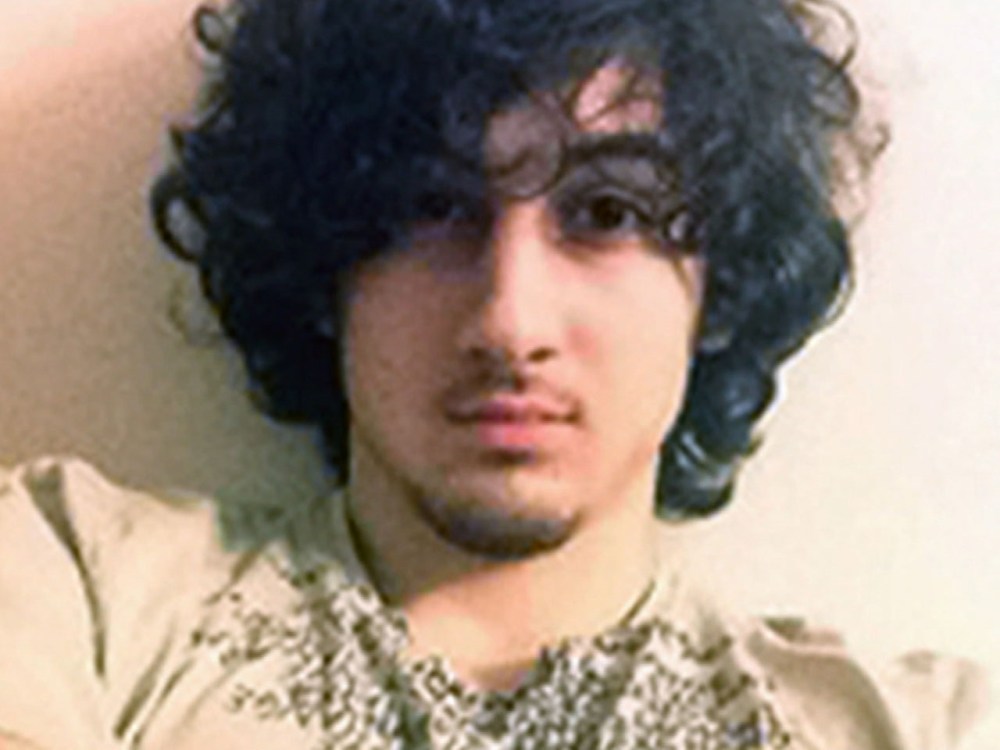
Boston bombing suspect Dhzokhar Tsarnaev was charged Monday with conspiring to use a weapon of mass destruction, a charge which could carry the death penalty, the Justice Department announced. Three people were killed and over 170 injured in the twin explosions placed near the finish line of the Boston Marathon on April 15. He was also charged with malicious destruction of property.
“Today’s charges are the culmination of extraordinary law enforcement coordination and the tireless efforts of so many, including ordinary citizens who became heroes as they responded to the call for help in the hours and days following the Marathon tragedy,” said U.S. district attorney Carmen Ortiz in a statement.
“The impact of these crimes has been far-reaching, affecting a worldwide community that is looking for peace and justice. We hope that this prosecution will bring some small measure of comfort both to the public at large and to the victims and their families that justice will be served,” she said.
Officials familiar with the initial interrogation in the hospital said Tsarnaev was cooperative. Unable to speak because of an injury, he has been writing his answers or nodding “yes” or shaking his head “no,” a senior government official said. The 19-year-old suspect indicated that he and his brother were not in touch with any overseas terrorists or groups, and that they planned the bombing on their own, motivated by religious fervor. The officials told NBC News’ Pete Williams that the brothers got their bomb-making instructions from the internet.
The charges brought against Tsarnaev so far all fall under federal law. He has yet to be formally charged with violating state law, despite being a suspect in the killing of an MIT police officer, a shootout with the police in a residential neighborhood, and a carjacking. Massachusetts abolished the death penalty in 1984. By charging Tsarnaev with use of a WMD, the Justice Department has opened up the possibility that he could be executed under federal law.
Tsarnaev will be represented by federal public defenders. He made what amounts to an official court appearance while still confined to his hospital bed at the Beth Israel Deaconess Medical Center in Boston on Monday. According to court records, he assented to a probable cause hearing on May 30. He was also finally read his Miranda rights, some 60 hours after being first apprehended. The Justice Department initially invoked the public safety exception in order to question Tsarnaev without first informing him of his rights.
During that time, Tsarnaev responded to questions from investigators in writing, due to a throat wound he sustained before he was taken into custody. Because he had not yet been informed of his rights, it is unclear whether any of what he said under questioning thus far will be admissable in court.
An FBI search of Tsarnaev’s dorm room at the University of Massachusetts Dartmouth turned up what was described in the criminal complaint as a “large pyrotechnic” as well as a black jacket and white hat that have the same general appearance as the items worn by the second suspect in the bombing footage.
FBI: Suspect seen dropping backpack, walking away
Federal law enforcement and intelligence agencies have expanded the investigation beyond Boston, pursuing leads in Russia and neighboring republics. Dhzokhar Tsarnaev’s deceased brother and alleged co-conspirator, the 26-year-old Tamerlan Tsarnaev, went on a six month trip to Russia in 2012. Tamerlan was shot and killed Thursday night after a firefight with Boston police. Dzhokhar evaded capture until around 8 p.m. the following night, when he was discovered hidden inside a boat parked in a Watertown, Mass., resident’s backyard.
Tsarnaev’s parents reside in the Russian province of Dagestan and his sister lives in New Jersey. Earlier Monday, White House Press Secretary Jay Carney definitively shot down calls from Republican members of Congress for Tsarnaev to be treated as an enemy combatant and tried by military tribunal. “We will prosecute this terrorist through our civilian system of justice,” said Carney. “Under U.S. law, United States citizens cannot be tried in military commissions. And it is important to remember that since 9/11, we have used the federal court system to convict and incarcerate hundreds of terrorists.” Republican Sen. Lindsey Graham of South Carolina denounced the decision to try him as a civilian as “premature and unfair to those trying to protect us.” “It would disturb me greatly if this administration was relying on the criminal justice system to gather intelligence,” he said at a press conference. The Tsarnaev family has roots in the Russia-controlled North Caucuses territory of Chechnya, currently the site of a longstanding violent struggle between the ruling Russian government and Chechen separatists. However, the two suspected bombers were born in Kyrgyzstan, not Chechnya, and Dzhokhar Tsarnaev is a naturalized U.S. citizen. Tamerlan, the older brother, held a green card, but his citizenship application had recently been denied. In 2011, the Russian government reportedly alerted the FBI that it suspected the older brother of having ties to radical Chechen groups. The FBI interviewed Tamerlan and his family, but found no evidence of terrorist connections.
Ned Resnikoff is an urban policy analyst, researcher, writer, and editor. His byline has appeared in a variety of publications, including the New York Times, San Francisco Chronicle, Dissent, and The Nation. He writes the newsletter Public Comment, which can be found at publiccomment.blog. Recommended


