








On Sept. 10, 2001, David Tyson — the only CIA officer fluent in Uzbek, the language spoken by more than 1 million Afghans at the time — was desperately trying to prevent a cache of United States-made Stinger missiles from falling into the hands of terrorists.
Nation-building required collecting personal information — lots of it.
But Toby Harnden’s new book, “First Casualty: The Untold Story of the CIA Mission To Avenge 9/11,” detailed how, according to the CIA’s tally, the Taliban already had several dozen missiles; 600 of roughly 2,500 remained unaccounted for.
Warfare had changed since the U.S. had secretly provided the anti-Soviet mujahideen with these weapons 15 years before, but infrared homing anti-aircraft missiles were just as deadly. The scattered Stingers were a legacy of the Cold War, when the U.S. paid proxies in cash and arms to contain the Soviet Union, and, just as often, left those allies broke and vulnerable when American interests shifted.
Not a single U.S. soldier set foot in Afghanistan during that period, but the weapons given to Pakistanis to be given to Afghan resistance fighters did not suddenly disappear the moment the Berlin Wall fell. So it was a sad irony that Tyson was working this major national security issue on the eve of the terrorist attacks that would, one month later, send him deep into Afghanistan once again.
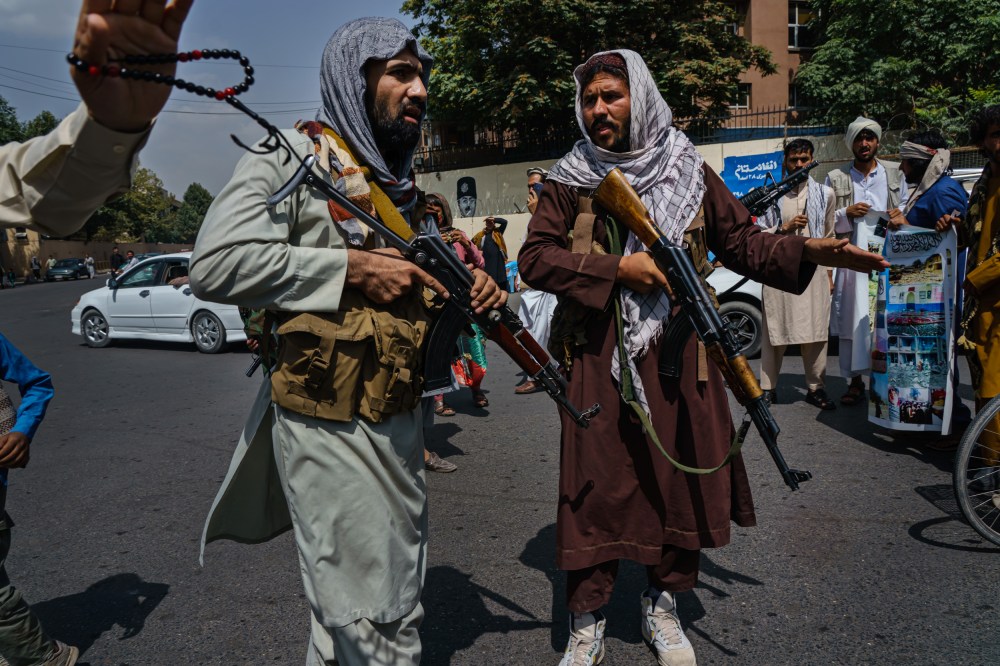
Twenty years later, Kabul has fallen to the Taliban. Again.
Although the U.S. scrambled to destroy tens of billions of dollars’ worth of intelligence-gathering technology almost overnight and scraped the cockpits of new Afghan air force jets of their classified targeting technology, they left behind thousands of weapons the Taliban now possess, along with something even deadlier: a detailed record of everyone who collaborated to keep the Taliban from doing what they managed to do.
The Pentagon insists it wiped all of its own, potentially compromising databases; it promises that what remains on servers in the country can’t be accessed by anyone who didn’t have access to them already and that biometric data was stored on clouds, not on hard drives.
Since the now-fallen Afghan government inherited top flight biometric collection systems itself, the Taliban has them, too.
But the Pentagon isn’t telling the full story, which is a lot scarier.
Nation-building required collecting personal information — lots of it. The coalition had to identify men above a certain age, track them and vet their backgrounds as they joined the nascent Afghan army. It had to pay hundreds of thousands of individual Afghans to build schools, to teach in schools, to build housing for women, to guard bases, to tend to farms, to erect bridges, to administer courts.
There are databases of voters — of women who voted; databases kept by the Afghan army of its own intelligence sources; taxation and land use data. There is data that could not be classified because Afghans had to use it; data that could not be segregated in case it fell into the wrong hands because it had to flow freely in order for the government to do any work.
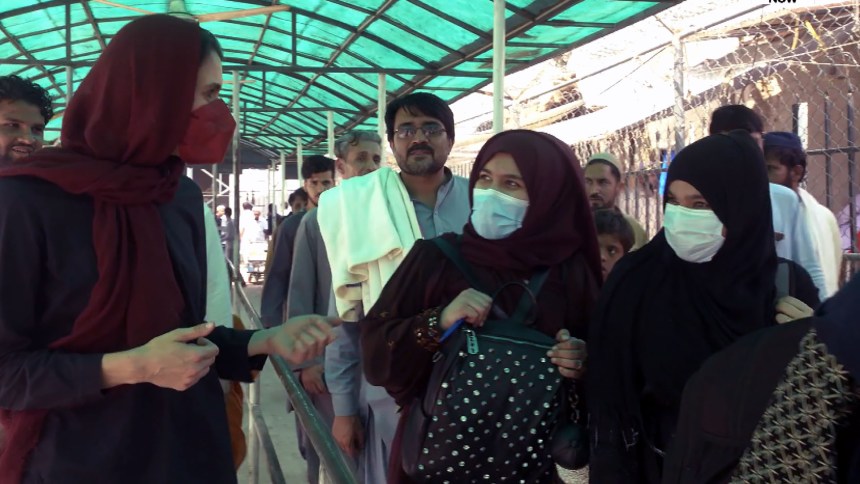
According to reports, the Taliban now have this data and are looking to exploit it. Since the now-fallen Afghan government inherited top-flight biometric collection systems itself, the Taliban have them, too. So why was there no contingency plan, just in case? If the mission was to build a stable Afghan government to prevent a Taliban Reconquista or an Al Qaeda safe haven, an all-knowing policy planner might well have objected decades ago to the project of data collection — just in case. But how the hell can you build a government and a new army without collecting data? The answer to both of these questions is: You can’t. The great migration to the cloud — where data can easily be segregated, erased, anonymized (or exploited) — trailed the decision to build a nation by about a decade and a half. The collective American “we” just assumed we could manage things until a point in the future that did not occur to anyone planning the immediate situation after Sept. 11. The moment the U.S. committed itself to the project of a new Afghanistan was the moment when the fate of every Afghan who worked with Americans was sealed. To borrow a term from the military, this eventuality was an acceptable risk to the United States. It could not be otherwise. So what now? The international community can pressure the Taliban not to target their potential adversaries, but the Taliban, quite legitimately, want to stock their government with loyalists. There is no shortage of foreign intelligence services that would be willing to lend the Taliban a hand with data sorting in exchange for favors, secret diplomatic understandings and even weapons. Wouldn’t the People’s Liberation Army Air Force just love to get the full specs of all those light attack aircraft the Taliban now possess? Wouldn’t its pilots love to test drive them? Hubris, as political satirist and author P.J. O’Rourke likes to remind us, is one of the great renewable resources. It’s also an American addiction without a cure, and innocent Afghans will suffer for years to come because of that.
Marc Ambinder
Marc Ambinder is a senior fellow at the USC Annenberg Center for Communication Leadership and Policy. A former White House correspondent and political reporter, he is the author of several books about national security, including “The Brink: President Reagan and the Nuclear War Scare of 1983.” He is a consultant for Spycraft Entertainment and lives in Los Angeles. 


