










Thanks to Republican abuses of filibuster rules, and frustrating divisions among Democrats, legislative progress has been halting in recent months. Infrastructure talks are failing; negotiations over law-enforcement reforms are advancing at a glacial pace; efforts to protect voting rights are stuck; efforts to address gun violence are effectively non-existent; and GOP senators won’t even approve a bipartisan plan for a Jan. 6 commission.
And yet, despite all of this, a bipartisan bill to improve U.S. tech competitiveness with China cleared the Senate yesterday with relative ease. NBC News reported:
The Senate passed bipartisan legislation Tuesday to boost science and technology research for the U.S. to better compete with China. In a vote of 68-32, the chamber passed the 60-vote threshold needed. The U.S. Innovation and Competition Act, which is also known as the Endless Frontier Act, now heads to the House.
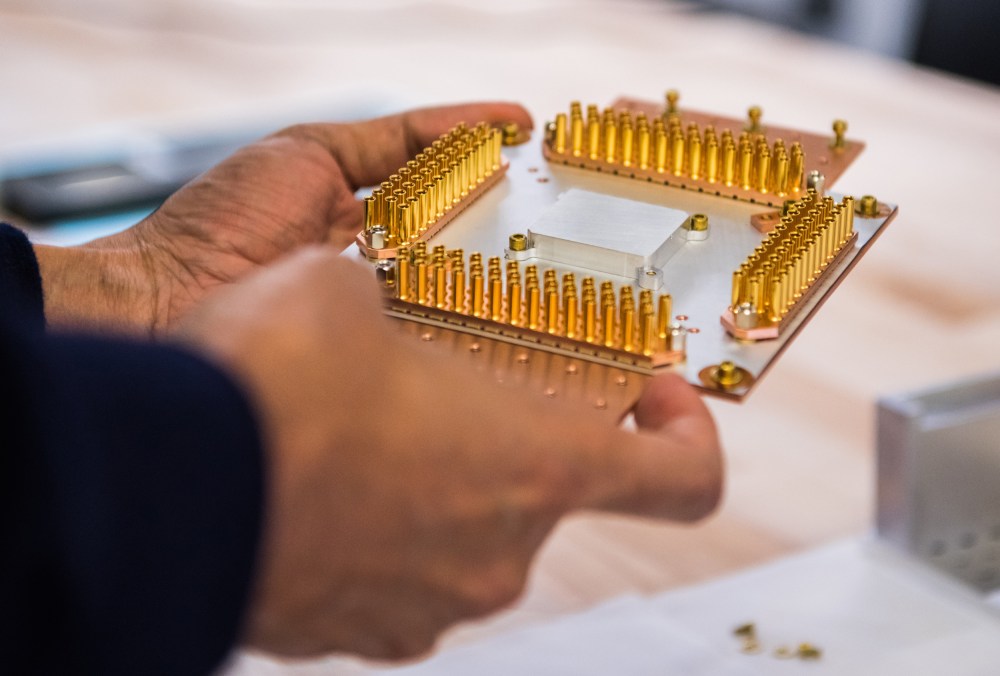
While the bill, championed by Senate Majority Leader Chuck Schumer (D-N.Y.) and Sen. Todd Young (R-Ind.) is ostensibly focused on tech R&D, the scope of the package is surprisingly broad. As NBC News’ report added, “The bill would commit nearly $250 billion to promote emerging technologies in the U.S. that China’s government is working to promote, as well, including artificial intelligence, quantum computing, computer chips, robotics and the lithium batteries used in smart devices and electric vehicles.”
It’s only natural to wonder how this bill passed, while bipartisan progress on a wide range of other issues appears all but impossible.
As it turns out, there is no great mystery behind the Endless Frontier Act’s success.
First, it’s one big bill, which ended up serving as a vehicle for other smaller proposals senators from both parties were eager to add to the mix. As the Washington Post noted, “The broad nature of the bill also opened the door for lawmakers to push some of their pet projects.”
Second, while Republicans are reflexively skeptical of Democratic spending packages, this one included funds that benefit big corporations, including sizable subsidies to semiconductor makers.
Third, proponents didn’t invest too much energy in figuring out how to pay for the investments, kicking financing questions down the road. How do you write a bill that passes with 68 votes in 2021? Evidently, this is the recipe to follow. That said, while the Biden White House voiced support for the bill’s goals, final passage is far from assured. Politico reported overnight: [T]he fate of the Senate’s rare cross-aisle collaboration is uncertain in the House, where Democrats are advancing several of their own bills to bolster U.S. competitiveness in science and manufacturing as well as to respond to Beijing’s human-rights abuses. That includes a 470-page bill drafted by House Foreign Affairs Committee Chair Gregory Meeks (D-N.Y.), for which he is working hard to secure GOP support. The House is expected to take up those bills — which likely would be taken to the floor in pieces rather than as one package — in late June or July, according to a Democratic leadership aide. Watch this space.
Steve Benen is a producer for "The Rachel Maddow Show," the editor of MaddowBlog and an MS NOW political contributor. He's also the bestselling author of "Ministry of Truth: Democracy, Reality, and the Republicans' War on the Recent Past."
Latest Post
Recommended


