








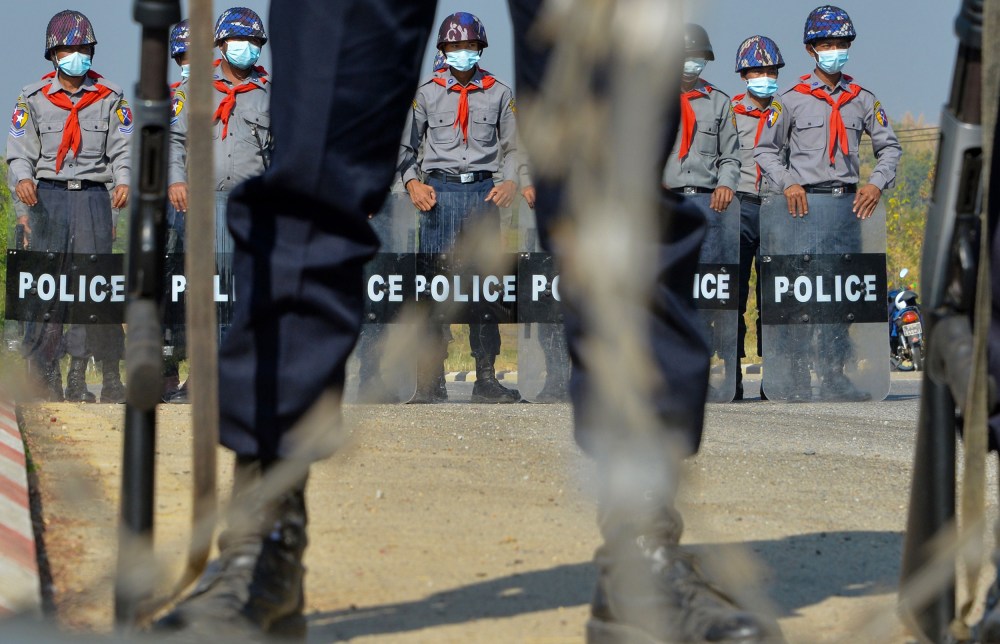
The first international crisis of President Joe Biden’s term didn’t take long to materialize. Just over eight years after the Obama administration paved the way for normalizing ties between Myanmar and the United States, the country’s generals announced that the military had taken over in a coup.
Some quick background: Civilian leader Aung San Suu Kyi’s political party won in a landslide last November in just the second democratic vote since the military’s 50-year rule ended a decade ago. In the process, it shunted the military’s proxy parties to the side. Three months later, Suu Kyi and members of her party, the National League for Democracy, were hauled away in the military’s late-night raid. In a statement, the military — known as the Tatmadaw — said that it would hold power for one year, as the country’s constitution allows in states of emergency.

There will be plenty of analysis in the coming days about Suu Kyi’s betrayal by an army she has defended against charges of genocide, the effect this will have on the Burmese people, and the Biden team’s efforts to piece an Obama-era policy back together.
But at the risk of being too U.S.-centric, the reasoning that the military gave for declaring an emergency has enough in common with former President Donald Trump’s failed attempt to stay in power to be deeply uncomfortable. Accordingly, I can’t stop focusing on this paragraph from The Washington Post’s story about the coup and what it says about our own near miss here:
Many assumed that despite its imperfections, Myanmar’s political evolution would continue with Suu Kyi as head of the civilian government and with entrenched powers for the military, led by Min Aung Hlaing. But the military was never comfortable with its enduring unpopularity and Suu Kyi’s godlike status among ordinary Myanmar people, analysts said, despite its role in engineering the country’s opening after half a century of isolationist rule.
Let’s see if this sounds horribly familiar to any Americans reading this. The Burmese military felt deeply unappreciated and unpopular, having done so much for the country in its eyes and getting no credit for it. It proceeds to lose big in a free and fair election, despite credible reports of voter intimidation. Rather than process this defeat and what it means, it instead choses to reject it entirely, unable to believe that the people don’t love them, and insist that voter fraud is the cause of their loss.
The military demanded a new election and attempted to get the country’s Supreme Court to overturn the old results. Instead, Myanmar’s Union Election Commission last week rejected the military’s claims entirely, prompting the military to warn that a new takeover might be coming. Monday’s coup delivered on that threat, leading to a situation where the armed forces have taken over Myanmar in what they outrageously claim is a bid to protect democracy. And like Trump, the Tatmadaw are citing the protests their allies have staged around the unfounded claims that voting fraud existed: “Although the sovereignty of the nation must derive from the people, there was terrible fraud in the voter list during the democratic general election which runs contrary to ensuring a stable democracy. […] Due to such acts, there have been a lot of protests going on in townships and cities in Myanmar to demonstrate their mistrust towards the UEC.” Last month, former White House staffer Fiona Hill laid out in Politico magazine exactly why Trump’s failed attempt to stay in power counted as a coup attempt and what caused it to fail. “To successfully usurp or hold power, you need to control the military and paramilitary units, communications, the judiciary, government institutions, and the legislature; and mobilize popular support,” Hill wrote, noting that despite his best efforts, Trump failed to secure any of these institutions. What we’re seeing in Myanmar is a vision for what would have happened if the military had bought into Trump’s lies as readily as so many in his party did. A free and fair election has been overturned in Myanmar. It almost happened here.
Hayes Brown is a writer and editor for MS NOW Daily. 

