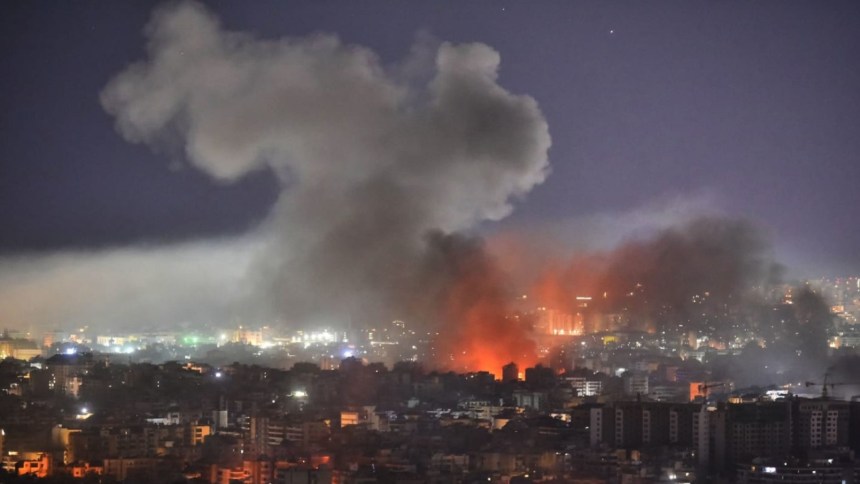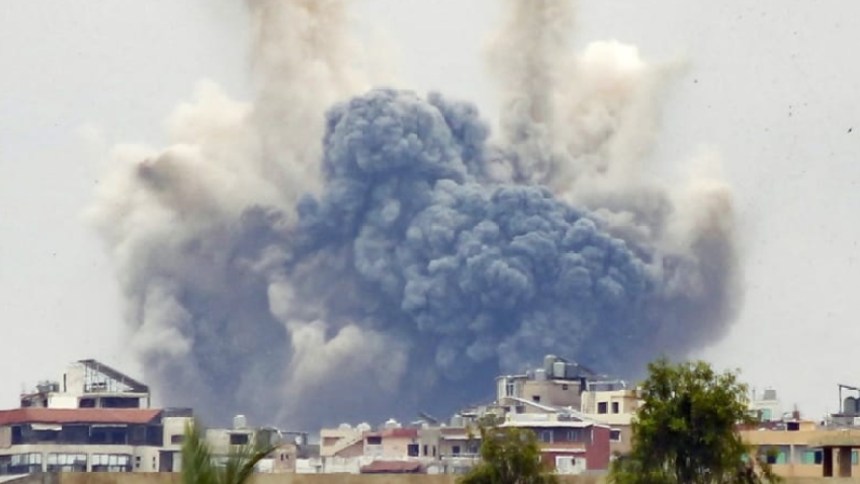
Last week, and for the second time this year, Iran launched a missile strike against Israel. This one, however, the military equivalent of poking a sleeping bear, is likely to provoke a fearsome Israeli response.
Iran’s first direct attack in April, which targeted non-civilian areas and was telegraphed in advance, looked more like a demonstration project than a serious strike. It was Tehran’s response to Israel assassinating a top Iranian general in Syria, but it appears to have been purposely narrowed to prevent a significant Israeli retaliation. Israel delivered a token response (attacking a single long-range air defense system) and, at least for a time, the threat of greater escalation diminished.
Last week’s strike, a response to the assassination of Hezbollah leader Hassan Nasrallah was qualitatively different.
Last week’s strike, a response to the assassination of Hezbollah leader Hassan Nasrallah (a close ally of Iran) in a southern suburb of Beirut was qualitatively different. Iran fired missiles directly at civilian areas of Tel Aviv — and sent millions of terrified Israelis into their safe rooms.
From a military standpoint, the Iranian attack accomplished little. While it caused some damage to targeted intelligence and military bases, there were few civilian casualties (A Palestinian man in Jericho died in the attacks, and two people were injured in Tel Aviv). More important, it barely put a dent in Israel’s military capabilities.
According to Yonatan Touval, a foreign policy analyst at Mitvim, an Israeli think tank, “Iran might have thought this was a measured strike it could get away with, and that at worst would provoke a symbolic counter-strike. But Israel perceives this differently and will likely launch a major retaliatory strike.”
As a geographically small country, deterrence has long been an essential element of Israel’s strategic mindset. It has generally responded with disproportionate military force to acts of war. The response to Iran’s missile attack will likely be no different. Touval said, “Israel cannot let this pass if it is to reestablish deterrence and convey the message that it is not a sitting duck waiting to be hit at will.”
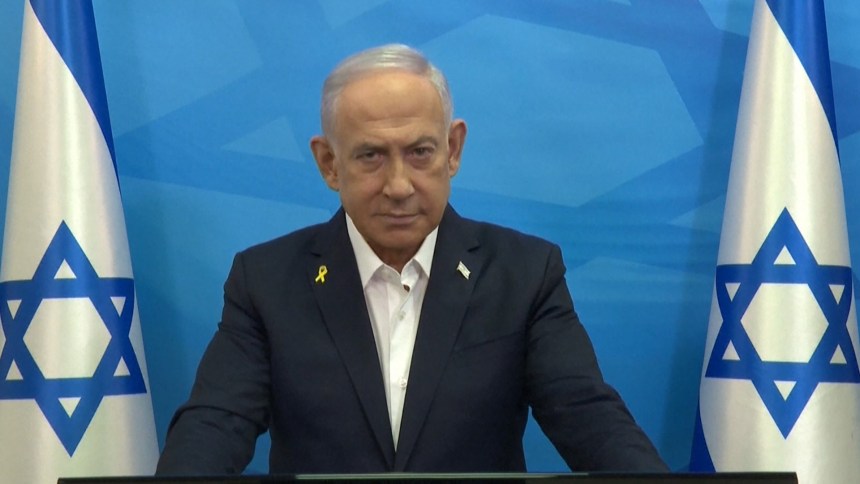
As Israeli Prime Minister Benjamin Netanyahu said Tuesday, Oct. 8, “Iran made a big mistake tonight—and it will pay for it. The regime in Iran does not understand our determination to defend ourselves and to retaliate against our enemies.”
But there’s another consideration for Israel’s leaders. For years, Israel has wanted to launch a military strike on Iran to diminish or even out wipe out the country’s nuclear program. Successive U.S. administrations have consistently discouraged Israel from doing so. Indeed, the attention devoted to the Iranian nuclear program — and the signing of the Iran nuclear deal in 2015 by the Obama administration — was motivated, in large measure, by a desire to avoid a conflict between Israel and Iran that could potentially drag in the United States.
But with last week’s strike, Iran handed Israel a casus belli and legal basis for an attack, and the U.S. will be hard-pressed to stop Israel from responding. While it will be difficult for Israel to hit Iran’s nuclear targets without direct U.S. involvement, one can imagine significant Israeli attacks on Iran’s military and even economic infrastructure in an effort to humiliate the regime in Tehran.
So why did Iran do it?
Iran’s decision-making seems to have been influenced not by military considerations but by reputational ones. Nayyera Haq noted last week in an MSNBC column that “despite new leadership in Iran, there remains the long-standing need to appear strong in the Middle East and also on the world stage.” To be sure, Iran was in a difficult situation, but it was one it created. For a year, Iran has supported Hezbollah as it, unprovoked, sent thousands of rockets and missiles into Northern Israel after the Oct. 7, 2023, attack by Hamas. Perhaps Hezbollah and its patrons in Iran believed that Israel would not aggressively respond (yet another deadly miscalculation). But once Israel launched a major military attack, taking out Nasrallah and most of Hezbollah’s leadership, and employed an audacious attack in which it blew up pagers that killed and wounded thousands of Hezbollah fighters, Iran’s choices went from bad to worse. Iran handed Israel a casus belli and legal basis for an attack, and the U.S. will be hard-pressed to stop Israel from responding. “Doing nothing” in response to the killing of Nasrallah would send a message that Israel could bloody its nose with no repercussions. But “doing something” risked unleashing another Israeli military strike. Iran chose the latter course — and by doing so likely made a huge strategic error. Provoking a much stronger military rival is never a good idea. Iran has now opened the door to a military retaliation that will likely cause significant physical damage and could, ironically, undermine the regime in the eyes of Iranian civilians. What has Iran’s expansionist foreign policy, support for terrorist networks and nuclear program brought the country other than economic devastation — and now likely physical pain? Iran’s leaders likely believed they had no choice but to “do something,” but their apparent failure to fully consider how the missile strike would be viewed in Israel — and the potential ramifications — has put a target squarely on the country’s back. The same is true of Israel, it must be said. Any military response to last week’s attack will need to be calibrated in order to prevent significant escalation. Ever since then-President Donald Trump foolishly pulled the U.S. out of the Iran nuclear deal in 2018, there has been no international monitoring of Iran’s nuclear program. So it’s impossible to know how far along Iran is in producing the fissile material necessary to construct a nuclear weapon. While it’s highly unlikely that Iran is close to having a nuke that it can actually deliver, Israel may still want to tread lightly for fear of pushing Iran’s leader into a desperate position. Still, that doesn’t mean Israel will sit this one out. Iran has provoked a far stronger military rival that has been itching at the chance to attack them. The consquences will be dire.
Michael Cohen is an MSNBC columnist. He is also the publisher of the newsletter Truth and Consequences and hosts the weekly podcast That ‘70s Movie Podcast.