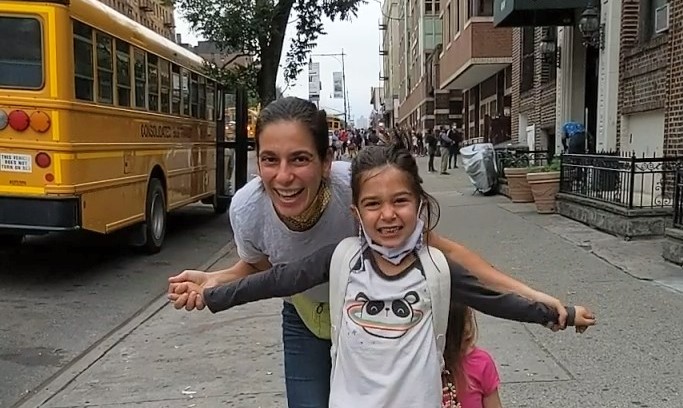
This past year was supposed to be Daniela Jampel’s best one yet.
With her oldest daughter entering first grade and her youngest going into a city-funded preschool program, the mom of two and part-time attorney was looking forward to having her kids in school full-time and being more productive. But her plans went out the window when schools shuttered after New York City turned in to a Covid-19 hotspot back in March.
“I am not unique in that when school shut down, not only the childcare situation rapidly increased, but also just home life increased,” said Jampel, who lives in Washington Heights. “All of a sudden, you’re making three meals for everybody in your family every day, because restaurants are closed. All of a sudden, you’re not getting the childcare help that you used to get. All of a sudden, grocery shopping was like a ninja activity.”
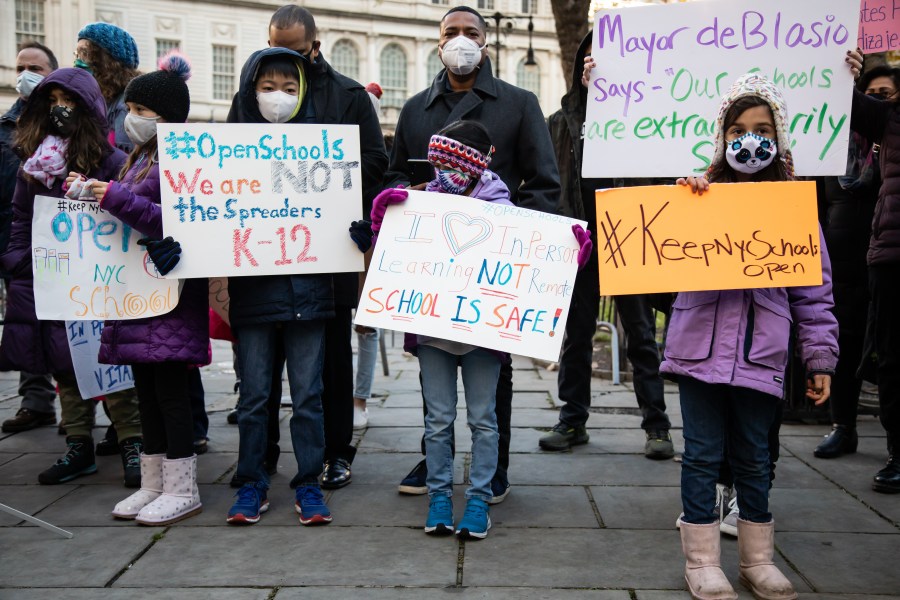
While the year 2020 didn’t mark a turning point for Jampel in the ways she’d hoped, she added a new title to her proverbial resume: mom, lawyer and activist. As a founding member of the “Keep New York City Schools Open” movement, she and seven other moms went from Googling “how to make a petition” to garnering more than 15,000 signatures on theirs using Change.org. As a result of nightly Zoom meetings and wider outreach within a Facebook group for the Upper Manhattan School District where they live, they helped harness support and pressured Mayor Bill de Blasio’s office to reverse its policy this November and re-open schools for in-person learning.
“We are people who take this very seriously,” Jampel said of the group’s approach to Covid-19 safety, including wearing masks and giving them out during protests. “But we also think that our children need to be educated. And parents need the time and space to do work so that they can continue being members of society.”
But not all parents were behind Jampel’s push to offer an in-person learning option to students in the fall. As “extremely lonely voices” calling for school to reopen over the course of the summer, Mia Eisner-Grynberg, a mom of two and federal public defender who lives in Inwood, remembers “facing a real onslaught of opposition to even raising the possibility that it could be safe to go to school.”
“Mia and I would say [on Facebook] like, ‘Hey, maybe school should open,’ and people would literally say to us, ‘Why do you want teachers to die?” Jampel recalled. “I was told ‘Why do you even have children if you don’t want to spend your time with them?’ I mean, that’s crazy. Like, can you imagine ever saying that to a man?”
“There was a lot of shame associated with it. And if it’s internet shame coming from someone you don’t see or you don’t know, it’s a lot easier to disregard that,” Jampel says. “[But] these are not anonymous strangers. These are people we see. These are people who go to school with our children. These are people we see on the playground. These are people who are at our children’s bus stops.”
Offline, Elga Castro, another Washington Heights mom with a daughter in third grade at a dual-language public school, spent months ranting about school closures to the people closest to her.
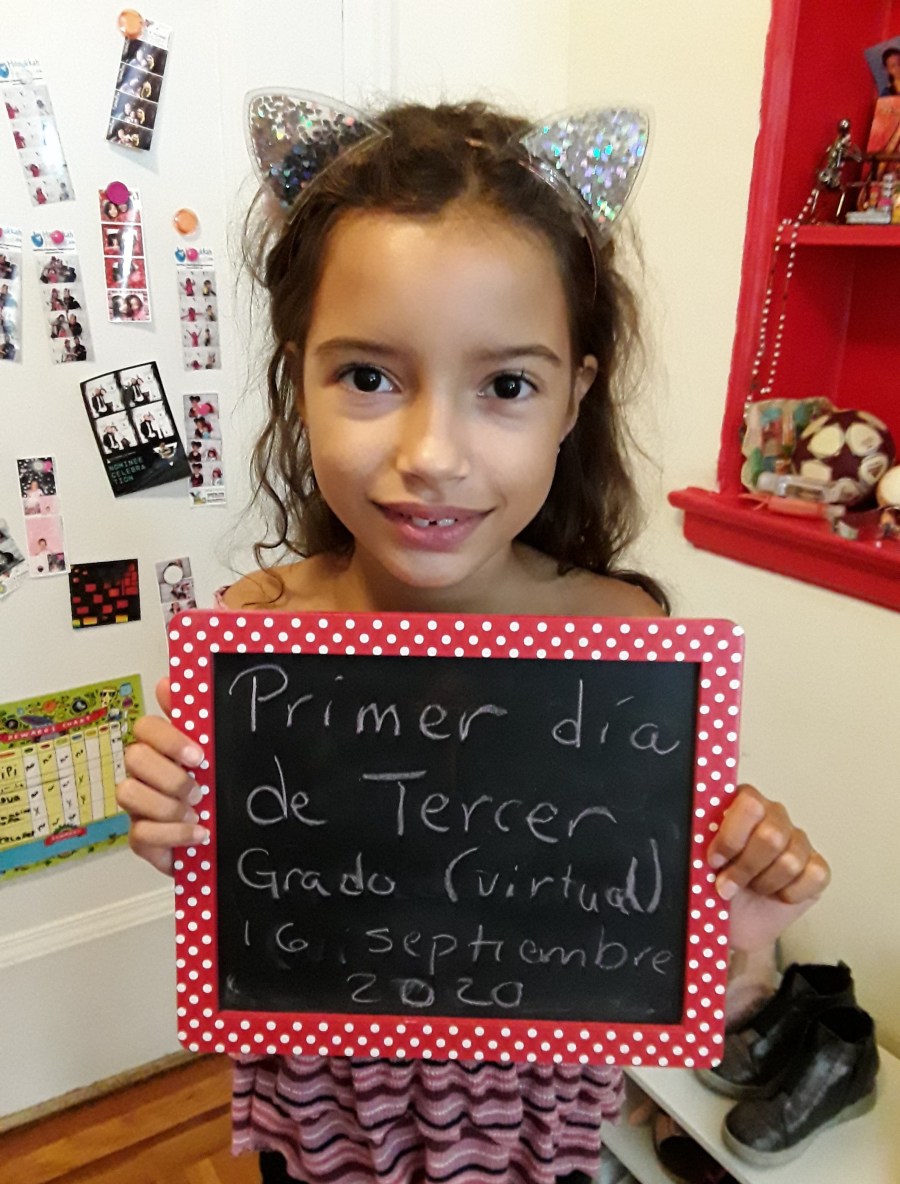
“They all made fun of me in my family, like my husband and my mom were like, ‘Oh my God, here we go again,’” Castro recalled. “Two hours of me screaming, like, this has to be a priority; I don’t see why bars, why restaurants, why casinos [get to stay open]?” She shared her opinion more widely in the neighborhood and got the same reaction Jampel and Eisner-Grynberg heard online.
A small group of like-minded moms reached out to each other and formed online friendships over the course of the summer. At home, Eisner-Grynberg’s 7-year-old daughter was counting down the days until school was supposed to start in September on a chart she titled “Countdown to Maybe School.”
The start date stretched from Sept. 10, then got pushed back to Sept. 21. That didn’t happen, either. But on Sept. 29 and Oct. 1, depending on a student’s assigned cohort, school reopened in a part in-person, part-remote “hybrid” learning model.
For six weeks, things went according to plan. Then, in the second week of November, the city began to approach a 3 percent positivity rate — the rate at which the mayor’s office said schools would have to close. Jampel reached out to two women, including Eisner-Grynberg, and asked if anyone was doing anything about it. She had the idea to start a petition and launched one on Change.org.
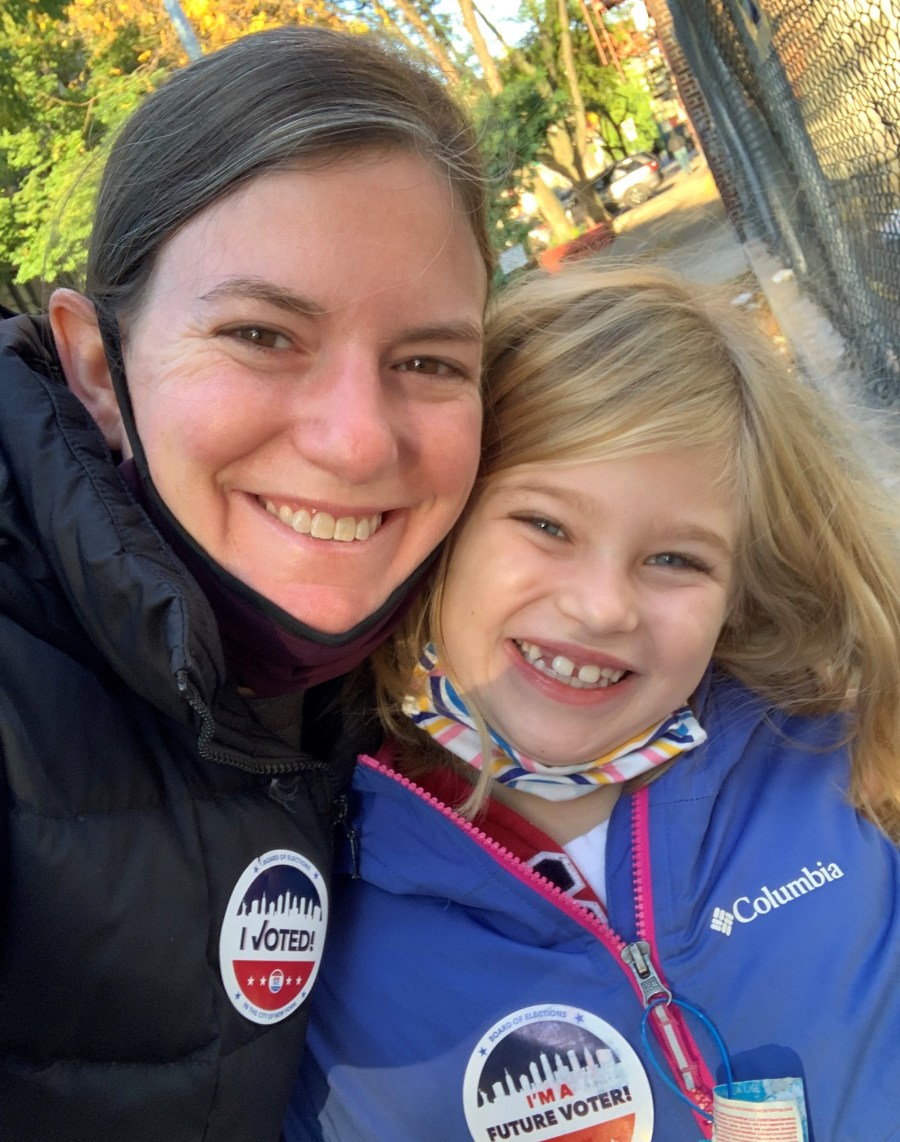
“We were extremely concerned, based on our experience in the Facebook group, that we would get no signatures, like 100 total signatures,” Eisner-Grynberg said. But with six weeks of school under their belts, she said parents who had opted for a couple of days of in-person instruction for their kids each week had had a chance to try the new system. “There really was like a total transformation of trust in the school and seeing what school being opened had done for those kids,” she said.
The moms sent the petition to their friends, networks, and neighborhood lists, and quickly garnered a couple hundred signatures. But that Friday, when the mayor instructed parents to prepare for schools to close on Monday, the group shifted into high gear. Eisner-Grynberg, who’d taken part in activist movements before but never led one, posted on Facebook asking if anyone knew how to plan a protest immediately in New York City. Overnight, a group of around 10 moms coalesced. Deep into the night, they used social media to announce a protest in Foley Square in downtown Manhattan for the following day and sent a press release to reporters whose contact information they could find online. They figured that if no one else showed up, at least the 10 of them would be there.
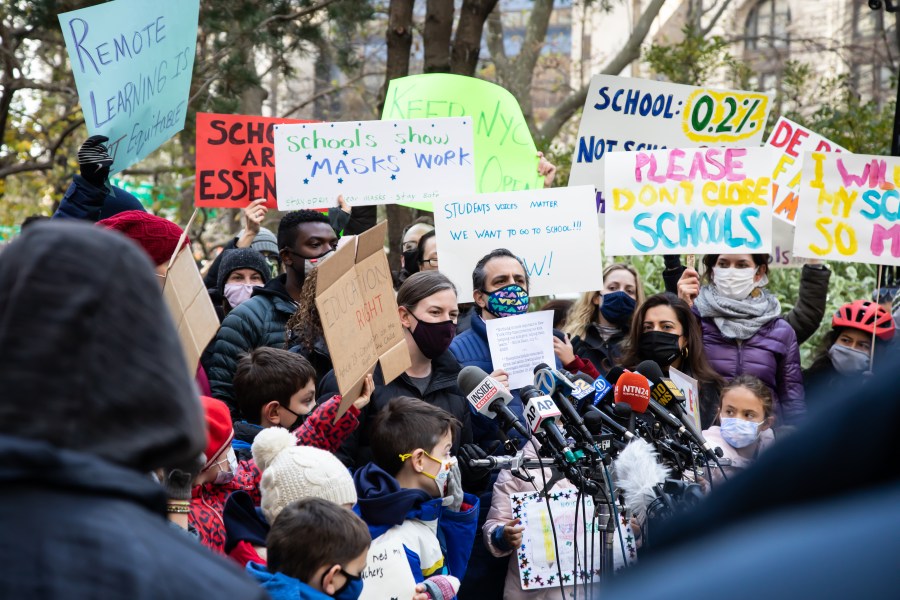
Around 60 adults actually attended that Saturday, as did some members of the press. It wasn’t enough: The schools closed on Wed., Nov. 18. But for the moms, that was just the beginning. “The thing that happened that really made our movement to keep school up and explode is that we lost, and schools closed,” Eisner-Grynberg said. Devastated, they went ahead with a planned rally at City Hall for the following day to deliver their petition to the mayor. But overnight, signatures on their petition doubled from roughly 6,000 to 12,000. This time, a row of television cameras and microphones awaited the moms when they arrived at City Hall. “We really felt a moral imperative to keep the pressure on,” Eisner-Grynberg said. They planned a press conference outside of Gracie Mansion for the day before Thanksgiving. At one point they, with their signs and yells, actually watched the mayor drive away with his security detail. Then on Sunday, New York City Mayor Bill de Blasio made a surprise announcement: Schools would reopen for students from kindergarten through fifth grade. “It wasn’t just a band of moms that forced schools to reopen,” Jampel says. “It was a huge amount of support that came up underneath us… the thousands of parents who signed our petition, activists who had been speaking out to reporters and politicians behind the scenes, the public health officials who came out in support of opening schools, and the editorial board of the New York Times who ran an editorial calling for the mayor to keep our schools open,” plus the crucial support that eventually came from the teachers’ union and school staff. But as Jampel puts it, her group of Zoom moms was standing on top of that cresting wave of public sentiment, and worked to ride it as far as they could to make change. When asked how much the group influenced their decision, Avery Cohen, a spokesman for the mayor, replied, “From the moment we closed, the mayor was clear that we had a moral obligation to reopen our schools. It was this drive that pushed us to reopen, and it’s why we’re still the only major school system to provide in-person learning for hundreds of thousands students.” The women don’t have proof it was their efforts that swayed the mayor. But they were the ones who coalesced a group of like-minded parents, showed that group’s strength in numbers, and then elevated their messaging in protests and press reports. The moms used data and research to push back on the city’s chosen 3 percent threshold for school closures and worked to redefine what was “safe” in conversations with other parents, teachers, union representatives, and administrators. And some of those conversations were tense, to say the least. “To the critics who say, ‘You’re going to kill teachers or kids are going to die:’ I think it’s so important to remember we’re sending our children to these places,” Eisner-Grynberg said. “No mom is sending their kids somewhere that they’re afraid that their kid’s going to die. And whatever their kid is picking up or bringing to school that’s making teachers concerned, we can never forget that the kids are coming home to us with whatever it is that they have.” Understanding that every family has to make the choice that’s right for them, the moms didn’t push for all kids to return to school — they only wanted the option. And now with that win under their belts, they’ve set their sights on the students who still don’t have a choice. “[The mayor] only sent back half the kids, kindergarten through fifth grade and district 75,” Eisner-Grynberg said. “We’re hugely grateful for that. But it’s only 190,000 of the 335,000 kids that were eligible to return to school.” This month, they held a protest to get sixth through twelfth grade schools open. It drew more than 100 people, including teenagers who came to speak at the event. “People from all across the city from all walks of life were coming up to us and saying, this is my story. This is my kids story,” Eisner-Grynberg said. “This is why this is so important to me. And that’s really organically how this has continued to grow.”
Erin Delmore Recommended