








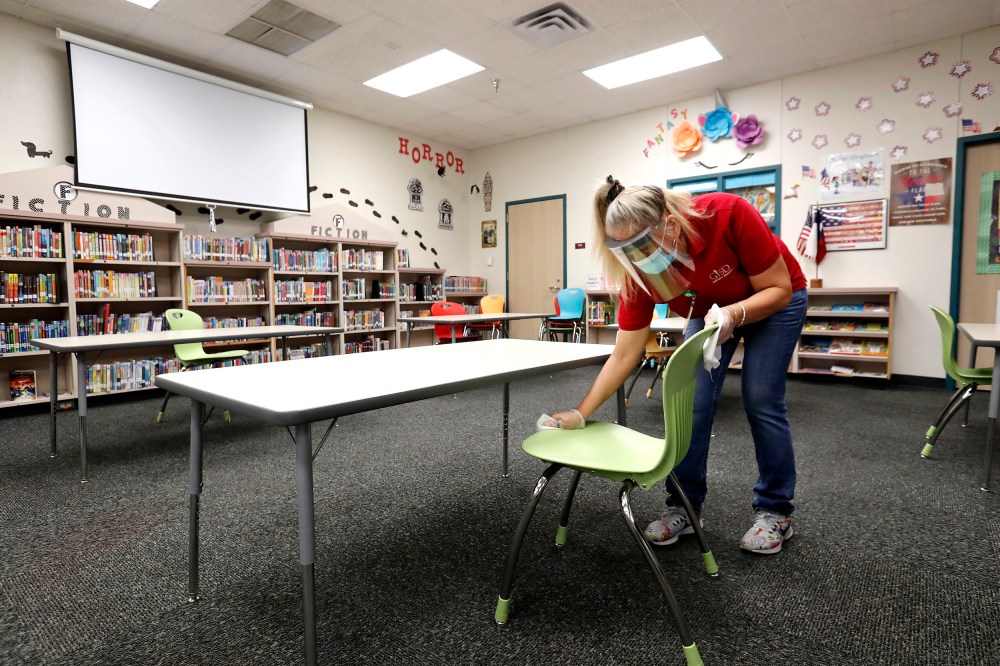
The discussion around the complicated logistics of how, and whether, to go back to school in the coming weeks is a heated one. Emotions are running high on the part of parents, teachers and administrators. School superintendents and boards of education across the country are struggling to balance public-health concerns with educational imperatives as the new school year approaches. There are no easy answers about what “back-to-school 2020” should look like, and certainly no single solution that will please everyone.
But one voice that seems noticeably absent in the dialogue is that of students themselves.
The school-wellness organization I lead, GENYOUth, has as one of its philosophical pillars elevating the youth voice. We always turn to the students with whom we work as sources of insight around the things that matter most to them.
This spring, GENYOUth released the first national study on the subject of how teens are coping with COVID-19. Our goal? To understand what teens say distresses them most, and what help they feel can best guide them during these increasingly uncertain times. How are they building resilience? In what ways are they hurting? And how can schools, parents, caregivers, community partners, and government leaders provide support systems?

Findings from the survey — which I’ve written about previously, is entitled, Life Disrupted: The Impact of COVID-19 on Teens — and can be viewed in detail here.
The survey data provides sobering insights on the enormous impact that the pandemic has created within so many young lives, particularly in terms of lost special moments. This includes having meaningful activities canceled, friendships put on hold and a sense of freedom, and control, lost seemingly overnight.
We’ve all watched kids wrestle over the past few months as the world around them has shaken on its axis – first the global pandemic, then the devastating economic fallout, and most recently the sometimes violent social unrest over race that has gripped the nation.
The honesty and youthful wisdom kids provide through glimpses into their inner lives and aspirations is invaluable. As adults, we should do everything in our power to listen to them as back-to-school 2020 is — lest we forget— all about them.
As of the end of May, 31 percent of surveyed students already claimed they were experiencing a “huge impact” around their educational future. They said they were struggling not to fall behind in school and to be academically ready for the next school year. The college exploration and application processes have been altered, with many students not being able to do the extracurriculars that are needed to be a successful college applicant.
So does that argue for resuming in-person learning? Can any of these concerns be addressed by continued distance-learning, or will things necessarily get worse? If we keep learning strictly online, will teens’ worries about their future darken further?

More than half of students — 54 percent of youth — said in the survey they were experiencing a huge impact when it comes to athletic participation. Loss of a season (or more) of sports, and the ability to maintain conditioning, both physical and mental, can lead to losing a key part of one’s identity. For talented athletes, sports can offer an opportunity to change their lives forever through scholarships, which the pandemic has disrupted. Will ongoing school closures aggravate things further?
How about the millions of kids who are wrestling with economic and financial security during this time? Fully 27 percent of those surveyed said that the pandemic was having a “huge impact” on their family’s financial security, and that figures goes up to over a third (35 percent) for those whose family income is less than $50,000. Moreover, disruptions from the pandemic are hurting some youth more than others, including African American youth, the youth population in urban areas, and, especially, girls.
There are so many unanswered questions now. And kids’ own voices should be instrumental in our figuring things out. Will the impact of a year or more of distance learning turn them into a “lost class”? Would middle, and high schoolers themselves, prefer the more conservative public-safety-at-all-costs philosophy, or, as young adults, do they feel that physical presence in the school building is “worth the risk”? RELATED: As the debate heats up around reopening schools, 5 critical pieces of advice for parents Clearly, there are cogent arguments on both sides of the school reopening debate. For myself, regardless of whether schools reopen to learning or not, my primary concern is that school buildings remain open to meal-preparation, feeding, and the providing of school meals to the 30 million U.S. children dependent on them for some — or part of — their daily nutrition, as they have done well before the pandemic hit. At the end of the day, what frustrates me the most – in these days of national turmoil and historic consequence, whether it to be to our health, our economic wherewithal, or our social well-being – is that the “youth voice” so often goes unnoticed or unsolicited. We know from our survey data that kids understand the current situation is complicated. We also know that they’re listening to the news and closely following what’s going on. They’re hearing all the discussion going on about their future, and they know that in most cases they’re not being given a chance to add their perspectives or opinion. Wanting to hear what they think, feel, want, and worry about is something we owe them, and ourselves, if we are to do this thing right. Alexis Glick is Chief Executive Officer of GENYOUth, a nonprofit organization dedicated to creating healthier school communities through programs presented in partnership with the National Football League and the National Dairy Council. Glick also serves as a frequent contributor to many national and international news programs, providing her perspective on global business topics of importance, the financial markets and CEO leadership trends. Prior to GENYOUth’s inception, Glick previously served as a senior media executive, and also appeared in the anchor role on NBC’s Today Show and CNBC’s Squawk Box. In addition to her current executive responsibilities at GENYOUth, and enjoying her active role as mom to four kids, Glick is active in several national and local non-profit institutions. She is a frequent, strategic
Alexis Glick Recommended


