










Governing requires cooperation and compromise, but elections tend to be zero-sum affairs. Candidates throw their hat in the ring, make their case, and vie for public support. Those who win advance; those who fall short are left with effectively nothing.
Some losing candidates can claim bragging rights for keeping it close and/or defying expectations. Other defeated candidates end up impressing enough people that they become well positioned for future contests. But in general, failure is painful in its finality.
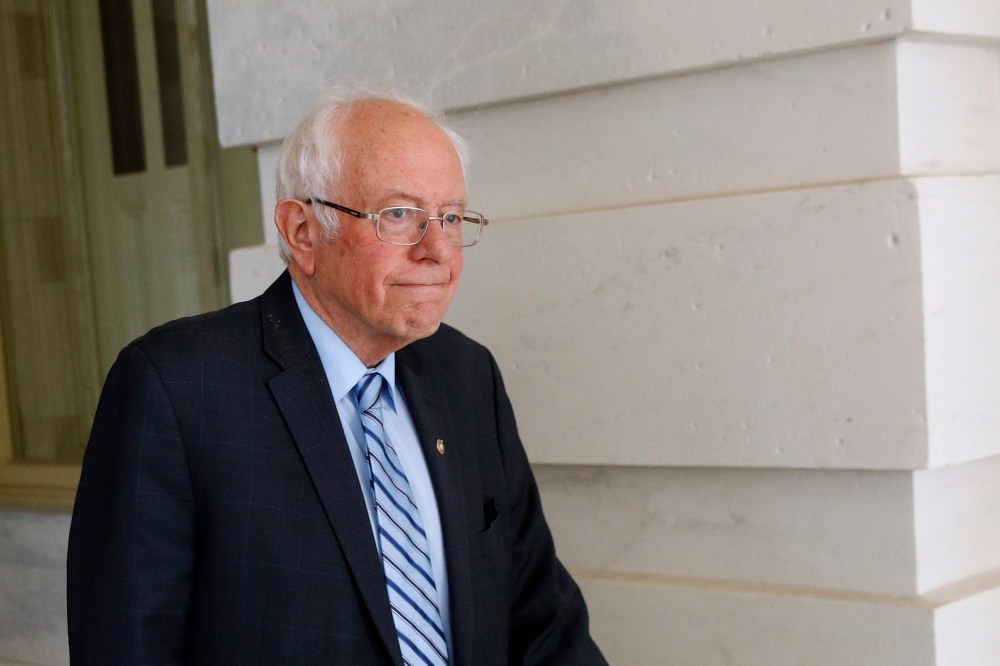
That said, as Sen. Bernie Sanders (I-Vt.) exits the 2020 stage, his departure doesn’t fit neatly into the usual boxes. He didn’t exactly defy expectations — the senator was expected to be a top contender and he was — and given the Vermonter’s age, he won’t be able to parlay his campaign into some other candidacy.
But to think Sanders walks away from the zero-sum affair emptyhanded would be to miss the scope of influence. I’m reminded of a pre-crisis column the New York Times‘ Jamelle Bouie wrote after Super Tuesday.
It looks like [Joe Biden] will secure the nomination, but Sanders won the policy argument. Democrats in Iowa, New Hampshire, Nevada and South Carolina support Medicare for All; Democrats in California, North Carolina, Texas, Tennessee and Virginia support free college. And the future of the Democratic Party — the youngest voters — are with Sanders.
When Sanders launched his 2016 candidacy, it was widely perceived a vanity exercise: the Vermonter stood no realistic chance of success against Hillary Clinton, the argument went, but the campaign would offer the senator a platform to present and defend his progressive vision.
In the months that followed, Sanders excelled in ways few could’ve imagined, cultivating a large base of die-hard supporters, and pushing Democratic politics in his direction. After the race, the senator used his success to draw even more attention to his policy priorities, picking up new allies, and building new support for his ideas.
With his 2020 candidacy, he added to the existing foundation, proving not only that there’s a sizable audience for Sanders’ platform, but also that a candidate can run a top-tier candidacy by relying on modest donations from regular people. Sanders won’t be president, but his leadership changed a party and a political model, and that’s no small thing. There’s ample room for discussion about why, after leading the field in February, the senator’s candidacy ultimately fell short. There’s also reason to speculate about what the near future holds in terms of Sanders’ possible unifying role in trying to defeat Donald Trump in the fall. All of these questions matter, even if their answers aren’t altogether clear. But today, as Sanders makes the painful decision to walk away, give the guy his due.
Steve Benen is a producer for "The Rachel Maddow Show," the editor of MaddowBlog and an MS NOW political contributor. He's also the bestselling author of "Ministry of Truth: Democracy, Reality, and the Republicans' War on the Recent Past."
Latest Post
Recommended


