“Why do you want to be a CEO? You’re already the CEO of your family.” That was the tongue-in-cheek retort of my male sponsor after I told him my career aspirations back in 2015. I sat quietly and let the gravity of that moment sit in. Afterall, I had just been told I was too ambitious—as if being the breadwinner of my family was enough.
Despite my sponsor’s hesitations about my professional objectives, I continued climbing the ladder and eventually became the CEO of Pipeline. Unfortunately, as a woman, my role as CEO is rare.
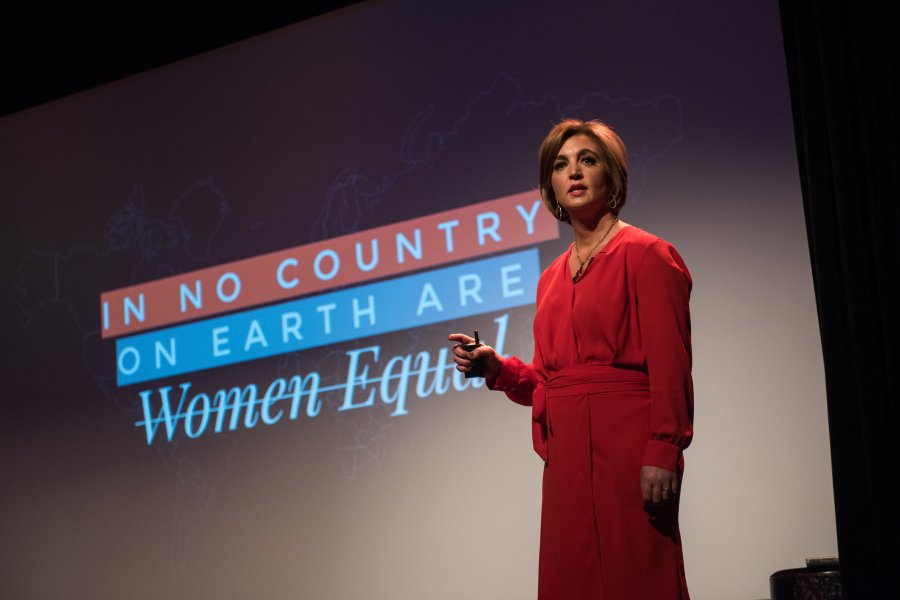
Of the top 3,000 businesses in the US, only 6 percent are run by women. In the Fortune 500, a record 37 companies, or 7.4 percent , have women at the helm. (That number will drop to 35 after the women running IBM and KeyCorp step down later this year.) And while we’ve certainly come a long way since 1995 when not one Fortune 500 company had a female CEO, the gender gap at the top of most organizations still leaves plenty of room for improvement.
It seems that decades of good intentions on the gender equity front have done little to bridge this leadership chasm. Why? It’s impossible to isolate a single factor. Fortunately, however, we have identified a cornerstone of the CEO gap: profit-and-loss (P&L) responsibility. Without this foundational P&L experience, women’s chances of ascending to the role of CEO crumble.
Data shows that women are remarkably underrepresented in the P&L roles, also referred to as line roles, that serve as stepping stones to the role of CEO. So if we want to close the gender gap at the top of the business world—and we should because doing so is in our economic best interest—perhaps we should start by asking, “Why aren’t there more women in P&L roles?”
To answer this question, it helps to view the broader labor force through the lens of gender. In other words, we need to gender-disaggregate the data to better understand it and its implications.
Seven decades ago, 32.7 percent of women and 86.6 percent of men in the U.S. participated in the workforce. In 2018, 57.1 percent of women and 69.1 percent of men participated in the workforce. And as of December 2019, women held 50.04 percent of our country’s jobs for the first time since the end of the Great Recession. (Note: this percentage excludes the self-employed and farm workers.)
Women’s increased participation in the labor force began with their growing pursuit of higher education. Between 1970 and 2018, the proportion of working men ages 25 to 64 with college degrees doubled. For women, that proportion quadrupled during the same time period. By 2015, women had become our nation’s most educated cohort—earning 57 percent of bachelor degrees and above.
This data tells us two things about today’s talent economy: one, the average working woman is more likely to be college-educated than the average working man; and two, women hold more jobs than men. Even so, women continue to be underrepresented in leadership positions throughout the corporate world as well as the P&L roles that lead to them.
We need to dig deeper into the data to understand why.
In 2018, 52 percent of workers in “management, professional, and related occupations” were female. This abstruse category of occupations includes architects, lawyers, artists, educators, doctors, and engineers, just to name a few. Perhaps more revealing, however, is the gender breakdown of specific occupations within this category. Here are a handful of examples:
- Software developers: 19 percent female
- Lawyers: 37 percent female
- Registered nurses: 89 percent female
- Accountants and auditors: 61 percent female
- Sales roles: 30 percent female
Let’s zoom in on that last occupational category, sales, because these roles largely require P&L responsibility.
But before we do, I need to share a bit of my professional history. While I was on maternity leave with my daughter a few years ago, my boss was fired. Within two weeks of returning to work from maternity leave, I went from managing one team of employees to managing three. A great opportunity, but there was a catch.
My male colleague who was one job level higher than me had taken on one additional team and, as I later found out, received additional compensation for doing so. I received nothing. I went to my new manager and HR to ask them how they wanted to close this pay gap. To my surprise, they said nothing.
At this point I knew I needed to do some research. What were my rights in this situation? I found the Lilly Ledbetter Fair Pay Act, which changed the statute of limitations for equal pay. I called HR and said, “This is a Lilly Ledbetter Issue, every time you pay me, the statute of limitations starts over. What do you want to do about it?”
To their credit, they gave me back pay and increased my salary, but this experience of fighting for pay equity left me wondering: why should my children have less economic opportunity simply because their mother is the breadwinner?
Shortly after this experience, I learned about Mika Brzezinski’s fight for pay equity and realized I wasn’t alone. My commitment to close the gender equity gap once and for all had been solidified. Fast forward and today I am the CEO and founder of Pipeline Equity, a SaaS platform that uses artificial intelligence to help organizations increase their revenues by moving toward gender equity. When I designed the Pipeline platform in 2017, I made P&L metrics an input to gender equity. I wanted my platform to measure the gender breakdown of these line roles that are critical to upward mobility, specifically to becoming CEO. I did this because I knew how easily gender inequity in the workplace causes women to fall out of the P&L pipeline. If we remember from above, women hold 30 percent of sales roles and sales roles rely heavily on P&L fluency. Since P&L experience is a key input to CEO ascension, it’s worth exploring why we don’t see more women in P&L roles. A report by the Working Mother Research Institute provides some insights: Furthermore, half of women in sales do not believe they have the same opportunities for advancement as their male counterparts, despite having the same skills and qualifications. And, 90 percent of new CEOs in 2015 had sales experience and 100 percent of them were men. The takeaway from the research comes down to two words. Unconscious bias. Overall, more men than women are growth-tracked to P&L roles. To close the CEO gender gap, then, we need solutions to correct for these biases and fix the leaky P&L pipeline. Here are a few steps to get started. 1. Promote women to leadership roles from the very beginning. To support a robust and gender-balanced talent pipeline at the top of an organization, we need to start by fixing the first leak which happens between the entry-level and first-level managerial levels. For every 100 men promoted or hired to manager roles, only 72 women are promoted or hired. We could add one million more women to corporate management roles in the next five years by fixing this first leak. Doing so would widen the pool of female talent for the P&L roles that eventually lead to the C-Suite. 2. Make a top-down commitment to gender equity. This could include establishing gender-balanced targets, signing a public pledge, or creating policies to ensure all employees have equitable opportunities in the workplace. Make sure to frame the commitment as the economic opportunity that it is: Pipeline’s original research across 4,161 companies in 29 countries found that for every 10 percent increase in gender equity, there is a 1 to 2 percent increase in revenue. 3. Use the tools of the Fourth Industrial Revolution to close the gender equity gap. Every year, companies make three key talent decisions: pay, performance, and potential. There are 30 million employees in the Fortune 500. That’s 90 million opportunities each and every year to move closer to or further from gender equity. Advanced technologies such as AI and cloud computing can ensure every decision a company makes is an equitably one and free of bias. Katica Roy is a gender economist and the CEO and founder of Denver-based Pipeline, an award-winning SaaS company that leverages artificial intelligence to identify and drive economic gains through gender equity. Pipeline launched the first gender equity app on Salesforce’s AppExchange. The Pipeline platform was named one of TIME Magazine’s Best Inventions of 2019 and Fast Company’s 2020 World’s Most Innovative Companies.
Katica Roy Recommended