








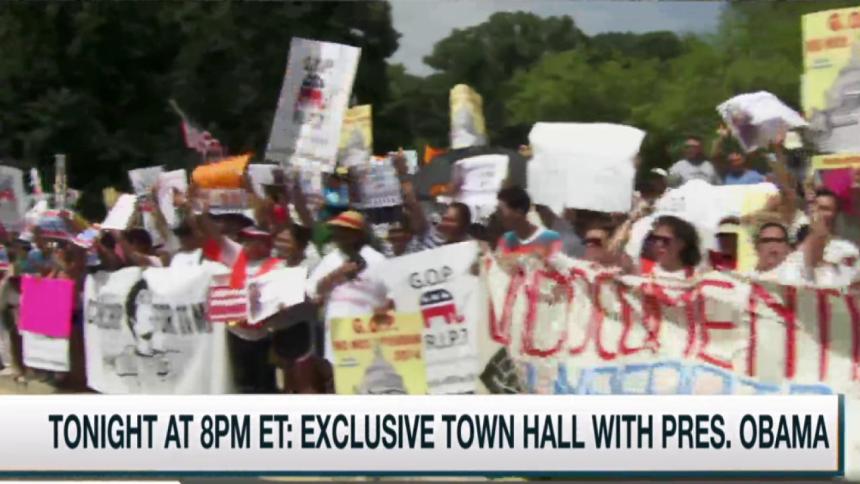
When President Obama speaks directly to the Latino community at a town hall event Wednesday in Miami, it will be exactly one week after the first phase of his immigration actions was supposed to kick in. But instead of taking a victory lap, Obama will be forced to address the legal setbacks that have put his actions on hold and reassure a community all too familiar with dashed hopes.
The event, hosted by Telemundo and msnbc host Jose Diaz-Balart, provides the president a platform to bounce back and address the people who are directly impacted by the enrollment delays. Obama will likely face a number of tough questions from the crowd, not all of which he’ll be able to offer firm answers — how long will families have to wait? Should they still prepare to come out of the shadows? What will happen in the future?
RELATED: Obama administration asks court to lift executive action freeze
Many times before, Obama has asked for patience from the immigrant community in seeking deportation relief. This time, he’ll need to calm worries that both legally, and politically, his administration will be able to follow through.
Confused by all the latest movements in the battle over Obama’s immigration actions ahead of the president’s town hall Wednesday? Don’t worry, we’ve got you covered.
What’s going on with this legal fight?
Consider this the beginning of what will likely be a drawn out match of legal ping-pong through the courts.
It all started when Republican leaders from 26 states signed onto a lawsuit to sink the executive actions before the programs even began. The officials were strategic in determining the federal court in which to file their lawsuit. That’s why they choose Brownsville, Texas, where a staunch Obama critic gave them the ruling they were hoping for. Last week, District Court Judge Andrew Hanen placed a temporary freeze on the executive actions, meaning the government could not begin accepting applications on schedule.
RELATED: Hopes dashed once more for DREAMers
A few days later, the Obama administration appealed the ruling on two separate fronts in efforts to get the executive actions back online as soon as possible. The first was to ask Hanen to reverse his ruling and allow the program to continue forward as planned. At the very least, the Department of Justice asked that Hanen only apply the enrollment freeze to Texas, where the suit was filed, and allow other states to accept applications. The DOJ gave Hanen until the end of Wednesday to decide, but the deadline is non-binding. On a separate front, the Obama administration is asking a three-judge panel for the 5th Circuit Court of Appeals in New Orleans to consider their case to keep the executive actions running.
In short, additional appeals from both sides are likely to kick the issue all the way up to the Supreme Court. The earliest that the federal government would be able to begin accepting applications for the executive actions would likely be weeks from now.
Think of the executive actions as divided into three parts: DACA, expanded DACA, and DAPA. Those are a lot of acronyms — and here’s what they mean.
The first phase of executive actions was introduced back in 2012 as a program commonly known as DACA, or Deferred Action for Childhood Arrivals. Under the DACA program, undocumented immigrants brought to the U.S. as young kids (known as DREAMers) would not be subject to deportation. Obama’s reasoning at the time was that the vast majority of DREAMers weren’t acting on their own accord when they arrived in the U.S.; many were young kids when their families immigrated illegally, and they shouldn’t be to blame. The DACA program meant DREAMers could apply to two-year stints to remain in the U.S. lawfully and not worry about being deported.
Quiz: How much do you know about DACA?
The DACA program was considered to be a huge success, allowing hundreds of thousands of young undocumented immigrants to use their temporary status to get better jobs, obtain driver’s licenses, pay taxes and contribute to their communities. But the program had limits on those who qualified: only DREAMers who had arrived in the U.S. before turning 16 and lived in the state continuously since June 2007.
So on Nov. 20, 2014, Obama unveiled two new phases of executive actions. The first, set to kick in mid-February, was the expanded DACA program. Instead of granting two-year permits, the program would be valid for three years. Meanwhile, the age cap was extended and allowed individuals who had lived in the U.S. continuously since Jan. 2010
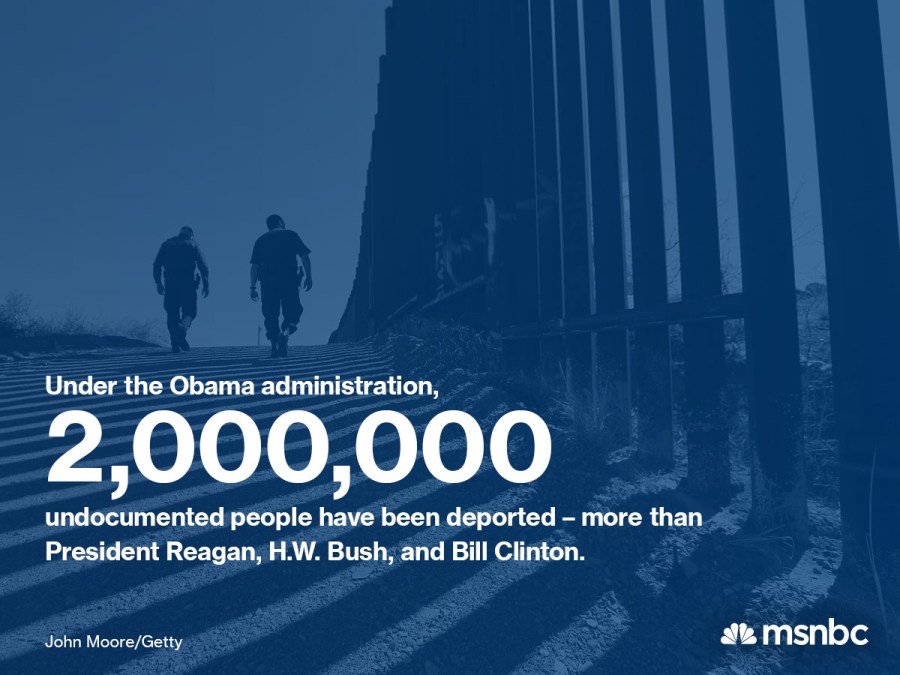
The final and most sweeping phase of executive actions isn’t expected to come until May, and it is being referred to as DAPA — Deferred Action for Parents of Americans. In essence, undocumented parents of legal permanent residents, or those with children born in the U.S., would receive many of the same benefits seen in the DACA program. So what’s the big deal? To break down the numbers, more than 600,000 DREAMers have already applied for the 2012 DACA program, while double that number likely qualify. Add another 300,000 DREAMers who are likely eligible for the DACA expansion, plus some 3.7 million adults who qualify for DAPA, and you have more than 5 million undocumented immigrants who could be temporarily exempt from being deported. That’s huge, especially considering the number clocks in at close to half of the entire undocumented immigrant population currently living in the U.S. Families have seen first-hand what the post-9/11 era’s emphasis on border security and immigration enforcement has meant for the undocumented community. Deportations only accelerated under the Obama administration — topping more than 2 million removals just months into the president’s second term — more than any other president before. Families with firm roots in the U.S. were being torn apart. For those able to fly under the radar, everyday life has meant constantly looking over one’s shoulder. Why are Republicans fighting the executive actions? Republicans want to see the executive actions annihilated, and as soon as possible. GOP leaders got a major break last week in the lawsuit from 26 states. Republicans in those states argued that illegal immigration has already had an adverse effect on local economies. Add temporary legal status to millions more people, and the states said government resources will be drained to harmful levels. Judge Hanen, the district court judge who temporarily blocked the immigration actions last week, largely sided with those arguments. He took Texas as an example, saying that forcing the state’s agencies to provide driver’s licenses to large number of enrollees would come a distinct cost. RELATED: Republicans wave white flag to avert DHS shutdown Meanwhile in Congress, Republican leaders have tried everything from threatening a lawsuit of their own challenging the president’s legal standings to offer blanketed protections to millions of people, to attempting to bring down the executive measures permanently through legislation. The latest was an attempt to tie DACA, the DACA expansion and DAPA to a bill to fund the Department of Homeland Security — the only way the critical department would receive much-needed funding would be if the executive actions were gutted. Republican leaders, however, have since signaled the first sign of retreat, and there’s no telling what will happen before the agency runs out of funds on Friday. OK. So what’s next? The Obama administration has expressed confidence that ultimately it will prevail and the executive actions will move forward. Officials argue that since it’s unrealistic to deport the more than 11 million undocumented immigrants who currently live in the U.S., the president has broad authority to decide who gets deported, and who doesn’t. The administration believes that Judge Hanen’s preliminary injunction was the action of a single, conservative-leaning judge. But until the dust settles and the situation plays out through the courts, the fate of more than 4 million undocumented immigrants remains up in the air. For now, it’s just a waiting game.
Amanda Sakuma Recommended


