








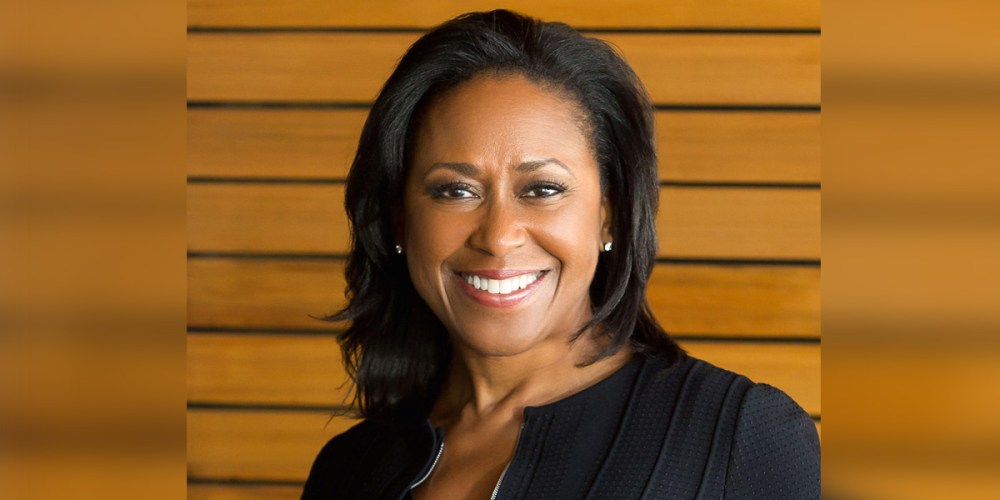
Black women in the United States are paid 61 cents for every dollar given to white men. And that’s beyond unacceptable, said Lisa Skeete Tatum, the founder of Landit, a technology platform created to increase the success and engagement of women in the workplace.
“I’m impatient when it comes to democratizing career success for everyone,” she told Know Your Value. “I would like to see all women be able to bring the full measure of their talent to the workplace and be equitably compensated for their brilliance— it’s what they have earned and deserve.”
Previously, Tatum was a general partner at Cardinal Partners, a $350 million healthcare venture capital firm. She also worked at Procter & Gamble, GE Capital and launched her own consulting firm. As an African-American woman, she has often been the only minority in the room.
“As you progress in your career, it becomes even more isolating, because you’re the only one,” Tatum said. “You may not feel confident to make the next move because it feels like there’s a social cost to doing so.”
Besides the obvious pay gap, black women only hold 3.8 percent of managerial positions, while white women hold 32.5 percent, according to Catalyst.
The onus is largely on companies to take initiative and close the pay gap once and for all. But women (and their allies) can help move the needle.
But in recognition of Black Women’s Equal Pay Day on Thursday, Tatum discussed what women, as well as their allies, can also do to move the needle.
These tips can be applied to all women, but they are even especially critical for black women who want to make gains in the workplace.
1. It’s all about preparation.
Women are reluctant to talk about money, according to Tatum. But not only do women have to get comfortable with it if they want to get ahead, but they have to do a lot of research about money, too.
“Number one is preparation,” said Tatum. “You have to do your homework, otherwise you’re negotiating in the dark. It’s very easy these days to look up ranges for your positions. You have to know your benchmark data.”
2. Keep track of your accomplishments year-round.
Women usually think that someone is just going to “discover” them, or they wait for their one-hour-a-year evaluation to log their accomplishments, said Tatum.
“You have to remember to keep track of your accomplishments, otherwise you suffer from ‘LIFO,’ which is ‘last in, first out.’ Make a list of what you’ve done so when you’re going into negotiation you’ve got it all in front of you.”

3. Make the ask.
Salaries aren’t distributed based on fairness, according to Tatum. It’s dangerous to assume that a boss is going to pay the “fair” rate without a conversation.
“Many of us think, ‘okay, they’re gonna give me what’s fair.’ And that’s not how it works. You have to ask,” Tatum said.
4. Aim high.
Women chronically undersell themselves. Tatum told women to ask for a higher pay raise, flexibility, leave, than what they believe is “fair.”
“Nobody who’s putting together a budget puts in their lowest number, so why are you asking for the lowest? Ask for what represents the brilliance of what you bring,” she said.
5. Don’t rush.
It’s easy to feel like the negotiation went poorly or that it’s time to give in based on initial conversations. Tatum advised women to stay with it.
“Don’t rush to come to a conclusion,” Tatum said. “The best negotiators take twice as long to come to a number. If you’re in a negotiation, if things aren’t going the way you want it, even if you get an offer, it’s okay to say ‘I’d like to think about it and come back.’ Give them a date. Don’t feel pressured to accept something on the spot.”
Nobody should enter a negotiation “blazing with ultimatums,” said Tatum. “I caution people against saying: ‘hey, I have this offer meet it or else,’” said Tatum. “It’s better to say something like: ‘I love it here. I’d like to stay here. I’m hoping we can work something out.’’ Having a backup is a good way to show that you really want to stay and work hard, and that you’re willing to negotiate. “If you have a strong alternative that might bolster your position. Maybe it’s not about salary, maybe it’s options or title,” said Tatum. A brand is not just your social media presence. It’s your total presentation. “We define personal branding as: what do people say and think about you that makes them want you in the room? You have to be your best advocate. If you can’t talk about the wonderful things you do, I can guarantee nobody else does.” Tatum is no stranger to risk-taking. “I’m used to being the only one,” she said. “I’ve always taken the path less travelled for whatever reason. I’m a chemical engineer, I was a venture capitalist, and certainly on the board I was the only one. I’ve never been much of a wallflower. I don’t have a problem articulating and speaking up. And when you’re more senior in your career you have a little more social and political capital.” However, Tatum recognized that being very assertive can be difficult for some women when there’s a lack of diversity in the workplace. “I think when you’re the only one in the room you become more risk averse and we need to take more risk so you can create visibility and opportunity.” Getting a mentor isn’t enough, said Tatum. You need a whole squad. “You need a mentor, a close friend to hear you out, coaches,” said Tatum. “You have to get a sponsor because you have to amplify your message when you’re not in the room …That’s the difference-maker for most careers.”
Halley Bondy Recommended


6. Have a backup.
7. Own your “brand.”
8. Take risks.
9. Find your squad.
