








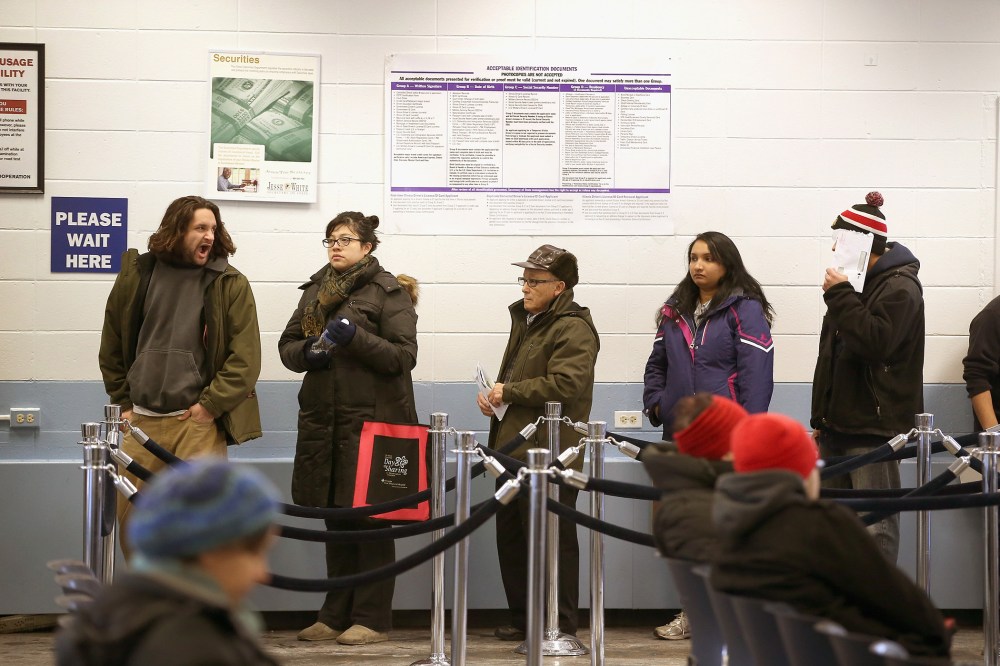
Last year, a new law that automatically registers voters when they come in contact with the DMV made Oregon a pioneer in expanding access to the polls. Since then, three other states, including California, have passed similar measures. Now, with the Oregon primary to be held Tuesday, the numbers confirm the state’s law has so far been a rousing success.
More than 51,000 people were automatically registered to vote through the law, known as automatic voter registration (AVR), between January 1 and April 30, the first four months that it was in effect, according to figures provided by the state. That’s an increase in the rolls of greater than 2.5 percent.
RELATED: Why does New York make it so hard to vote?
A comparison with 2008, the last time both parties had contested presidential nominating contests, makes the extent of the uptick clear. In the first four months of that year, when the Obama-Clinton race electrified progressives, the total number of active registrations in the state increased by 85,362. This year during the same period, it grew by 129,162.
In an interview with MSNBC, Secretary of State Jeanne Atkins predicted that the numbers will stay high at least through the summer. That’s in part because her office expects to complete a project in August that will add voters who came into contact with the DMV during 2014 and 2015.
To address concerns about non-citizens sneaking onto the rolls, Oregon works only with DMV lists of people whose citizenship has already been established.
“Many, many people who could be voting find themselves not registered,” said Atkins. “And there isn’t a reason we can’t be positive about welcoming them into the system and making it easier for them to register while still maintain the quality of our voter rolls.”
There’s evidence that the law has particularly helped groups that have traditionally been alienated from the process, including the young and racial minorities. The Bus Project, which aims to mobilize the youth vote in Oregon, examined new registrations for March and found that more than half were for people under 35.
Nikki Fisher, the Bus Project’s executive director, said the fact that more young people will now be registered allows her group focus instead on educating them about what’s on the ballot.
And Kathy Wai of the Asian Pacific American Network of Oregon said the law was likely to have a “significant positive impact” on registration rates in the state’s Asian-American community, which traditionally has been under-registered due to language and other issues.
RELATED: California set to automatically register millions of voters Over and above the statistics, Oregon’s law — championed by former Secretary of State Kate Brown, now Oregon’s governor — represents a fundamental shift in how states approach voter registration: By putting the registration burden on the state, not the voter. And it does so simply by flipping the default status from unregistered to registered: Once a voter is added to the rolls, she receives a letter informing her that she can notify the state if she wants to un-register. If she does nothing, she stays registered. “Social science research suggests this true no-action default structure increases the likelihood that eligible citizens will become registered to vote because it strongly signals the preferred outcome and requires effort to change the outcome of becoming registered to vote,” notes a report on the Oregon system released Monday by the liberal Center for American Progress. That report called Oregon’s program “hugely successful.” Since Oregon passed its law in March 2015, automatic voter registration has emerged as the most prominent policy idea for expanding access to the polls at a time when voter turnout has dropped precipitously. President Obama, Hilary Clinton and Bernie Sanders all have endorsed AVR, as has the Democratic National Committee. Experts on voting say the registration process is perhaps the most significant hurdle to casting a ballot. California, Vermont, and West Virginia have passed their own AVR laws, and bills have been introduced in 28 other states, as well as the District of Columbia, where it looks likely to pass. New Jersey lawmakers passed an AVR bill last year but it was vetoed by Gov. Chris Christie, who said it was already easy enough to register.
Zachary Roth Recommended


